Roofing for Logistics and 3PL Operators in Pembroke Pines, FL
Roof inspection, leak repair and phased replacement for logistics and 3PL operators in Pembroke Pines, FL, planned around docks, stock and client commitments.
A leak over staged pallets turns a roof finding into an inventory claim. The membrane defect may be small, but the cost depends on what sits beneath it and whose goods they are. For a logistics or 3PL operator in Pembroke Pines, FL, that is the lens we use: each roof section is rated by the stock and the client commitments below it, then by its condition. The city identifies warehouse and flex space in the Chapel Trail planned unit development east of US 27, and light manufacturing and transportation-related uses on northwestern industrial land with access to US 27 and Interstate 75. We begin with what the roof protects and then examine how well it does so.
Find the leak path over staged inventory
We walk the building with the racking plan or a floor sketch and mark the aisles, dock lines and staging zones that sit under each roof section. A leak above a staging lane is a different problem from one above an empty bay. Where racking is dense, water can run down the steel and reach stock far from the entry point.
The roof inspection then follows the same map. We trace likely paths from curbs, drains, seams and perimeter details to the zones below. If an infrared moisture survey shows wet insulation above high-value stock, that section moves to the front of the list even when the membrane looks sound.
Seasonal peaks change the answer. A zone that is lightly loaded in summer may be full before a holiday, so the survey notes the inventory pattern in each season and the plan places roof work where stock is lowest.
Rack uprights and sprinkler lines near the deck also matter. Water running down a column can reach product and trip a corrosion claim, so we trace where each leak path ends, not just where it starts.
Protect stock before opening the roof
Before any section opens, the stock below is protected. Pallets move, or they are covered with poly sheeting rated for water, and the plan names who handles each task. We schedule the roof opening for a time when the affected zone is lightly loaded.
Temporary protection stays staged while the section is open. A tarp ready on the roof and a person trained to deploy it make the difference when a pop-up storm arrives. We close each section the same day, and an interior spotter confirms that no water entered. Where a client's goods carry insurance conditions, the operator tells us the requirements and we add them to the plan.
Trailer parking and drop yards are another constraint. Crews and lifts stay outside trailer swing paths, and the work zone is fenced so a driver never has to guess where an overhead hazard begins.
A short stand-up meeting on the first morning, with the dock supervisor and the roof foreman, fixes the rules for the day: which doors are live, who can stop work and how a storm call is made.
Work around docks and trailer yards
Dock activity sets the rhythm of the building. Trucks arrive in waves, trailers stage in the yard and forklifts cross the same paths all day. Roofing work above that activity needs a separated zone, a spotter and a plan for hoisting that stays clear of active doors.
We ask for the busiest hours, the doors that can never be blocked and the yard areas that must stay open. Material staging goes on the side of the building with the least traffic. For a building in the Chapel Trail commercial area, the operating pattern of neighboring tenants also affects access, and we confirm it on the first walk.
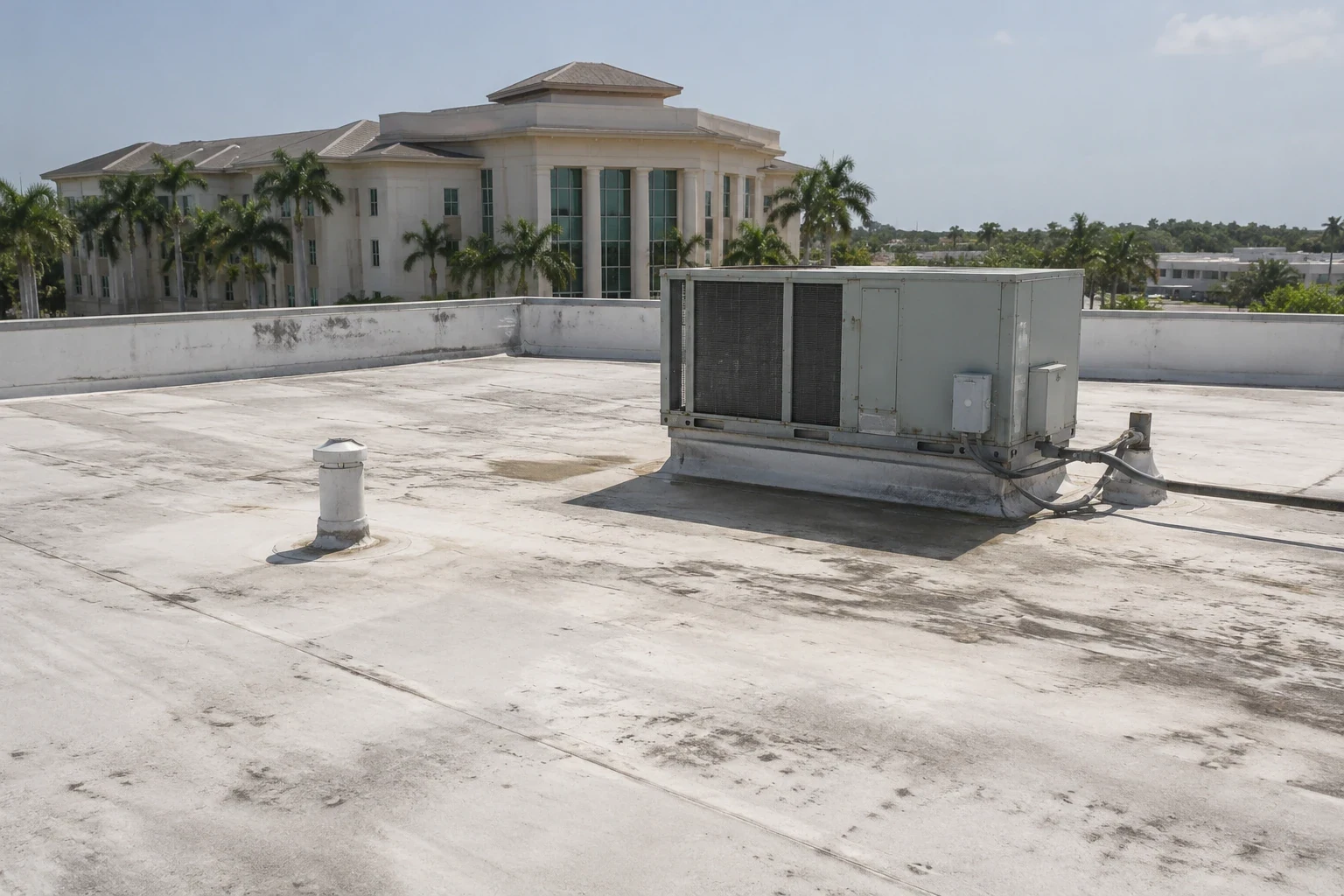
Rooftop equipment is a final piece. Dock levelers and HVAC for office pods often sit near the same roof edge, and their service traffic wears paths in the membrane. Walk pads along those routes cost little and protect the sheet.
Treat penetrations as clusters
Logistics roofs carry smoke vents, exhaust fans, skylights, conduit and mechanical units. They are often grouped near building cores or over dock lines. A cluster that shares patched flashing can feed water into several details.
We map the clusters, probe the flashings and decide whether a cluster needs resealing or rebuilding. Work on skylight and penetration flashing is often the least costly improvement on a roof whose field is sound. Rebuilding a cluster with prefabricated components and a documented detail also gives the operator a repeatable standard for future changes.
Hail and tornado hazards belong in the record too. The National Weather Service lists tornadoes and hail among the hazards of the stormiest wet-season weeks, and the city's plan describes local exposure to flooding, tornadoes and hurricanes, so a post-storm walk is part of the routine.
A contract with a client may also require notice of any roof work above their stock. The operator can pass our schedule along as written, which avoids a gap between what the roof crew does and what the client was told.
Labeling is useful at this stage. Each cluster gets a number on the roof plan and a matching photograph, so a maintenance crew that finds a stain can report cluster seven instead of describing a corner of the roof from memory.
Size the wet-season opening
Distribution roofs spend five months of every year under near-daily showers, with the heaviest storm weeks falling between mid-May and early July. A logistics operator that cannot pause shipments needs a roof plan that works through those months.
Each day's opening is limited to the section that can be sealed before the afternoon rain, and covers stay staged beside the work. The hurricane zone designation means a warehouse reroof is permitted with zone-specific paperwork and approved products, and we verify the requirements with the city before the first bay opens. A distribution center and a warehouse each get their own permit check, and we run both.
Interstate 75 and US 27 carry much of the freight that reaches the area, which is why delivery windows around shift changes drive the pace of material handling more than the roof schedule does.
Keep a record that clients can read
Clients ask 3PL operators about building condition, and insurers ask about roof age and repair. A clear record answers both. Operators with sites in Miramar and nearby cities can use one format across buildings through a multi-site roof program. The manufacturers who ship through these buildings may ask for the same file, and the property management companies that lease the space already work from it.
Commercial Roofing Questions
How can a 3PL protect client inventory during roof work?
Move or cover stock under the work area, open small roof sections and close each the same day. Temporary protection stays staged on the roof, and an interior spotter confirms that no water entered. Client insurance conditions go into the plan before work begins.
Which roof sections should a logistics operator repair first?
Sections above high-value or sensitive stock rank first, then sections with wet insulation, then those with aging seams. The map of stock zones under the roof sets the order, and we update it as inventory layouts change.
Can roofing happen while docks are busy?
Yes, with a separated work zone, spotters and hoisting away from active doors. The operator names the doors and hours that cannot be disrupted, and the plan is built from that list.
What is the benefit of rebuilding a penetration cluster?
A rebuilt cluster replaces layers of old patches with one detail, which reduces leak points and gives a documented standard. It also simplifies later work, since the next trade knows what is there and how to reseal it.
How does the hurricane zone affect a logistics roof project?
Zone rules call for their own permit paperwork and approved products on a distribution roof. The city is asked for the permit scope up front, the assembly is chosen to match, and the documents go into the file the operator keeps.