Commercial Roof Leak Repair in Pembroke Pines, FL
Investigate commercial roof leaks in Pembroke Pines with entry-point testing, insulation review, compatible corrections and a clear return assessment.
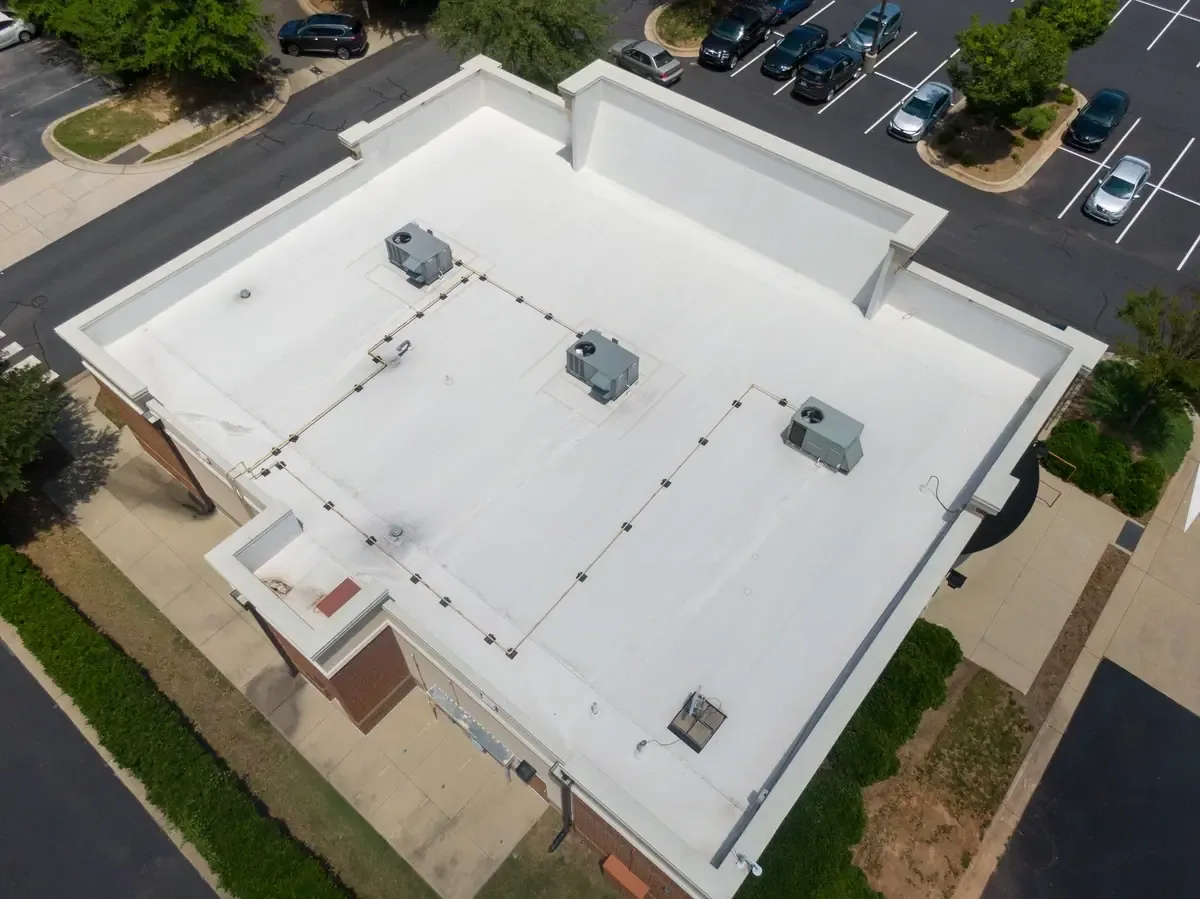
Water collecting beside a rooftop curb can turn an apparently isolated leak into a repair involving flashing, insulation and drainage. The curb connection needs examination, but the material beneath it also determines the correction. In Pembroke Pines, FL, we investigate the reported leak as an assembly problem and identify the smallest scope that addresses its cause. An asset manager needs that distinction before approving another surface treatment at the same location.
Leak response begins with the interior consequence and the roof conditions above it. We ask where water appeared, what equipment was operating and how the event related to rain or wind. Those observations help direct examination without fixing the diagnosis in advance. A focused roof inspection then connects the report with seams, flashings, drains and penetrations that could admit water.
Interior evidence guides the examination
A ceiling tile, exposed deck or wall stain gives a useful investigation area, but water can travel through the assembly before becoming visible. We compare the interior location with roof elevations, equipment and drainage paths. Moisture beside an air-conditioning unit may involve condensation or equipment drainage as well as roofing. Keeping those possibilities open prevents a roof patch from becoming the default response to every wet interior surface.
Photographs taken during the event and observations from occupants can preserve details that disappear once the room dries. We ask for timing, water movement and any recent equipment work. Where access permits, examining the underside of the roof helps establish which assembly components are involved. The purpose is a useful test sequence, not a collection of unrelated photographs that leaves the owner with the same uncertainty.
Test one connection at a time
Visible membrane damage may identify a probable entry point, while a sound-looking flashing can still conceal a deficient connection. We examine seams, termination details and the condition around penetrations. Appropriate controlled testing can help isolate an entry path where it can be performed without creating unacceptable interior risk. Testing several areas simultaneously can make the result difficult to interpret and can expose more operating space than necessary.
The repair method follows the established condition. A separated seam needs a suitable seam correction; an unsupported curb flashing may need reconstruction rather than another sealant bead. We consider repair of failed flashing where the water path involves a vertical transition. Compatibility and sound supporting material matter at the connection because the finished repair must remain attached as the roof and equipment move.
The wet area changes the scope
Insulation can remain affected after visible dripping stops. We investigate the extent where leak history, surface observations or moisture testing indicate concealed deterioration. A thermal moisture survey can direct selective confirmation under suitable conditions, but an anomaly needs evaluation before it becomes a removal boundary. We identify where the opening confirms moisture and where further examination remains necessary.
Retaining affected material below a patch can leave inadequate support and continue the consequences of the original leak. We separate removal of that material from correction of the entry point so the owner can understand both parts of the work. A localized leak may require a wider repair than its visible defect suggests, while a dry supporting assembly may permit a compact correction. The condition decides the difference.
Commercial use shapes the response
The city identifies office development in the SW 145th Avenue Office Corridor. In an office building, a leak over occupied rooms may require temporary interior protection and coordination with maintenance personnel before rooftop investigation begins. Sensitive equipment, tenant access and the location of return-air intakes can influence the testing sequence. We ask which rooms can tolerate inspection activity and which require a more restricted approach.
Chapel Trail includes warehouse and flex uses. A leak over stored goods there can make the immediate protection area more important than the appearance of the defect outside. We discuss movable inventory, access to the underside of the roof and loading activity before opening the assembly. Work in the Chapel Trail commercial area needs a response that protects the operating space while leaving room for a careful diagnosis.
Rain conditions deserve comparison
South Florida's wet season brings frequent showers and thunderstorms. A leak occurring under heavy rain can involve drainage capacity or a connection exposed to accumulated water; a wind-driven event may emphasize another detail. We compare those conditions with the roof's water paths and flashing geometry. The event helps direct the investigation, but the repair recommendation still needs an observed or appropriately tested defect.
Water entering during a storm may require temporary protection before safe access or suitable preparation becomes possible. We provide emergency response through evenings, weekends and holidays for active problems. A temporary correction should be recorded as temporary, with the remaining investigation identified. Weather, lightning and unsafe surfaces can restrict work, and the permanent repair should wait for conditions that allow its materials and connections to be installed properly.
Confirm the repair in context
After correcting the defect, we document the connection and identify any affected material removed beneath it. Follow-up may include appropriate testing or comparison during subsequent rain, depending on the condition and interior risk. A dry observation shortly after installation is useful, but the owner also needs to know whether separate roof concerns remain. We distinguish those findings from the corrected entry path.
Where repeated leaks occur across an office roof, the useful next decision may be a broader condition assessment instead of several independent emergency calls. That review can establish whether repairs remain localized or whether capital work is warranted. We preserve the leak locations and completed corrections in a roof condition report so the next recommendation starts with the building's actual repair record.
Commercial Roofing Questions
Should maintenance personnel seal the visible opening first?
An active leak may need immediate protection, but preserve photographs and the defect location before covering the area where practical. Unselected sealants can complicate later preparation or conceal the connection needing examination. We can advise on the immediate protection while planning the permanent correction. Interior safety and protection of equipment take priority over trying to establish a diagnosis during unsafe rooftop conditions.
Why can water return after a patch?
The original entry point may remain unresolved, another defect may admit water or concealed moisture may continue to drain through the assembly. We review the repair location alongside the event that produced the renewed leak. The next step is a directed examination of those possibilities. Applying another layer over the same area without that comparison can repeat the uncertainty of the first response.
Will a moisture survey find every leak?
A survey looks for conditions associated with moisture within a suitable assembly; it does not establish every possible water entry path. Timing, roof construction and surface conditions affect the result. We use it where it can improve the investigation and confirm suspect areas selectively. A dry survey area still needs examination of the reported entry mechanism when the interior evidence points there.
Can roof testing disturb business below?
Controlled water testing can introduce water where a connection fails, so the test area and interior protection need deliberate planning. We discuss sensitive rooms and decide whether testing is appropriate before beginning. Some conditions can be established by examination and openings instead. The selected method should resolve the roof question while keeping the operating consequence acceptable to the property manager.
What information should we retain for later budgeting?
Record the reported event, identified entry point, affected material and completed correction. Keep distinct leak locations separate even where they were repaired during the same visit. Those details help determine whether future issues are isolated or part of distributed deterioration. We can then recommend a further repair package or a capital assessment from the pattern of findings rather than the memory of individual calls.