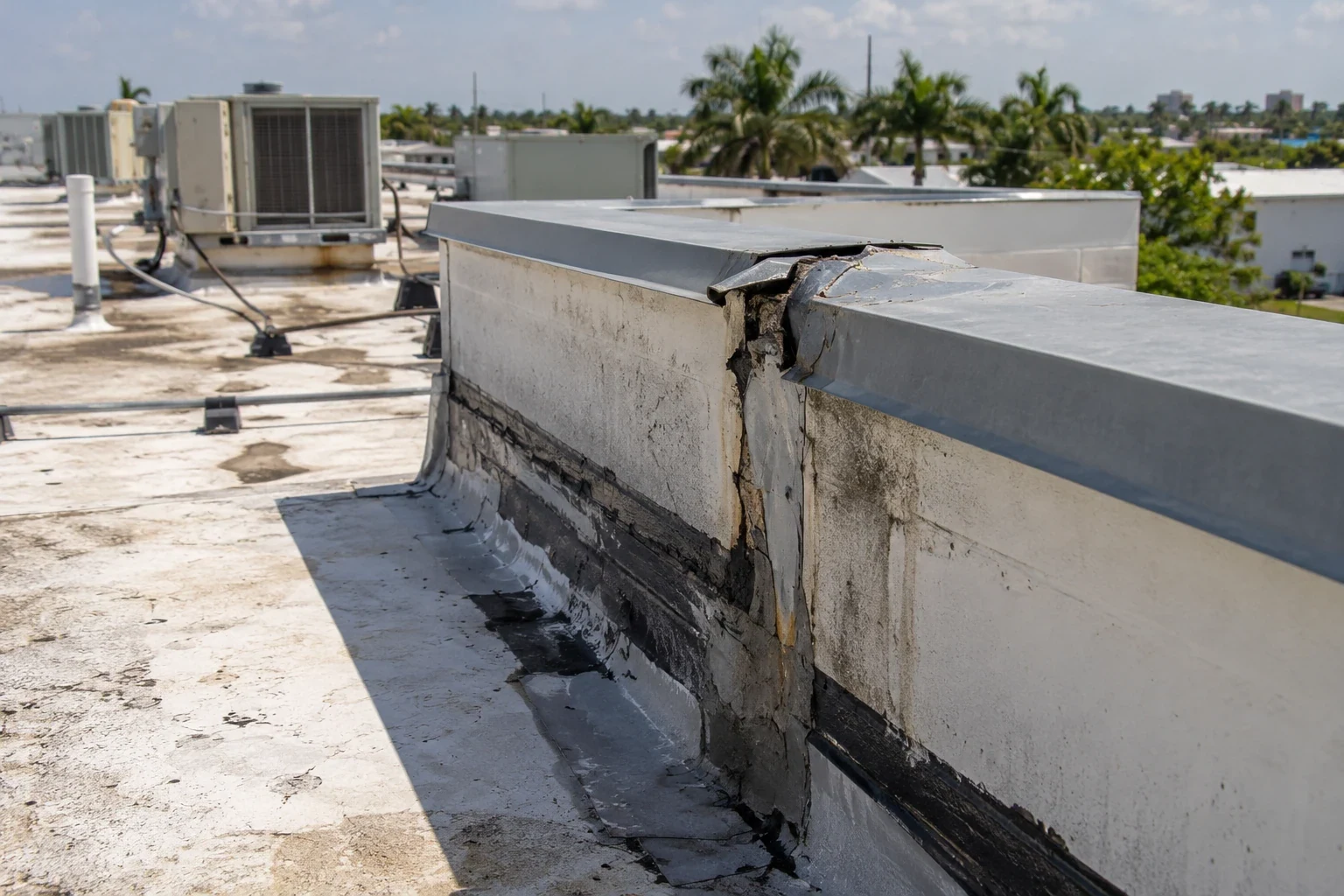
Membrane Puncture Repair in Pembroke Pines, FL
Membrane puncture repair on Pembroke Pines, FL commercial roofs: traffic mapping, moisture checks, membrane-matched patches and walk pads where wear repeats.
A puncture that sits along a worn path was made by traffic, and the next one will be made in the same place. That inspection finding changes the repair from a patch to a patch plus protection. For an owner in Pembroke Pines, FL, the useful questions are what made the hole, how much water has already reached the insulation and whether the pattern will repeat. A dropped tool, a service technician's route, a storm-borne branch and a mechanical contractor's ladder each leave a different mark. We read the mark, test the area beneath it and repair the membrane in a way that matches both the sheet and the cause.
Map the traffic before patching the hole
Most punctures on commercial roofs trace back to people. Technicians walk between rooftop units, carry tools to a fan and set ladders against the same parapet. Over months, the membrane along that route thins, scuffs and finally breaks.
We mark each puncture on a plan and draw the likely routes between equipment, hatches and ladders. If the holes line up along a route, the cause is traffic, and the repair includes protection. If they scatter without pattern, the cause may be debris, hail or a one-time event. Knowing which saves the owner from patching the same path every year.
Fresh punctures look different from old ones. A clean edge and bright material point to a recent event, while dirt-filled edges and algae suggest the hole has been open for a while and the insulation below has had time to soak. The date of the finding helps the owner judge how much damage to expect.
Check what the puncture reached
A hole in the top sheet may be just a hole, or it may be a path to the insulation and deck. We probe the area around each puncture for softness, check the underside of the insulation board where it can be seen and use a moisture meter or a scan to look for wet material.
If the insulation is dry, the repair stays at the surface. If it is wet, the wet portion is cut out and replaced before the patch goes on. A patch over wet insulation holds moisture in and fails again within a season. The wet season matters here: South Florida's May 15 to October 15 rainy period brings near-daily showers, which means a puncture can take on water within hours of being made. An infrared moisture survey maps the whole section when more than one hole is suspected.
Core samples taken near the hole confirm what the meter suggests. Each core is patched the same day, and its location is added to the plan so a later survey can find it.
Choose the patch by membrane
The patch must bond to what is on the roof. Thermoplastic sheets such as PVC take heat-welded patches cut with rounded corners. Rubber sheets take adhesive or tape patches over a cleaned, primed surface. Modified bitumen takes a torch-applied or cold-applied patch of compatible material. Built-up roofs take layered repairs.
We identify the sheet by markings, texture and behavior, then clean the area, cut the patch large enough to lap well beyond the damage and seal the edges. Rounded corners resist peeling. A patch that extends several inches past the hole in each direction holds longer than a tight one, and its edges are checked at the next visit.
Seams near a puncture get a probe too, since a seam that looks closed may be the real entry point and the hole merely the thing someone noticed. Finding both in one visit avoids a second leak call.
Add protection where the traffic goes
Walk pads are inexpensive and effective. A pad along the route between a hatch and a unit takes the wear that would otherwise go to the membrane. Pads around equipment protect the sheet from dropped tools and panel covers. At ladder landings, a protection board spreads the load.
We place pads where the traffic map shows wear, and we ask the facilities team to route contractors the same way. When the mechanical contractor services a unit, a short briefing at the hatch tells the technician where to walk. The cost is small compared with repeated patches, and the pattern of punctures shows the benefit in the next survey. Work on equipment curbs and supports often includes pad placement.
Wear pads come in several materials. We choose the ones that match the membrane, bond them in place or set them loose depending on the system and keep them clear of drains so they do not catch debris.
Handle storm-borne damage and debris separately
Debris thrown by summer storms is a common source of punctures in this market, and the stretch from mid-May into early July brings the greatest mix of wind, hail and flooding hazards. Wind carries branches, signs and loose roof items that can strike the membrane, and hail can bruise or perforate older sheets.
We distinguish those marks from traffic wear and document them with photographs, since a carrier may ask. A hail damage repair or a wind damage repair may sit alongside puncture work in the same visit. Debris is removed before patching, because a stray fastener or a piece of metal left on the roof will cut the next sheet.
Exposed fasteners from old equipment, cut conduit stubs and abandoned supports also puncture sheets. A short sweep during the walk removes or caps them, which prevents the next hole from forming.
Record each repair on the plan
The record lists each patch by location, size and cause, with before-and-after photographs. Over time it shows whether the punctures are decreasing after pads were added. Owners with buildings in Pembroke Pines and nearby cities such as Miramar or Hollywood can use the same plan format, and the record supports a conversation with tenants or contractors about who may enter the roof and how.
Interstate 75 and US 27 carry a great deal of truck traffic, but the roofs beside them face the same punctures as any other roof: tools, ladders and debris, which is why the controls are about people and storms, not location.
Commercial Roofing Questions
Why do punctures keep appearing in the same part of the roof?
Foot traffic and tool handling follow predictable routes, and the membrane along them wears. If the holes line up, the cause is traffic. The repair then includes walk pads and a routing rule, not only a patch.
Can a puncture be patched if the insulation underneath is wet?
Only after the wet insulation is removed and replaced. A patch over wet material traps moisture and usually fails within a season. We probe and scan around each puncture to find out how far water has traveled.
What patch material is used on a rubber or thermoplastic roof?
Thermoplastics take heat-welded patches of the same material. Rubber sheets take adhesive or tape patches over primed surfaces. We identify the membrane first, because the wrong patch peels off after a few weeks.
Are walk pads worth the cost?
Usually yes, on routes with repeated traffic. They are inexpensive compared with repeated patching and interior repairs. The traffic map shows where they are needed, and the next survey shows whether punctures have stopped.
How can a facility team prevent roof punctures by contractors?
Control roof access, brief each contractor on the walk routes and require a pre-work and post-work photo set. Pads along routes and a log of who entered the roof make damage easier to trace and prevent.