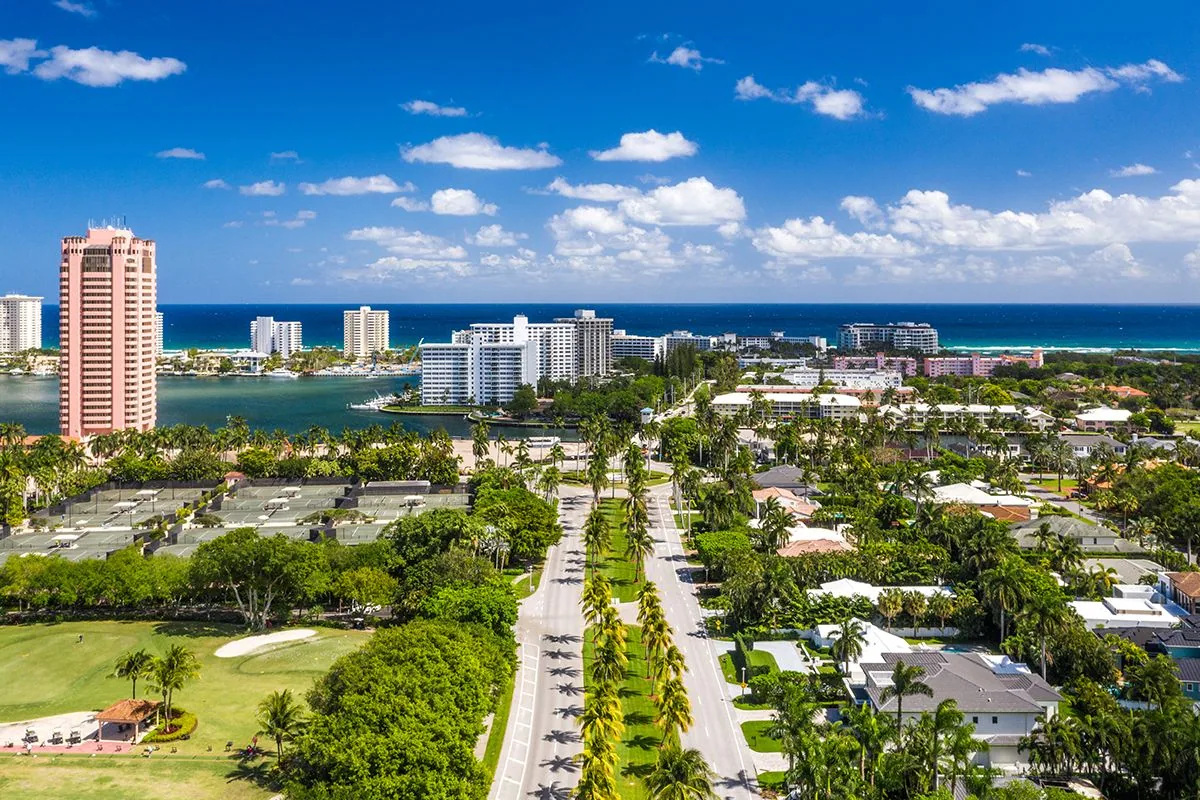
Commercial Roofing in Pembroke Park, FL
Commercial roof repair and replacement planning for Pembroke Park, FL buildings along the I-95 corridor, with drainage review and wet-season phasing.
Ponding at a single drain can reveal that a whole roof was built without enough slope. Pembroke Park lies between Hallandale Beach and Miramar and runs from Pembroke Road to the Miami-Dade line along I-95. The Alliance's profile of the town reports more than 700 businesses, though the count is undated, and it also describes a one-stop permitting process. In a compact corridor, buildings can sit close together and share walls, drains or delivery space, and a defect on one roof can become a question for the neighbor. In Pembroke Park, FL, we start with the drainage finding and let it decide how much of the roof is retained.
Drainage tells the roof's story
A roof that holds water after rain is carrying a weight it was not designed for, and the seams beneath that water wear faster than the dry field. We measure the depth and extent of ponding, note whether it is near a drain or in the middle of a span and trace the route from each low point to its outlet.
Often the cause is mundane: a clogged strainer, a drain set high or an added unit that blocked a path. Sometimes it is structural, and the roof needs tapered insulation to restore slope. Our ponding water repair work names the cause first, since a repair that ignores it will recur. The owner receives the findings with photographs and a recommended sequence.
We also check the secondary path. If the primary drain clogs, water should leave through an overflow scupper or opening set at the right height. Where that path is missing or blocked, a heavy storm can load the deck beyond what it was meant to carry. Adding or clearing an overflow is a small piece of work, and the roof report lists it as its own line so it does not get lost inside a larger scope.
Shared walls need shared decisions
Where buildings abut, the roof edge becomes a boundary. Flashings run up a wall that belongs to one owner and sheds water onto another's roof. A scupper in one parapet may drain a neighbor's field. We identify those shared details and record who controls each.
Before any work we ask the owner to speak with the neighbor if a shared wall or drain is involved. Agreement on access, on temporary protection and on who pays for the shared detail prevents disputes later. The scope drawing marks the line between the roofs, and the closeout photographs show it. That record matters if a leak appears near the line a year after the work.
Temporary protection also crosses the line. Debris netting, plywood walkways and sealed edges are placed so that nothing falls on the neighboring roof, and the neighbor is told the dates and hours in advance. Courtesy of that kind costs little and keeps a shared boundary from becoming a dispute.
Small commercial buildings carry concentrated risk
A restaurant, a repair shop and a showroom can occupy similar footprints and ask very different things of a roof. A restaurant roof carries grease exhaust and heavy equipment. An auto dealership roof covers vehicles and sales space that cannot take water. A flex building holds inventory with its own limits.
We take the use into account when we plan the repair sequence. A kitchen needs grease containment protected and exhaust paths kept clear. A showroom needs interior finishes covered. A flex unit needs racks protected. In each case the temporary protection goes in first, and the opening is sized to what can be sealed in a shift.
The wet season sets the working hours
Most of the year's rainfall in South Florida arrives in the wet season, and storms are expected most afternoons. Hail and damaging wind are possible in the early part of the season, while tropical systems become relevant in late summer and fall.
We start early, open small and close before storms build. A commercial roof leak repair in this season often begins with a temporary seal and a record of the water path, and the permanent repair follows once the roof is dry enough to bond. Immediate leak work is separated from capital work so the owner can judge each on its merits.
Pick a system that tolerates ponding
If a roof will hold some water even after drainage corrections, the system should tolerate it. Heat-welded and fully adhered membranes handle intermittent standing water better than some mechanically attached ones, and a modified bitumen roof offers a durable surface where foot traffic is common. The selection also depends on the existing substrate and the building's equipment.
We compare complete assemblies, including insulation, cover board, flashings and edge metal, and we state what each includes for wet insulation and curb repair. The comparison lets the owner see which proposal includes the removal boundary and which leaves it open. Owners with buildings in Hallandale Beach or Miramar can request the same comparison for each.
Retain what the survey supports
Retention decides how large the project is. If the survey shows dry insulation and a sound base layer, the owner may keep both and replace only the weathered surface. If water has spread through the board, the removal boundary expands to follow it. We list each layer with its condition and a recommendation, and we show the cost of each path.
On a small commercial roof, the cost of mobilizing a crew is a large share of the total, so grouping repairs into one planned visit is usually cheaper than several small calls. We prepare a work package that gathers the drain corrections, the flashing repairs and any deferred items into a single sequence, and we mark which items can wait. The next work package is then a known item on the owner's calendar, not a surprise.
That approach also helps in conversations with lenders and buyers, who often ask for a roof history. A dated survey, a list of completed work and a plan for the remainder answer those questions directly.
Commercial Roofing Questions
Does standing water after a storm mean the roof must be replaced?
Not by itself. Short-term ponding near a drain may only need clearing. Water that persists for days, or collects over seams, points to a slope or drain problem that must be corrected. We measure it, find the cause and recommend repair or replacement accordingly.
Who pays for repairs to a drain shared by two roofs?
The lease, deed or neighbor agreement governs that. We document the shared detail and describe the repair, so the owners can allocate cost. Agreement before work begins prevents delays at the closeout.
What can a restaurant do to protect its kitchen during roof work?
Share the service hours, the location of exhaust equipment and any areas that cannot be shut down. We protect exhaust paths, cover openings and schedule work above the kitchen around peak service. Interior protection goes in before the first cut.
How is a modified bitumen roof inspected?
We check laps, flashings, surfacing granules and blisters, and we probe for wet insulation. Cracks at laps and splits at corners are common early signs. Findings are mapped so repairs can be sized to the areas that need them.
Why separate emergency leak work from capital work?
Because they answer different questions. Emergency work stops water entry now. Capital work addresses the condition behind the leak. Keeping them apart lets the owner see what the emergency cost and what the roof still needs.