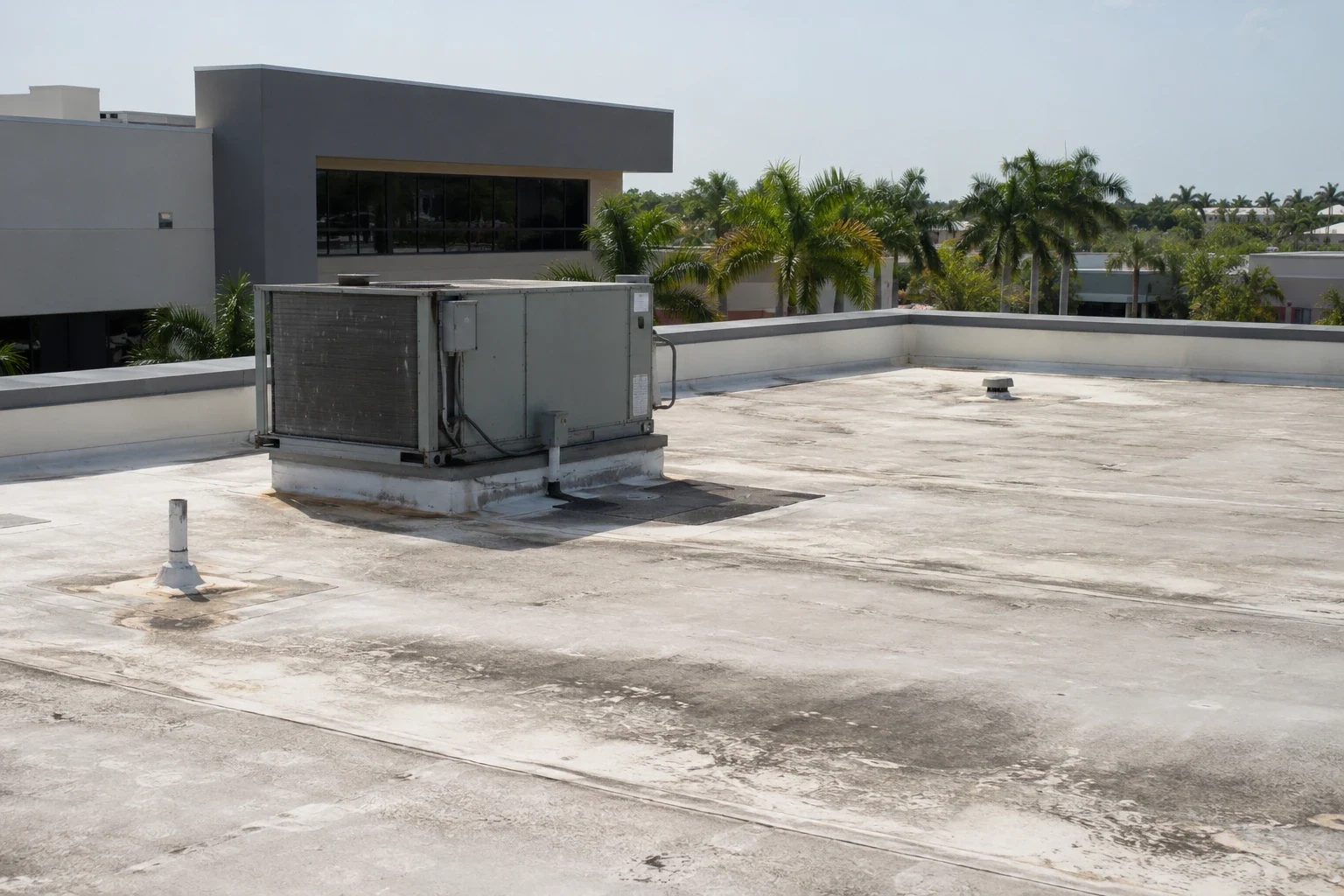
Manufacturing Plant Roofing in Pembroke Pines, FL
Assess manufacturing-plant roofing in Pembroke Pines with equipment interfaces, material exposure review and work phases matched to the operating process.
A deteriorated flashing beside a process exhaust needs examination of both the roofing connection and the exposure reaching it. Rebuilding the membrane without considering the discharge or support can leave the same condition acting on the new work. In Pembroke Pines, FL, we assess manufacturing-plant roofing by connecting roof findings with the operating equipment involved. The owner needs a defined correction and the trade coordination necessary to make it workable.
Roof work above manufacturing activity can involve occupied production areas, sensitive equipment and limited interruption windows. Those conditions need identification before removal is scheduled. We examine the roof and discuss the operating consequence with the responsible personnel. A comparison with warehouse roofing work may inform stock protection, while the actual process equipment and activity determine the additional constraints at the plant.
Identify the exposure at the failed detail
An exhaust, drain line or other rooftop component can introduce a material or temperature exposure that affects the roof connection. We examine visible deterioration and ask the equipment personnel to establish the relevant operating condition. Material suitability needs evaluation for that actual exposure. The membrane name alone is not sufficient evidence that a proposed repair can tolerate every substance or condition produced by the equipment.
Correcting the roof may need a change to the discharge or its routing as well as compatible new flashing. We identify that dependency before selecting the scope. An owner should understand which part of the work addresses the failed material and which part addresses the continuing exposure. That distinction prevents a roofing package from being accepted as a complete correction when another responsible trade still needs to resolve the source of the condition.
Supports and penetrations require coordinated examination
Equipment movement, piping and support arrangements can stress the water-control connection. We inspect those interfaces and identify where a stability or capacity question needs qualified assessment. A patch should not become an improvised restraint for a component whose support remains unresolved. The roofing scope follows the appropriate support decision and provides a suitable connection for the selected assembly.
For curb and equipment-support work, handling or shutdown can require coordination with personnel responsible for the process. Access beneath or beside the component may be restricted while it operates. We identify those requirements before the roof is opened, so the correction can proceed through a defined sequence. A compact visible defect can require a substantial coordination package where its supporting component cannot be reached under normal operation.
Examine concealed material before choosing retention
Repeated water entry or surface deterioration can leave affected insulation beyond the visible defect. We investigate the assembly where the findings warrant it and identify a removal boundary suitable for the reconstruction. Selective openings can establish layers, moisture and support condition. The owner should know which observations support retention and which remain unresolved before a new membrane or detail closes the area.
A manufacturing roof assessment can distinguish localized repairs from distributed deterioration requiring another capital decision. Some conditions may be corrected during a coordinated equipment interval, while others need a wider roof package. We compare those options using the same findings, including substrate and drainage corrections, rather than assume that avoiding a process interruption makes continued retention technically suitable.
The work boundary needs an operating decision
Production activity beneath an opening may need protection, temporary relocation or a defined interruption. We discuss sensitive equipment, material handling and personnel access with the manager before scheduling removal. The roofing plan should identify the effect on the actual operating area, not present continued production as an unconditional promise. Each package needs a practical way to expose, correct and close the assembly.
A flex-industrial building can involve separate occupants or processes with different requirements. We identify those differences when they affect the work interval or material route. Some activity can continue elsewhere while an affected area is restricted. The owner benefits from that specific phase discussion because it makes the capital scope and operational adjustment reviewable together, rather than discover their conflict once the roof has been opened.
Select a compatible assembly
Manufacturing roofs can use several commercial systems, depending on their construction and service conditions. A PVC membrane assembly may be considered where appropriate, with actual exposure suitability and installation requirements evaluated for the selected system. Other options require the same discipline. The proposal should include insulation, attachment and detail work instead of presenting membrane chemistry as a complete construction recommendation.
The current Florida Building Code, 8th Edition (2023), includes Energy Conservation requirements relevant to applicable roof work in Pembroke Pines. We review the project's requirements and physical interfaces together. Added insulation can change curb height or drainage geometry, which may need equipment coordination. An energy-related change still needs a workable flashing and outlet arrangement rather than treat field thickness as independent of the surrounding plant equipment.
Local access gives context to staging
Chapel Trail includes warehouse and flex properties with industrial-use zoning. For a manufacturing roof project in the Chapel Trail commercial area, we assess the actual process and building rather than infer it from the zoning description. Loading, roof access and sensitive equipment can shape staging. The operating personnel need to identify the constraints that apply to the proposed work package.
Most industrial properties in the city lie in the Northwest Pembroke Pines Industrial Area and have access to US 27 and Interstate 75. Those connections provide context for the market's industrial uses without settling material movement at a particular plant. South Florida wet-season storms also affect removal limits and temporary closure. We coordinate access and weather decisions so the assembly can be protected while necessary process or equipment work proceeds.
Closeout should preserve the shared detail
The completed record needs the roof correction and the coordinated equipment changes where they affect the interface. Photographs before closure can preserve support and flashing findings that later become concealed. We identify retained components and observations outside the authorized work so another service visit can understand what was changed. The owner should not have to reconstruct the shared detail from separate descriptions that omit each trade's connection to the roof.
Where broader work remains, replacement planning can distinguish the next roof phase from completed immediate corrections. We identify maintenance requirements and equipment changes that should prompt another examination. The capital decision then follows the assembly's condition and the operating interval needed to correct it. A manufacturing roof becomes easier to manage when its process interfaces and retained areas remain clearly recorded throughout subsequent work.
Commercial Roofing Questions
Does an exhaust-related defect need another trade?
The equipment condition and exposure may need assessment by the responsible personnel before the roofing correction is finalized. We identify observed deterioration and the interface needing attention. Where discharge or support changes are necessary, the scopes should be coordinated. Replacing membrane alone should not be accepted as a complete response while the condition acting on it remains unresolved.
Can repairs fit a planned production shutdown?
The roof geometry, removal depth and coordinated equipment work need comparison with the available interval. Some packages can fit that window, while another may require a different phase or earlier investigation. We identify the work needed to leave a protected assembly at its end. The shutdown schedule should be evaluated against construction prerequisites rather than assume that every concealed correction can be completed within it.
Will you confirm resistance to our process materials?
The actual substance and service conditions need to be identified and reviewed against the selected system. We examine the affected area and coordinate the information necessary for that evaluation. A general membrane description does not establish compatibility with every exposure. The proposal should explain the relevant material question and any equipment correction needed before the roof connection is rebuilt.
What should be included in a phased capital scope?
Identify roof removals, concealed material assumptions, equipment interfaces and the operating adjustment needed for each package. We distinguish established work from further investigation or design questions. Material handling and daily closure belong in the phase as well. That lets the owner compare a coordinated construction decision instead of separate roof and process schedules that leave their shared detail unresolved.