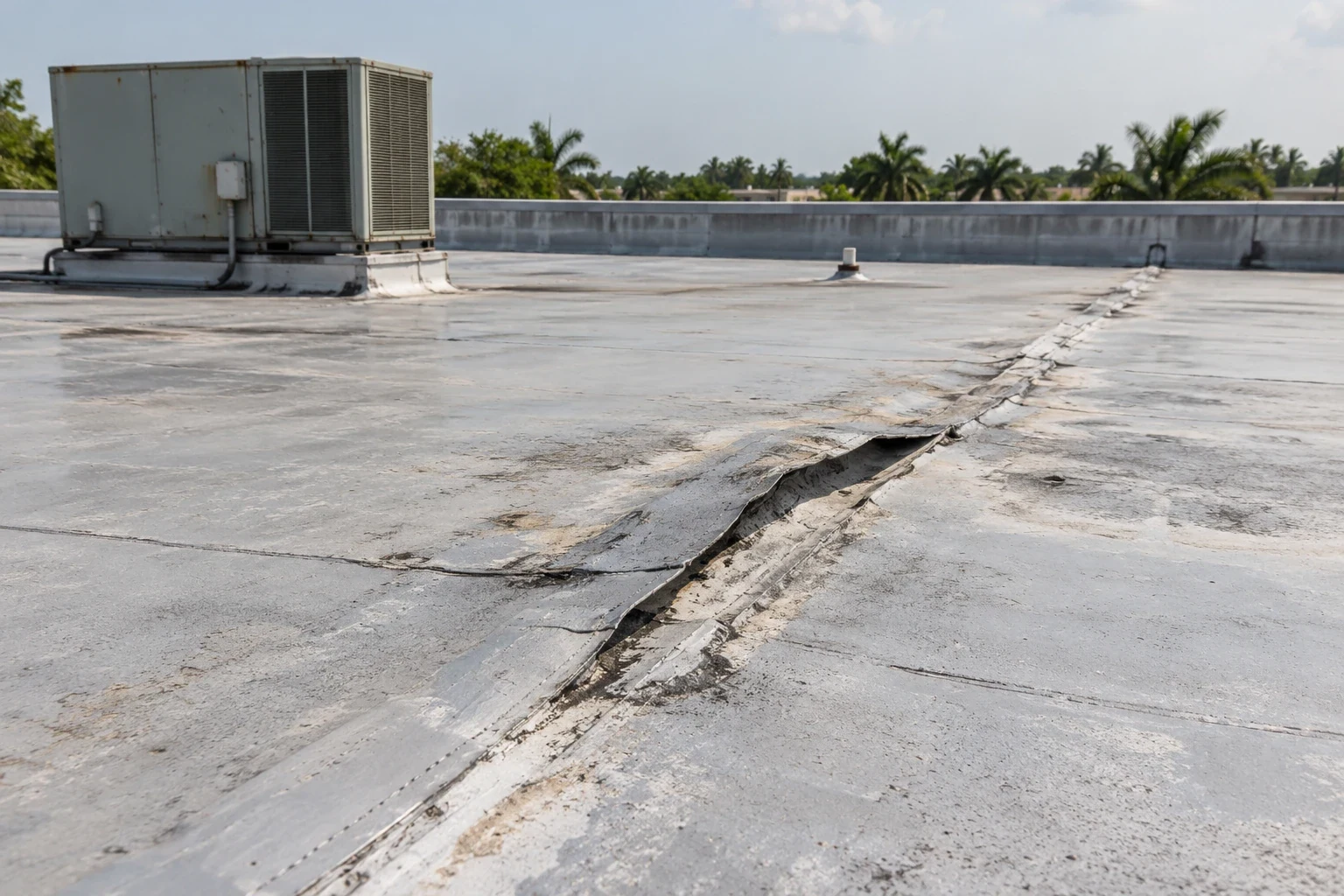
Fire Damage Roof Repair in Pembroke Pines, FL
Fire damage roof repair in Pembroke Pines, FL: deck and structure testing, smoke and water separation, temporary protection and code-aware rebuilding scopes.
After a fire, the roof finding that matters most is not the burn. It is what lies beneath it. Charred membrane tells us where the heat peaked, but the deck, the insulation and the supports decide whether the roof can be repaired in sections or must come off. For an owner in Pembroke Pines, FL, the first questions are whether the structure is safe to walk, how far the heat and water reached and what must be protected before the next storm. The South Florida wet season brings near-daily showers from May 15 to October 15, so an open or weakened roof cannot wait for a long investigation. We sequence the work to protect the building and keep evidence intact.
Clear the site safely first
A fire-damaged roof is not a normal work surface. Deck sections may have lost strength, supports may be compromised and hidden hot spots can remain. Before anyone walks the roof, the fire authority and, where needed, a structural engineer confirm that access is safe.
We do not start with a ladder. We start with the engineer's clearance and a plan for fall protection and load limits. Where the roof cannot be walked, we use a drone for imaging and work from lifts at the edges. Safety decisions are written down and shared with the owner and the carrier, because they affect what evidence can be gathered and when.
Lightning-related fires, electrical fires and fires that begin in rooftop equipment each leave different patterns. We note where the burn starts and which equipment sits nearby, because the origin affects both the repair and the carrier's questions.
Test the deck and structure
Heat can weaken steel deck by warping it, damage wood by charring it and spall concrete by driving moisture out of it. Each material tells a different story. We check the deck for deflection, discoloration, fastener pull-out and loss of section, and we probe the underside from inside where access allows.
The engineer sets the limits for what can be retained. Deck that is sound can stay. Deck that is warped, charred or fastener-loose is replaced. The result is a deck map showing retained, repaired and replaced areas, and the roofing scope follows it. A roof built over unsound deck will fail early, so this step is not shortened to save time.
Wood-framed and mixed-construction roofs need extra care, since charring can hide deeper loss. The engineer may call for sampling or load tests before approving reuse of any framing.
Separate heat, smoke and water damage
A fire leaves three kinds of damage. Heat melts and distorts membrane and insulation. Smoke contaminates surfaces and, in some cases, adhesives. Water used to fight the fire soaks insulation and deck, often far beyond the burned area.
We map each separately. A moisture survey finds the extent of the water, since fire-fighting water can travel across large areas of roof and into ceilings. Heat damage is visible as blistering, melting or shrinkage. Smoke is checked by testing whether the surface will accept new adhesive. The three maps together set the removal boundary, which is often larger than the burn alone.
Standing water left on the roof after firefighting adds its own load and soaks the layers below, and the correction follows the logic of ponding water repair once the structure is cleared.
Smoke residue can prevent adhesives from bonding. We test a small area with the chosen adhesive before committing to a larger bond, and we clean surfaces to the standard the membrane maker requires.
Define the removal boundary
The removal boundary is drawn where retained material is sound, dry and compatible with the new system. Affected insulation comes off. Contaminated or heat-damaged membrane comes off. Sound areas outside the boundary can stay, with a cover board over them if needed.
We state the boundary on a plan with quantities, so the carrier and the owner can see what is being removed and why. Where the findings are uncertain, the scope names a unit price for deck replacement or insulation removal and sets a rule for adjusting it. A cover board and insulation package is then specified to match the building's current needs.
The scope also names retained roof sections in plain language, so there is no doubt about what remains and who is responsible for it afterward.
Protect the building while it waits
The roof may stay open for days or weeks while the investigation proceeds. During that time, we install temporary protection: tarps fastened through battens over burned areas, sealed edges and drainage paths kept clear. Our emergency roof repair response is available at any hour for this step.
Photographs are taken before anything is covered, and the cover is built to withstand the next storm. Fire repair leaves the deck open to the afternoon rain that South Florida's summer pattern brings, so temporary protection goes on before anything else and stays until the permanent scope is closed. A cover that survives a normal afternoon is not enough in those months.
Debris from the fire can also cut the membrane that survived, so loose material is cleared before the cover goes on, and any new openings are handled as a membrane puncture repair before the cover is fastened.
If rooftop equipment was damaged, its curbs and supports are inspected and rebuilt as needed. New equipment is set only after the flashing is complete.
Coordinate the carrier and rebuild to current code
The carrier and any investigator need access and a record. We keep the evidence in place until they release the site, photograph each stage and log who visited. Because the city lies in the High Velocity Hurricane Zone, a rebuilt roof here is permitted under the 2023 Florida Building Code edition and needs product approvals that match the assembly.
The scope lists those items separately. Our claim assistance follows the same structure, and adjusters and restoration contractors receive a file organized by roof section. Owners in Miramar or elsewhere can expect the same sequence: safety, structure, boundary, protection, rebuild.
Interstate 75 and US 27 carry the heavy material deliveries for large rebuilds in the area, so early ordering of products that need approvals shortens the time a temporary cover has to stay in place.
Commercial Roofing Questions
Can a fire-damaged roof be walked right away?
Not until the fire authority and, where needed, an engineer clear it. Deck may be weakened and hot spots may remain. We start with clearance, then use drones and lifts for imaging where walking is unsafe.
Why is the removal area larger than the burned area?
Because water used to fight the fire soaks insulation across a wide area, and heat and smoke can affect material beyond the visible burn. A moisture survey and testing set the boundary where retained material is sound, dry and compatible.
How is the roof protected while the carrier investigates?
With temporary covers fastened through battens, sealed edges and cleared drainage paths. We photograph the roof before covering it and build the cover to survive the next storm, which in the wet season arrives almost daily.
Does the hurricane zone affect a fire rebuild?
Yes. Permit forms for the rebuilt section are confirmed with the city before material is ordered, which keeps the insurer's scope and the code requirement aligned. We confirm the scope with the city.
What should an owner document after a roof fire?
Photographs of the roof and interior, the fire report, dates and times, receipts for temporary protection and contact details for everyone who visits. These records support the claim and help the contractor scope the work.