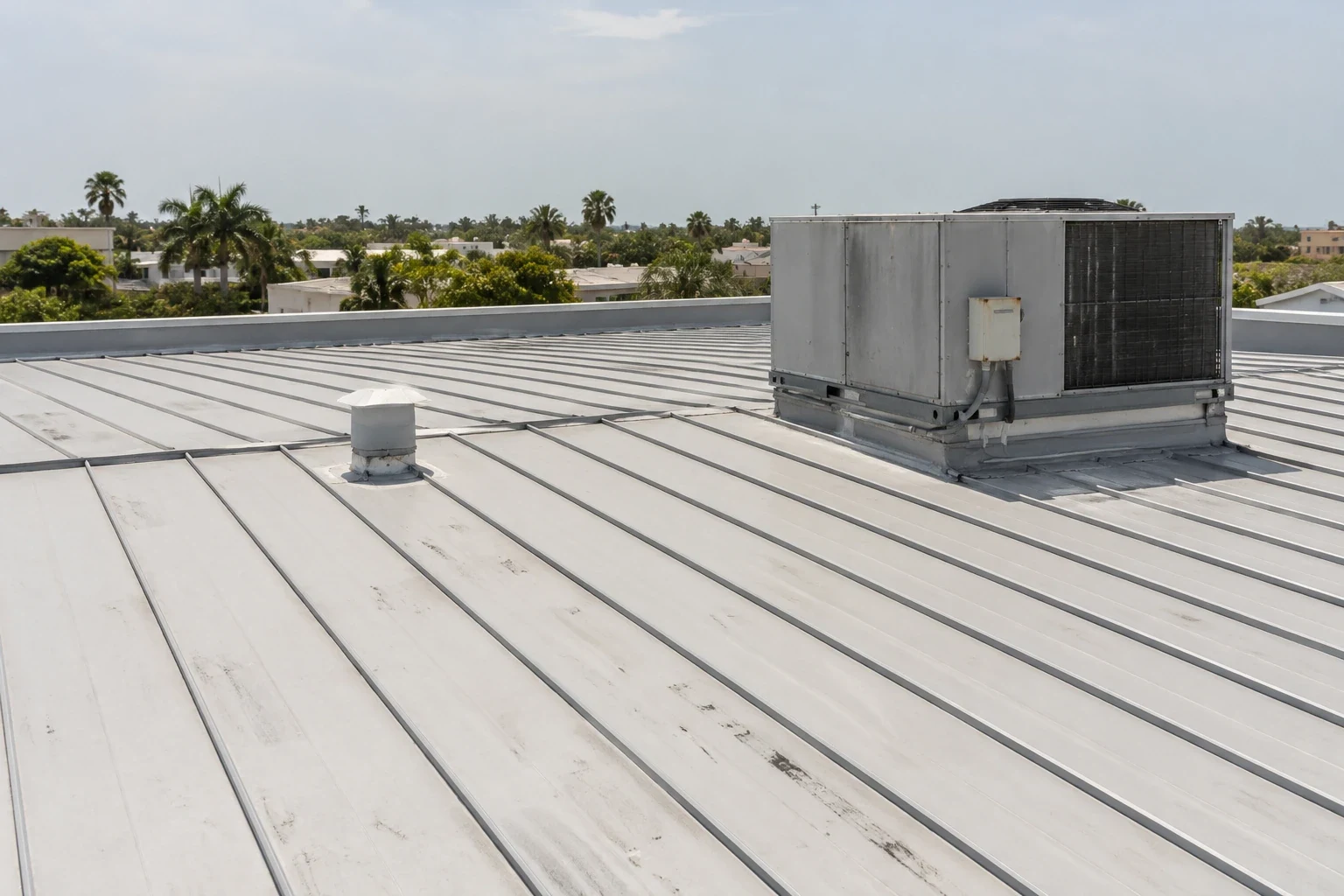
Modified Bitumen Roofing in Pembroke Pines, FL
Assess modified bitumen roofing in Pembroke Pines with lap condition, flashing support, application-method review and a clear repair or replacement scope.
An opened sheet lap beside a blistered area presents two findings that may need different corrections. The lap can admit water, while the blister calls for assessment of adhesion and the material below it. In Pembroke Pines, FL, we examine modified bitumen roofing before combining those observations into a capital recommendation. The owner needs to understand which components are suitable to retain and what the proposed opening will resolve.
Modified bitumen systems use reinforced asphalt-based sheets with polymers that alter their properties. SBS and APP systems have application and material requirements that should be identified for the selected roof. We review the installed assembly and details before choosing repair materials or a new package. A comparison with built-up roofing should address actual construction and operating conditions rather than assume that all asphalt-based roofs require the same method.
The lap needs a complete assessment
Sheet laps, seams and terminations need a suitable connection to the adjoining material. Weathering, contamination or an unsuitable prior patch can affect how that connection is restored. We examine the lap and the surrounding sheet, then identify a removal and preparation boundary appropriate to the repair. A new patch must connect to a serviceable assembly rather than simply extend over the visible opening.
Blisters or ridges may involve another condition requiring investigation. Their extent and effect on the assembly should be examined before a surface cut or overlay is selected. We identify whether the finding affects attachment, water control or the supporting material. The owner should receive a correction tied to that condition, not a general instruction to cover every surface irregularity with another sheet.
Flashing support affects continued service
Changes in plane at walls and curbs can concentrate movement in asphalt-based flashing. Securement, support and the available material geometry all influence the detail. We inspect those interfaces and identify where reconstruction is necessary. A separated corner beside an unstable component may need coordinated support work before the membrane connection can be corrected appropriately.
Additional insulation during a roof project can reduce the available flashing height. We compare the proposed roof elevation with the curb and termination before accepting retention. Where flashing and penetration correction is needed, the scope should identify the adjoining material and equipment connection. A new field surface is not a complete assembly recommendation if those altered interfaces remain unresolved.
Application method belongs in the operating plan
Modified bitumen can involve different application methods depending on the selected product and assembly, including self-adhered, cold-applied or heat-based approaches. Their preparation and installation requirements are not interchangeable. We evaluate the system against the substrate, details and project conditions before selecting the method. The owner should know why the proposed approach fits the roof and what operating considerations it introduces.
Heat-based work needs appropriate fire precautions and project procedures. Other methods also have specific requirements for surface preparation, material handling and conditions. We discuss air intakes, occupied areas and sensitive activities where they affect the installation sequence. Material selection should not be finalized without evaluating those practical constraints, particularly where a compact flashing correction sits beside equipment serving rooms that remain in use.
The concealed assembly still matters
A granulated or coated surface can conceal affected insulation or prior roof layers. We examine the available construction information and investigate concealed material where the findings warrant it. Leak reports, soft areas and questionable transitions can identify a need for selective openings. The removal boundary should follow confirmed condition and the connection needed for reconstruction, rather than assume that a visually continuous sheet represents a suitable entire assembly.
Where recover eligibility is being considered, the existing layers, moisture and support require assessment alongside the proposed attachment. A rubber membrane alternative likewise needs an appropriate substrate and transition details. The owner can compare systems meaningfully only after those retention and removal assumptions have been made consistent across the proposed packages.
Rain exposure influences the daily package
South Florida's wet season extends from mid-May through mid-October, bringing frequent showers and thunderstorms. Modified bitumen installation needs conditions and preparation appropriate to the selected method. We evaluate the forecast, opening size and work required to complete connections before starting removal. New insulation or a prepared substrate should not be left exposed merely because the original phase assumed a longer clear interval.
Temporary boundaries and drainage need particular attention while work is incomplete. We identify how water will reach an outlet and how the unfinished area will be closed at the end of the shift. Weather or additional substrate correction may require the phase to change. The useful schedule accounts for that construction consequence rather than treat the daily opening as fixed regardless of what the roof reveals.
Local use sets access priorities
Completed offices in the SW 145th Avenue Office Corridor can require coordination with occupied suites and rooftop equipment. We discuss the operating space beneath a proposed repair and the access needed for the selected application method. A project that leaves tenants in place still needs defined protection and a practical sequence at affected connections. The roofing package should identify those dependencies before work begins.
Chapel Trail includes warehouse and flex space, with loading and inventory concerns that can alter staging. At a property in the Chapel Trail commercial area, we identify material routes and any interior protection needed beneath openings. Those conditions can support a different phasing plan from an office roof. We assess the actual building rather than infer its membrane, insulation or condition from the area's commercial use.
The recommendation should identify its limits
Localized repair can be appropriate where the adjoining sheet and support remain suitable. Distributed deterioration, affected insulation or several deficient details can require broader capital work. We compare those findings and explain what another repair would leave unresolved. The current Florida Building Code, 8th Edition (2023), and applicable project requirements also need review where the proposed scope alters the assembly.
After construction, maintenance of the asphalt-based roof should track drainage, detail movement and damage from later equipment work. We record the installed construction and any areas retained outside the package. Suitable future repairs need that information because an unidentified treatment can complicate the next connection. The completed work should leave a clear record of what was corrected and a useful basis for the next asset decision.
Commercial Roofing Questions
Can a blister be covered without opening it?
The blister's condition and effect on the assembly need examination before a correction is selected. Some findings may remain manageable, while others affect attachment or require removal. We identify the specific concern and appropriate investigation. Covering every irregularity with another layer can conceal the question without establishing whether the retained material provides a suitable base.
Does SBS require the same application as APP?
The selected products and assembly define their installation requirements. Polymer descriptions alone do not establish one universal method for every sheet. We review the system and substrate before proposing the approach. The scope should identify preparation and operating considerations appropriate to that material rather than assume that any asphalt-based membrane can be installed using the previous roof's method.
Why can the repair extend past an open lap?
The new connection needs surrounding material suitable for preparation and bonding. Weathered sheet, old treatments or affected insulation can require a wider boundary. We examine those conditions and explain the removal needed. The proposed repair should restore a workable assembly rather than fit a predetermined patch size that leaves its edge connected to unsuitable material.
How should application methods be compared?
Consider substrate suitability, detail access, occupied space and the specific requirements of each system. Preparation and precautions can differ, so the owner should evaluate the full work package. We explain the construction consequence of the proposed method and any operating coordination needed. The comparison should resolve the roof condition and installation constraints together instead of focusing solely on the finished sheet material.