Roofing for Manufacturers in Pembroke Pines, FL
Roof inspection, chemical-resistant membranes and phased replacement for manufacturers in Pembroke Pines, FL, planned around production lines and equipment.
A softened patch of membrane around a process stack is an inspection finding that changes the material choice for the whole section. The surface may look normal ten feet away, yet the sheet near the discharge has absorbed what the line emits. For a manufacturer in Pembroke Pines, FL, that finding matters more than the roof's age, because it decides whether a standard membrane will last or whether the exposure calls for a different system. According to the city, northwestern industrial land hosts light manufacturing and transportation-related uses, reached from US 27 and Interstate 75. We begin with the exposure, then match the assembly, the schedule and the records to the plant.
Find the exposure first
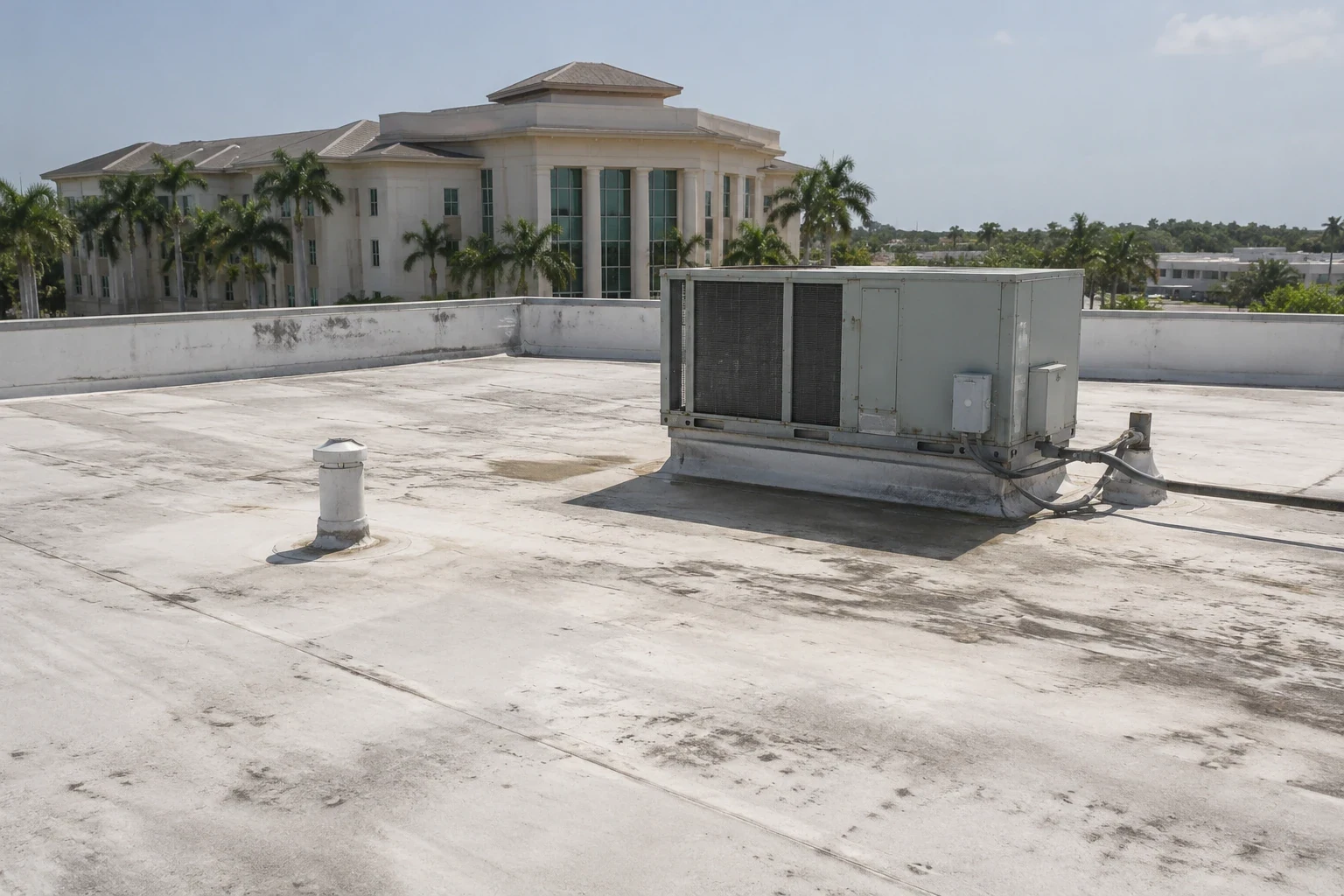
We walk the roof with a plan of the process: stacks, exhaust fans, makeup air, dust collectors, cooling equipment and any venting from tanks or ovens. Around each discharge we photograph staining, press the surface for soft spots and check seams and flashings for swelling or lifting.
The goal is to tell chemical or heat damage from weather and age. Damage that is limited to the area near a discharge calls for a protective detail or a different membrane there. Damage that is spread evenly across a section calls for a wider response. The plant engineer tells us what the process emits, how hot it runs and whether the line is changing, since a new line can change the exposure overnight.
Particulates matter as well. Dust that settles in valleys and around drains holds moisture against the sheet and clogs outlets, so a plant with a dusty process may need more frequent drain clearing than a clean one. We set the visit interval from what we find.
Match the membrane to the process
Different exposures favor different systems. PVC and KEE-based sheets are formulated for better resistance to oils, fats and many chemicals, while other membranes suit a clean roof and a poor choice near a discharge. Heat from exhaust adds a second factor, since high temperatures soften some materials and stress seams.
We write the choice into the scope with the reasons, so the plant, the insurer and the manufacturer's representative can see the logic. Product questions go to the manufacturer's published resistance data before work starts. Where the exposure is limited to a small area, a replaceable wear pad can protect the surrounding roof and extend the interval to the next capital item.
A trial section is sometimes the right proof. Where the exposure is uncertain, a small area is built with the proposed system near the discharge, and the plant watches it through a season before the whole roof is committed.
Keep production running
A plant cannot stop for a roof, and most do not need to. We divide the roof into sections, open one at a time and close each at day's end. Hoisting and staging stay away from truck courts and loading doors. Debris and dust control protect product, air intakes and clean areas.
Some tasks need planned outages: work directly above sensitive lines, crane lifts over live equipment or hot work near flammable materials. We identify those tasks early and place them in the plant's scheduled shutdowns. For a facility on the northwestern industrial land near the northwest industrial area, truck routes and shift changes set the delivery windows for material.
Material handling follows the plant's own safety rules. Crane lifts, lockout procedures and permit-to-work systems are agreed before the first day, and the crew attends the plant's site safety briefing so there is no gap between its rules and ours.
Coordinate equipment, lines and utilities
A manufacturing roof carries ducts, conduit, piping and sometimes process lines. Before any tear-off we mark each one and confirm what can move. Temporary supports keep lines in service where they must stay, and the membrane is cut and sealed around them with details suited to the movement.
Curb and support work is sequenced with the mechanical trade. A curb and support rebuild is finished and flashed before the unit is reset. Abandoned penetrations are capped or removed in the same visit. The plant receives a drawing of the final layout, which becomes part of the roof record and helps the next trade avoid damage.
Fire protection is part of the same plan. Where a detector or suppression line runs near the roof opening, the plant's team decides whether to isolate it, and the roof crew works to that decision.
Plan around the wet season and wind code
Production buildings face a long rainy stretch from mid-May to mid-October, and its earliest weeks bring the most severe mix of damaging wind, tornado, lightning, hail and flood hazards. A plant roof that is open in that window needs temporary protection staged and a sized opening. We set daily limits based on the forecast.
The plant's roof falls under the High Velocity Hurricane Zone rules and the 2023 code edition. Reroofing follows specific permit forms and product approvals, and we confirm the scope with the city before pricing. For a manufacturing plant and a nearby flex industrial building, the same permit questions apply, and we answer them for each building separately.
Wind and uplift ratings matter at corners and perimeters, where equipment screens and parapets can catch the wind. Attachment of those items is checked before the season, since a loose screen can damage a new membrane in a single storm.
Record the roof for the plant file
Engineers, insurers and customers sometimes ask about the building envelope. A roof record with exposures, repair history, moisture surveys and photographs answers them. A manufacturer working with logistics and 3PL operators can share the relevant parts of the record with them, and general contractors planning plant additions can use the same file to understand the existing roof.
The record also carries the warranty file. Some coverage depends on specific details near equipment, so the plant can see which repairs it may make itself and which need the manufacturer's input.
Commercial Roofing Questions
How can a plant tell chemical damage from ordinary roof aging?
Location gives it away. Damage that clusters around a discharge and fades with distance is chemical or heat related, while damage spread evenly across a section tracks weather and age. We map the staining and softness against the process layout to separate the two.
Which roof system is best near exhaust that contains oils or solvents?
Systems formulated for oil and chemical resistance, such as KEE-based sheets and many PVC products, are common choices. The final selection depends on what the exhaust contains and how hot it runs. We review the process data and manufacturer information before specifying.
Can roofing proceed without stopping production?
Usually, with sectioned work, protected product and defined staging. Tasks over sensitive lines or near flammables may need a planned outage, and we schedule them for the plant's regular shutdowns.
What changes when a plant adds a new production line?
New lines add penetrations, exhaust and loads and can change the exposure of nearby roof areas. We update the roof record when equipment changes so that repair and replacement plans reflect the building as it operates now.
How does the hurricane zone affect a manufacturer's reroof?
A reroof here calls for zone-specific permit forms and approved products, which is why the roof package is reviewed with the plant's facilities lead early. The permit scope is verified with the city, the assembly is matched to its approvals, and the paperwork joins the roof record kept for the plant.