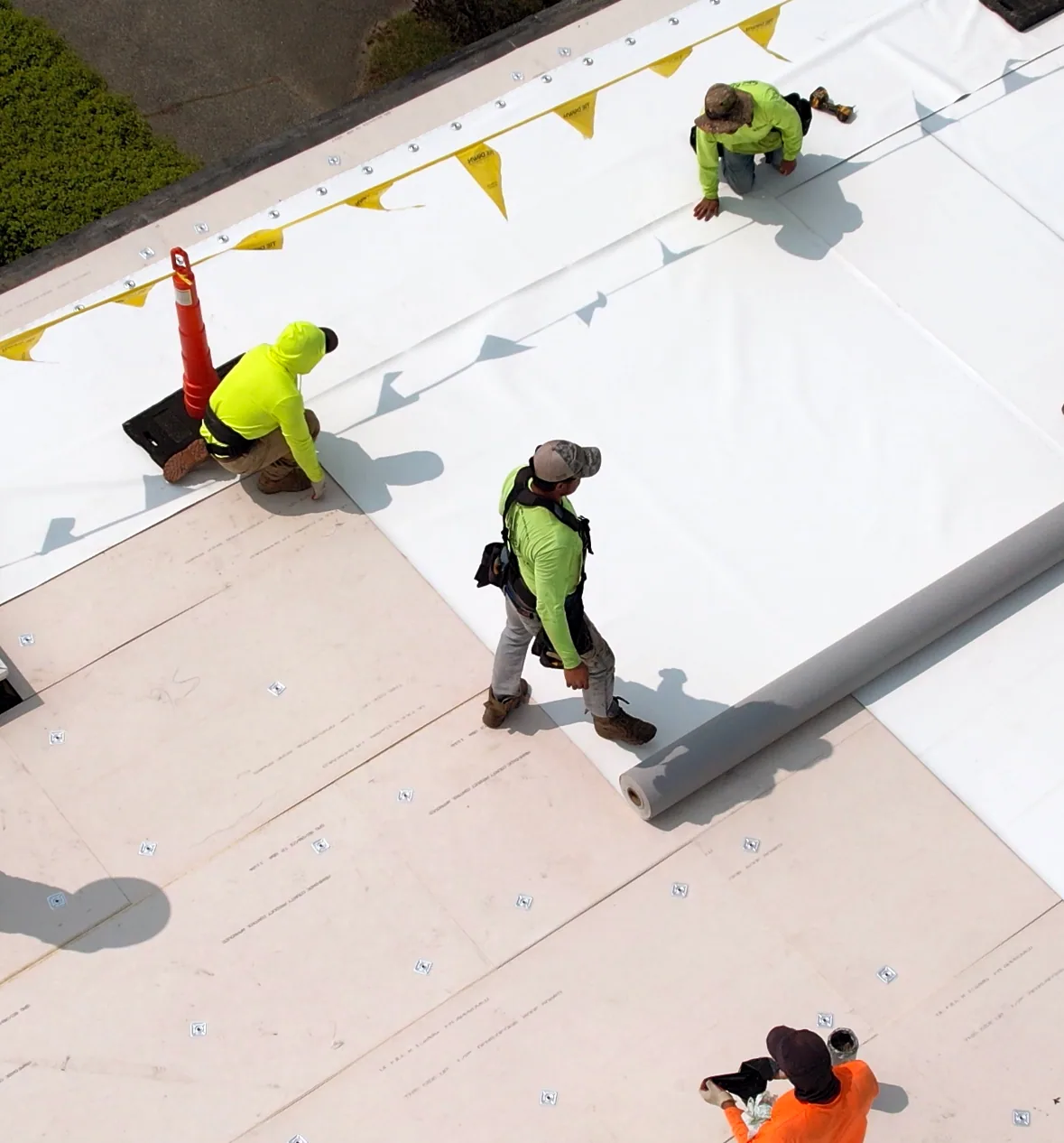
GAF Commercial Roofing Systems in Pembroke Pines, FL
GAF commercial roof systems in Pembroke Pines, FL: TPO and modified bitumen repair, HVHZ approval checks, wet-season sequencing and replacement decisions.
A GAF label on a roof plan tells an asset manager which maker supplied the membrane, but the inspection finding that matters is which of its systems sits on the deck. GAF supplies single-ply TPO under its EverGuard name and modified bitumen sheets such as Liberty and Ruberoid, and the repair rules for each differ. In Pembroke Pines, FL, we start by identifying the installed system, then look at seams, flashing, insulation moisture and attachment before recommending capital work. The recommendation then separates the immediate scope from the next work package, so the budget decision rests on what the roof actually shows.
Identify the system before choosing a repair
The first task is to learn what is on the roof. A heat-welded white or gray sheet with probed seams is a thermoplastic membrane; a granulated cap sheet lapped in courses is bitumen. Markings on the membrane, flashing profile, seam type and any labels on equipment curbs help narrow it, and roof plans or invoices from the owner confirm it. Where records are missing, we cut a small test opening, record the layers and patch the opening the same day.
This matters because the wrong patch can fail quickly. A thermoplastic repair needs a clean, weldable surface, while a self-adhering or torch-applied bitumen repair needs a compatible primer and laps. Identification costs little, and it keeps the repair sequence honest about what is being joined to what.
We also photograph the roof edges and the transitions between old and new work. Many commercial roofs have been patched by several contractors, and the transition where a bitumen flashing meets a thermoplastic patch is a common leak point. Documenting it early lets the repair address the junction itself, not only the visible stain.
Decide what the roof can retain
Retainable material is the main variable in any GAF roof assessment. We probe seams, check the fasteners, survey for affected insulation with infrared and moisture meters, and define a removal boundary on the roof plan. If the membrane still welds and the insulation is dry, a targeted repair protects the current budget. If wet insulation appears across separate zones, spot repairs only move the cost forward, and a larger package is the more defensible choice.
Bitumen roofs add a ply-count question. A core sample shows how many courses remain and whether the lower plies have taken on water. We state the number in the report, since it decides whether a recover is practical or whether tear-off is needed.
Attachment is the other retention question. Fasteners that have backed out or corroded, and adhesive that has lost its bond, change what the existing roof can carry. We pull a few fasteners where the system allows, check for corrosion on the plates and decide whether the wind uplift performance of the existing assembly can be relied on or must be restored with new attachment.
Weigh repair, recover and replacement
A repair suits isolated damage with dry insulation. A recover adds a new membrane over a dry, regular surface and avoids tear-off, though it adds weight and raises the roof height at curbs and walls. Replacement removes saturated material and resets the system. Each option carries consequences for flashing height, drainage and rooftop equipment, and we state them with the quote so the owner can compare packages on the same terms.
Where the existing sheet is a thermoplastic, we follow TPO practice for welds, flashing turns and terminations. For layered roofs, modified bitumen practice governs laps, base plies and granule protection. The same logic applies to other makers: a Carlisle SynTec or Johns Manville membrane is identified before it is patched.
Plan around the hurricane zone and the wet season
Within the High Velocity Hurricane Zone, the 2023 Florida Building Code edition is the standard a GAF assembly must satisfy. A commercial reroof here brings a zone reroof statement, an insulation certification and a rooftop equipment form, paperwork that many other markets do not require. We check that the proposed system has the approvals accepted in that zone before specifying it, and we confirm the wind exposure assumptions with the design professional.
The National Weather Service defines South Florida's wet season as May 15 through October 15, when 60 to 70 percent of average annual rainfall occurs, and mid-May through early July is the stormiest phase. That limits how much roof can be opened in a shift, so the sequence is built from small bays that can be closed before afternoon storms form.
Phase the work around the operating space
Occupied buildings set the pace. Along Pines Boulevard, where the city reports most of its commercial development, shops, offices and medical tenants have different hours and entrances. The Chapel Trail area has warehouse and flex space east of US 27, where dock activity and staging dominate the plan. We agree on access routes, material staging, noise limits and temporary protection with the building contact before a crew mobilizes, and we show a phased opening plan on the roof drawing.
Rooftop equipment adds its own sequence. Curbs are flashed one unit at a time with the mechanical contractor present, and shutdown windows are kept short.
Temporary protection is part of every bay. At the end of a shift the open edge of insulation is sealed with a tie-in that sheds water, tarps cover any equipment penetration left open, and drains are protected from debris. Showers in the wet season arrive with little warning, so the closing sequence is rehearsed with the crew before the first bay opens.
Close with a written capital recommendation
The closeout record lists the identified system, the test findings, repairs made, areas left alone and the next work package. It supports a capital plan and keeps the warranty file accurate. Where a manufacturer warranty applies, we review its terms and inspection requirements before work and record each repair against them.
The final recommendation also states what we did not examine. If a roof zone was inaccessible, if a drain line sits outside the roofing scope or if a deck condition needs an engineer, the report says so and names the follow-up. That keeps the next work package defined and prevents a gap in the record from becoming a surprise in the next budget cycle.
Commercial Roofing Questions
Will repairing a GAF roof affect its warranty?
It can, depending on the terms. Warranty documents often set approved repair methods, notice requirements and inspection intervals. We review the file before any work, follow the stated method where one exists, and record each repair with date, materials and location.
How can I tell whether my roof is a GAF TPO or a bitumen system?
Seam type is the quickest clue: heat-welded laps point to a thermoplastic, while granulated cap sheets lapped in courses point to bitumen. Plans, invoices and a small test opening settle it.
Can a TPO roof be recovered instead of replaced?
Sometimes. The old roof must be dry, securely attached and flat enough to accept a cover board and new membrane. Infrared mapping and test openings show whether it qualifies, and wet insulation ends the option.
What documentation does a commercial reroof need in the hurricane zone?
The city lists an HVHZ commercial reroof statement, insulation certification and rooftop equipment forms among its permit resources. We confirm current requirements with the building department for each project.
How quickly can a leak on a GAF roof be stopped?
A temporary dry-in can often be placed quickly, then the permanent repair is scoped from the findings. The temporary measure is recorded so the later repair addresses the actual opening.