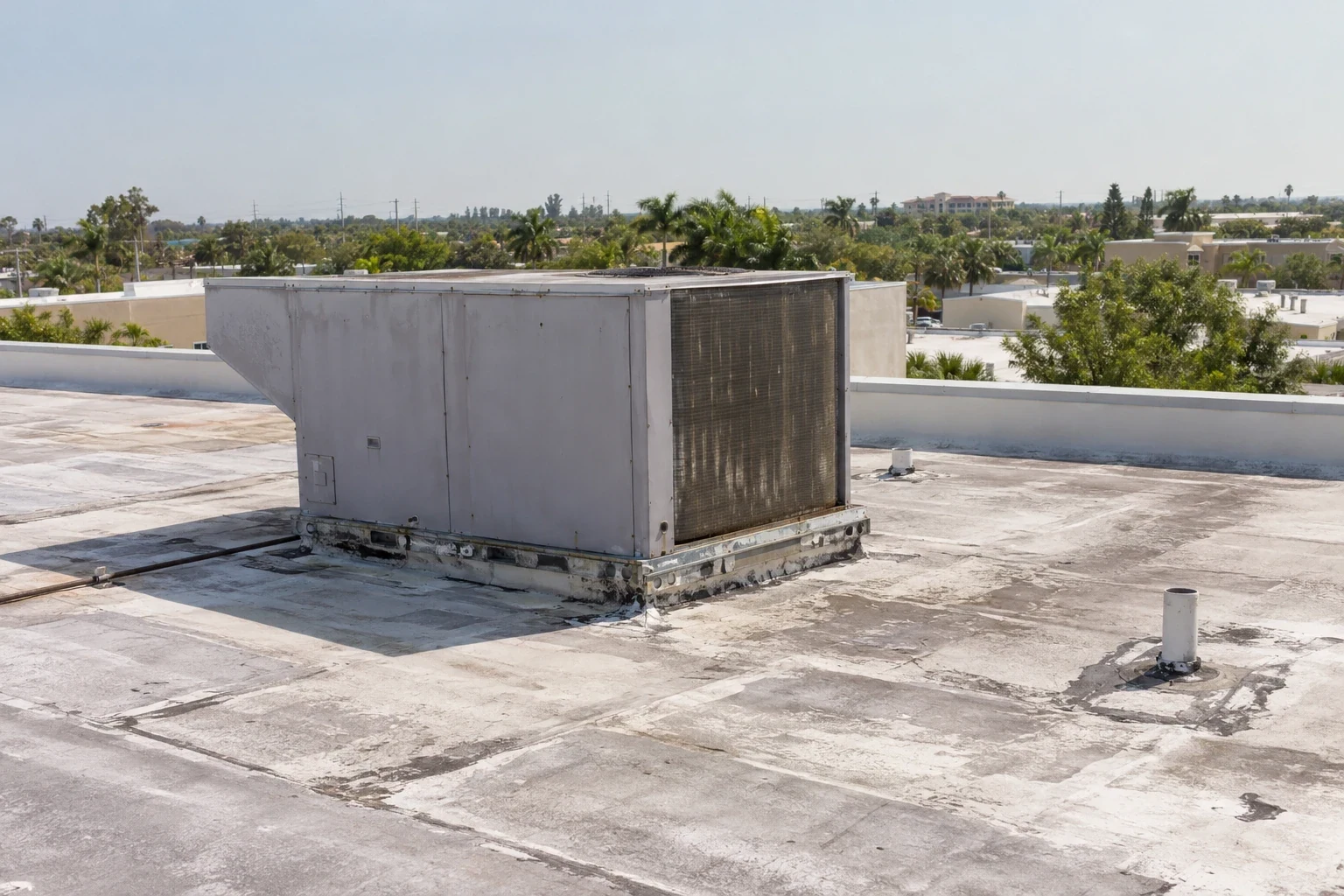
Emergency Commercial Roof Repair in Pembroke Pines, FL
Get emergency roof repair in Pembroke Pines with safe access decisions, temporary water control, affected-area review and a separate permanent scope.
A loose membrane beside an exposed curb creates two immediate concerns: water entry into the operating space and further movement of material outside. The first work package must address those concerns without committing the owner to a permanent assembly that has not been examined. In Pembroke Pines, FL, we respond to urgent commercial roof problems at night, on weekends and on holidays, with safe access and current conditions determining the work that can begin.
An emergency response is a condition assessment followed by appropriate protection. We establish where water or loose material is affecting the building, what access is safe and which connections need immediate attention. The recommendation separates temporary measures from the permanent roof repair that can follow. That separation keeps an urgent operating decision from becoming an undefined capital commitment.
Protect the operating space first
Water near electrical equipment, unstable ceiling material or occupied walkways needs immediate coordination with building personnel. Keep people away from the affected area and involve the appropriate electrical or safety personnel where necessary. We discuss how to protect movable contents and identify the space beneath the reported roof problem. Interior containment can reduce disruption while exterior access is being evaluated, but it must not direct water toward another vulnerable area.
The property manager can help by identifying roof access, equipment shutdown restrictions and rooms that cannot tolerate water or inspection activity. Photographs and event timing are useful where they can be obtained safely. Personnel should not enter a damaged roof area simply to produce a closer view. We can establish the immediate response from available observations and evaluate the exterior once conditions permit a responsible examination.
Safe access sets the first limit
Lightning, strong winds, slippery surfaces and uncertain deck condition can prevent rooftop work. A damaged assembly may conceal an opening or unstable material beneath an apparently continuous surface. We assess those hazards before placing personnel and materials on the roof. The fact that water is entering does not make an unsafe approach workable; interior protection and other suitable measures may need to precede exterior correction.
South Florida's stormiest wet-season phase occurs from mid-May through early July, with hazards including damaging winds, lightning and flooding. Those regional conditions make access decisions part of the response rather than a separate scheduling detail. We review the immediate forecast and roof observations before selecting an opening. Later tropical-system exposure also warrants attention to securing loose material and establishing temporary protection that fits the available conditions.
Temporary protection needs a purpose
A temporary repair should address an identified opening, loose edge or vulnerable transition. We choose the measure for the roof material and the present condition, recognizing that wet or contaminated surfaces may not accept a permanent bond. A temporary covering also needs appropriate securement and a way to avoid diverting water into another roof area. Poorly placed protection can conceal the defect while creating an additional drainage problem.
We document what was protected and what remains to be investigated. Where a leak involves a curb or termination, directed leak investigation may still be required after the first water-control measure. A dry interval following temporary protection does not establish that the concealed assembly is suitable to retain. The next work package should resolve that question before the emergency measure is treated as finished construction.
The building use changes priorities
The Pines Boulevard Commercial Corridor contains a concentration of commercial development. An emergency above a retail entrance or occupied office room can affect public access and daily operations before the roof defect is fully known. We coordinate with the manager to identify affected routes, sensitive equipment and the personnel who can authorize immediate protection. Clear limits on the first scope are especially useful where several occupants share the building.
Chapel Trail contains warehouse and flex properties, where stored goods and loading activity can change the protection priorities. Water over inventory may require a wider interior containment area than the roof opening suggests. Emergency work at a warehouse property should preserve practical access for the response without forcing deliveries through a work zone. We discuss those constraints before staging material or opening the assembly.
Damage may extend beyond the entry
Wind can displace flashing or membrane and affect the connections beside the visible opening. We examine the surrounding roof where safe access permits and identify components requiring further assessment. A localized water-control repair is not necessarily the full repair boundary. The distinction matters when an owner must decide whether the building can continue operating beneath the affected area.
After the event, a storm-damage assessment can establish which details were disturbed and where concealed material needs investigation. Photographs should preserve the observed condition before permanent work changes it. We can provide factual repair documentation without determining insurance coverage. The emergency decision remains focused on protection, while the later assessment supports the scope and any separate claim review.
The next work package closes the gap
Once weather and access allow, we examine the temporary correction, confirm the supporting assembly and identify the permanent details needed. A patch over sound material may be enough for one condition; wet insulation or damaged decking can require an expanded opening. We explain the consequence for removal and installation before proceeding beyond the emergency authorization. That keeps the owner informed as the roof findings become more complete.
Properties in the Pines Boulevard commercial corridor may need repair sequencing around customer and tenant activity even after the immediate event has passed. We connect the permanent recommendation with written condition documentation, identifying temporary work, completed repairs and unresolved observations separately. The building then has a defined follow-up decision rather than an emergency invoice with no clear explanation of what remains.
Commercial Roofing Questions
Can you complete the permanent repair during the first visit?
Some conditions permit a permanent correction once safe access, suitable preparation and sound material are established. Others require temporary protection because weather, moisture or concealed damage prevents a durable connection. We explain which kind of work is being performed. The first visit should resolve immediate exposure as far as practicable while identifying the examination needed before the permanent scope can be approved.
What should the emergency authorization include?
Identify the affected building area, access arrangements and the work needed for immediate protection. Separate that authority from broader removal or replacement unless the conditions are already sufficiently established. We can explain the observed risk and the proposed initial measure. Where an opening reveals additional deterioration, the revised scope should be discussed before it becomes an unplanned capital package.
How can we preserve useful damage evidence?
Take photographs of interior effects and visible exterior conditions only from safe locations. Record when the problem appeared and any equipment or power interruptions. We document the roof condition during our examination and distinguish emergency measures from later repairs. Those observations can support a property record or insurance submission, while coverage decisions remain with the insurer and the applicable policy.
Will the temporary work need another inspection?
Temporary seals and coverings deserve follow-up because they may have been installed under limited conditions and are not the intended final assembly. We identify the remaining work and the conditions needed to assess it. Further severe weather or a change in leakage can justify earlier attention. The owner should retain a clear distinction between protected areas and permanently corrected connections.
What happens if the roof cannot be accessed safely?
We discuss available interior protection and the information needed to plan exterior work once the hazards permit it. Occupants may need to avoid affected rooms or equipment areas under the building's safety procedures. A delay in rooftop access should still produce a defined next action. We keep the immediate operating concern separate from promises about an exterior repair that current conditions will not support.