Commercial Roof Inspection in Pembroke Pines, FL
Use commercial roof inspections in Pembroke Pines to separate active defects, retainable areas and capital work with photographs and practical priorities.
A worn seam beside firm insulation and a similar seam over soft material belong in different budget decisions. The inspection needs to establish that difference and connect it to the building's next work package. In Pembroke Pines, FL, we examine commercial roofs with the owner’s operating requirements in mind, identifying active defects, serviceable areas and conditions that need further investigation. A list of surface observations is only the beginning of that recommendation.
Our hands-on inspections address roof fields, flashings, penetrations, drainage and perimeter connections. We discuss leak history and recent equipment work before examining the assembly. The resulting condition report should explain the consequence of each material finding and identify the appropriate next action. That gives an asset manager a basis for repair approval, monitoring or a separate capital assessment.
Begin with the operating question
An inspection for an active leak differs from one supporting a purchase or a replacement budget. The roof areas may be the same, but the unresolved questions and needed evidence can be different. We establish the purpose, available access and any sensitive interior areas before the visit. A due-diligence decision may require particular attention to assembly information and maintenance obligations, while an active defect needs a focused path to correction.
Existing repair records and drawings can help identify changes in the roof. We compare that information with observed conditions instead of assuming that the installed assembly matches every drawing. A new equipment curb, a modified drain or an older repair may affect the current water path. We note those relationships where they change the recommendation and identify any important construction detail that cannot be established from surface examination alone.
Walk the water path
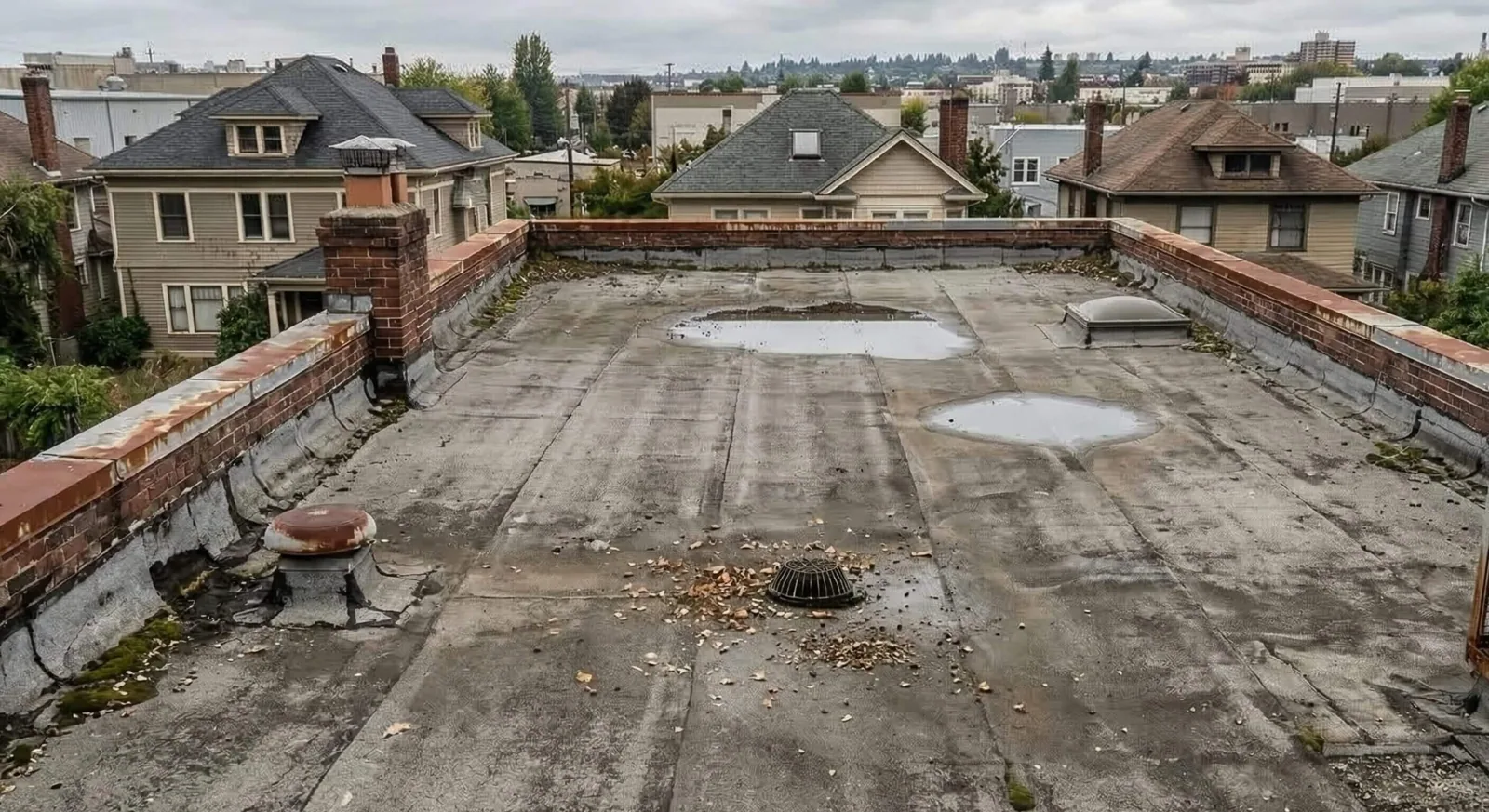
Drain outlets, scuppers, low areas and roof transitions show how water moves through the roof's geometry. Debris, sediment and staining can indicate a drainage concern requiring further examination. We look at the discharge connection as well as the surface leading toward it. A blocked outlet and an incorrectly detailed drain flange need different corrections, even if both contribute to water near the same roof area.
South Florida wet-season showers and thunderstorms make that distinction useful for Pembroke Pines owners. A clear outlet can still serve a roof with persistent low spots, and correcting a seam does not change the geometry that keeps water there. We identify where drain or scupper work is appropriate and where a broader drainage assessment may be needed. The recommendation should name the observed limitation rather than calling every water mark a drainage failure.
Examine the connections closely
Seam condition, flashing height, securement and material compatibility influence whether the roof remains serviceable. We examine the points where field membrane meets walls, equipment curbs and penetrations because those transitions can change under movement and exposure. Metal edges and coping require attention to their connections and the condition of adjacent material. A neat visible edge can still leave an unresolved attachment question beneath it.
For TPO membrane roofs, seams and detail connections need a different examination from metal panels or built-up assemblies. We identify the system and report conditions using the appropriate construction context. The city lies in the High Velocity Hurricane Zone, so observed attachment concerns deserve particular attention. Surface examination can identify a defect or an unanswered question; a specific performance or structural assessment may require further testing and qualified design review.
Concealed condition requires another method
A roof walk cannot establish the dryness of every insulation panel. Soft areas, repeated leaks or surface anomalies can indicate the need for moisture investigation and selective openings. We explain why those methods are being recommended and which roof decision they will help resolve. The investigation should answer whether material is suitable to retain, how far removal may extend or whether another defect mechanism is involved.
A drone-assisted roof overview can provide useful images of inaccessible elevations and relationships across a property. It does not replace close examination of suspect connections. Thermal investigation likewise requires suitable conditions and confirmation. We distinguish what was observed directly, what was assessed indirectly and what remains unresolved so the report does not present an unexamined concealed condition as a settled finding.
The local use informs the visit
Office development in the SW 145th Avenue Office Corridor makes occupied-room coordination a practical inspection concern. We discuss roof access, equipment serving tenants and any rooms requiring restricted inspection activity. The exterior observation becomes more useful when it can be compared with a specific interior report. A ceiling stain logged by maintenance staff may direct a focused examination even where the surrounding roof field looks continuous.
Chapel Trail includes warehouse and flex space, where loading activity, stored material and separate occupants can affect access beneath the roof. An inspection in the Chapel Trail commercial area should account for those operating constraints before arranging selective openings. We identify what can be examined during the visit and what needs separate coordination, preserving a useful distinction between limited access and a finding that the assembly is sound.
Assign the next decision
An inspection finding should carry a recommended response. Active water entry or loose material may require immediate attention; a stable but deteriorating detail may fit a scheduled repair; an uncertain concealed condition may require investigation before either decision is made. We explain the basis for that priority and keep the recommended scope tied to the observed roof. The report should help the manager act rather than merely accumulate photographs.
Where repair remains reasonable, a defined corrective scope can identify preparation, removal and finished connections. Where the findings suggest broader capital work, we separate that assessment from immediate defects. The owner can then approve protection or repairs while developing the larger decision. Photographs, locations and clear limits on the examination make later comparison possible as the roof's condition or the building's use changes.
Commercial Roofing Questions
Will the inspection include opening the roof?
Selective openings may be recommended where the assembly or concealed condition affects the decision, but they need appropriate authorization and protection. We establish the purpose and proposed locations before proceeding. A surface inspection can identify many defects without an opening. Where an important question remains unanswered, the report should say what further examination is needed instead of implying that the surface view settled it.
Can the report support a replacement budget?
A condition report can identify the deterioration and unresolved questions that inform replacement planning. A construction-ready replacement scope may need additional investigation, design and permitting review. We distinguish those stages so the owner knows whether the available findings support an initial capital allowance or a more defined work package. The purpose of the report determines the level of detail needed.
How should separate roof areas be prioritized?
Consider the observed defect, its consequence for occupied space and whether deterioration is localized or distributed. A small active opening above sensitive equipment may need earlier correction than a larger stable area. We identify those differences rather than ranking work by roof area alone. The resulting priorities should allow immediate protection and longer-term capital planning to proceed as separate decisions.
What makes a photograph useful for future comparison?
A photograph needs an identifiable roof location and an explanation of the condition it records. Close views show the defect, while wider views establish its relationship to nearby equipment and drainage. We include both where useful. A later inspection can then compare the same connection and determine whether the condition changed, rather than attempting to reconstruct its location from an isolated image.
Should an inspection follow rooftop equipment changes?
Equipment work can alter flashing, traffic patterns and drainage even where the roof was previously serviceable. We examine affected curbs and penetrations and identify damage or altered connections requiring attention. Coordination with the equipment trade helps establish what changed. A focused post-work assessment can address those areas without automatically turning the equipment visit into a full replacement recommendation.