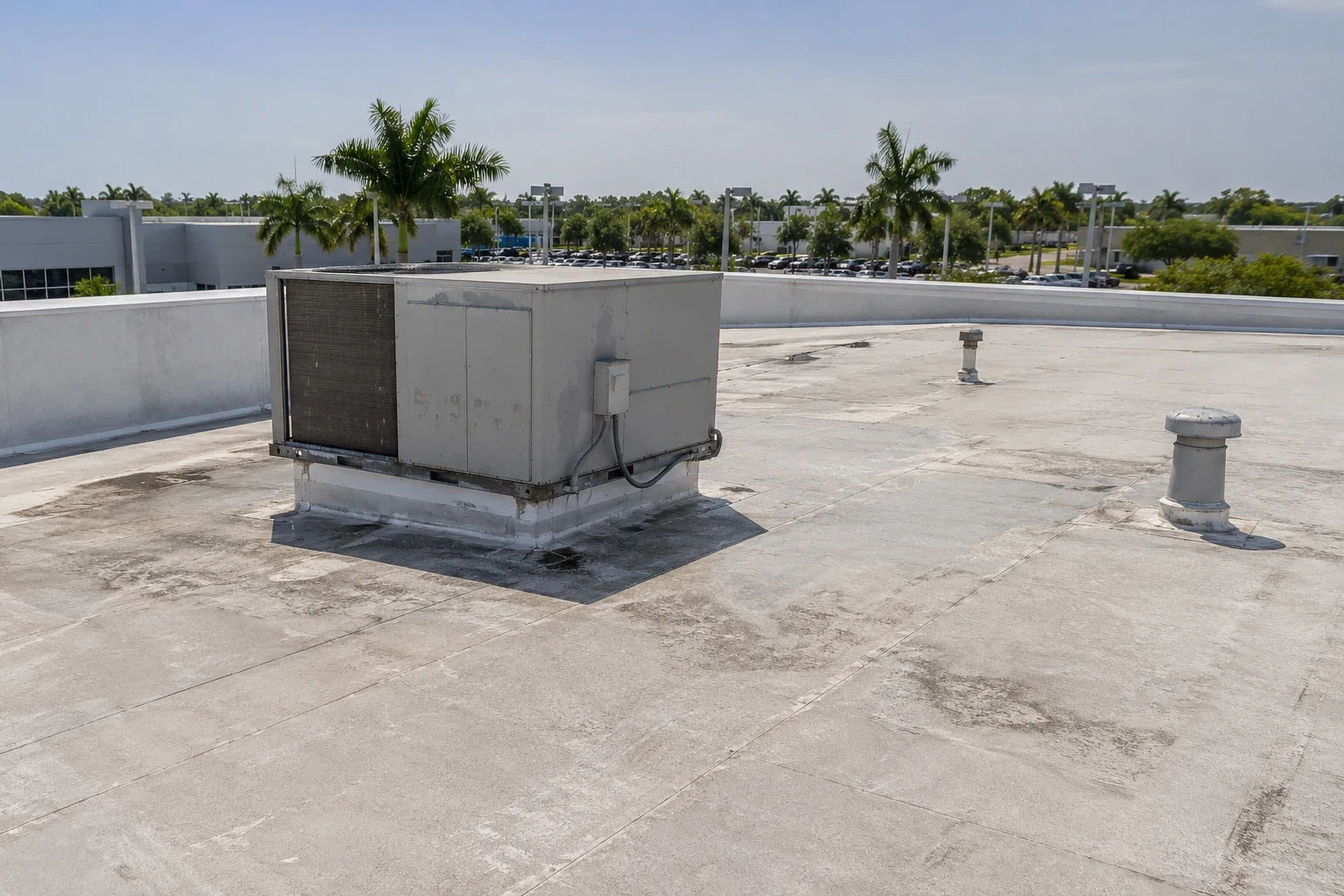
Distribution Center Roofing in Pembroke Pines, FL
Coordinate distribution-center roofing in Pembroke Pines with dispatch access, inventory protection, condition findings and repair or replacement phases.
A failing drain connection above outbound staging can make a small roof defect consequential to the next dispatch interval. The immediate protection area and the permanent repair boundary may need different limits. In Pembroke Pines, FL, we assess distribution-center roofing with those operating decisions in view. An asset manager should receive a correction tied to the roof finding and a sequence that accounts for receiving, storage and outbound activity beneath it.
We repair and replace commercial roofs and plan work around occupied operations where suitable arrangements can be established. A distribution building may need careful coordination even for localized work because material routes and activity change during the shift. We identify the roof condition and discuss the operating area before developing the scope. Comparison with warehouse roof work helps frame inventory protection, while the actual dispatch arrangement sets the construction constraints.
Connect the finding with the operating zone
A leak report should identify the affected area, event timing and equipment nearby. We compare that information with roof details and drainage before selecting the repair. Water at a ceiling or exposed deck can travel through the assembly, and an equipment-related condition may require another trade. The initial operating consequence deserves attention, but it should not settle the roof mechanism before examination.
A focused leak investigation can establish the connection needing correction and whether concealed material has also been affected. The manager needs both findings because a surface patch may leave unsuitable insulation or support below it. We identify what requires immediate protection, what can be assessed during the available access interval and what needs a separate work package before permanent construction proceeds.
Receiving and dispatch require separate access review
A material lift that avoids outbound traffic can still obstruct receiving or a pedestrian route. We discuss those movements with the personnel responsible for operations and identify suitable staging intervals. Debris removal and material delivery need practical routes that can remain separated from active warehouse movements. A roof phase should not depend on an exterior space whose operating use has not been considered.
Multiple shifts can create different access conditions through the day. We identify which schedule information is necessary and coordinate the proposed work against it. The construction plan should explain the operating change required for a particular package rather than offer a blanket assurance that every movement can continue unchanged. A manageable interval follows from the actual roof work and the site's use of the affected area.
Stock protection follows the opening
Removing membrane and insulation above inventory requires assessment of the goods and the protection available. The manager may need to move stock or limit activity beneath an opening. We identify that requirement before demolition and distinguish it from the exterior repair boundary. A wider interior protection zone can be necessary where material movement or access creates a different practical footprint from the roof area being corrected.
Where replacement work is proposed, the removal depth and concealed correction influence the phase size. We investigate material condition where possible before scheduling and explain how additional findings will be reviewed during exposure. The plan needs a suitable daily closure, with temporary protection if the final connection cannot be completed within the interval. Production planning should follow that construction requirement rather than leave the opening unresolved to preserve a dispatch schedule.
Roof equipment can set another dependency
Air-handling units, supports and penetrations can affect access to the membrane and the assembly needed at the detail. Equipment may serve occupied or temperature-sensitive spaces, making coordinated shutdown or handling important. We examine the connection and identify the responsible personnel before choosing the sequence. A new field roof does not automatically resolve a curb whose height or support is unsuitable for the altered buildup.
For temperature-controlled storage roofing, condensation and assembly questions can require closer coordination with building specialists. Those concerns should be evaluated for the actual property rather than inferred from distribution use alone. We identify the roofing observation and the additional question requiring review. The owner can then approve a complete interface instead of separate scopes that leave the equipment-to-roof connection unassigned.
The assembly must fit the condition
A TPO system can be considered among suitable commercial roof options, with substrate, attachment and details evaluated together. Other systems may fit different conditions. We compare alternatives using the same moisture-removal and drainage assumptions, so membrane preferences do not obscure differences in construction. The recommended package should explain which retained components are acceptable and which must change.
Pembroke Pines is in the High Velocity Hurricane Zone. Applicable assembly and perimeter requirements need assessment for the project, along with the supporting deck and any necessary qualified design review. Roof surface appearance does not establish an acceptable attachment path. We identify the relevant questions before committing the system, leaving the owner with a practical route to resolve them rather than a specification based on an unexamined existing configuration.
Regional weather affects daily closure
South Florida wet-season thunderstorms can change the interval available for removal and installation. We assess the forecast and the work needed to protect the assembly before choosing the opening limit. New insulation and unfinished transitions require appropriate closure if the sequence changes. The daily package should be manageable even when an exposed condition needs more correction than the surface examination anticipated.
Chapel Trail contains warehouse and flex uses, providing a relevant operating context for commercial roof planning. At a property in the Chapel Trail commercial area, the actual loading and interior arrangement governs staging. The Northwest Pembroke Pines Industrial Area has access to Interstate 75 and US 27, but those highway connections do not settle a building's construction route. We assess that route with the manager before material handling is scheduled.
Make the next work package identifiable
Closeout should record the roof areas corrected, installed components and retained areas needing continued assessment. Photographs taken during exposure can preserve the concealed findings supporting the scope. The operating record should also identify any access arrangement useful for later maintenance. A subsequent leak report can then be compared with the actual repaired location rather than a general description that the distribution roof received attention.
We distinguish immediate defects from capital concerns requiring a later decision. A localized correction may restore a suitable connection while another area still needs investigation or replacement planning. That separation helps the asset manager coordinate expenditure and operations without bundling unrelated conditions into one urgency level. The value of the roof package is its defined correction and workable sequence, with the remaining decisions made clear before the next dispatch interval or capital review.
Commercial Roofing Questions
Can roof work fit between dispatch peaks?
The roof geometry and correction needed must support a phase that can be opened and protected within the proposed interval. We compare those requirements with the site's receiving and dispatch schedule. Some packages can fit a limited window, while another may need a different operating arrangement. The recommendation should preserve suitable closure instead of assuming that every roof task can be compressed into the same available gap.
Why does a small leak require an inventory discussion?
The exterior defect and the affected operating area can have different practical boundaries. Stored goods, access and protection needs may require coordination beyond the visible opening. We identify that consequence before examination or removal. The manager should know which stock areas need attention while the roofing assessment establishes the entry mechanism and the material requiring correction.
Should a temperature-controlled area receive another assessment?
Its enclosure and operating conditions can introduce condensation or assembly questions relevant to the roof findings. We identify those concerns and coordinate qualified review where needed. The roofing scope should distinguish a confirmed membrane defect from a condition requiring building or equipment assessment. That gives the owner a complete next action rather than assume that patching the exterior settles every moisture report.
What supports a limited correction instead of reroofing?
A localized defect with suitable adjoining membrane, insulation and support can justify repair. Distributed deterioration or extensive concealed correction may lead to broader work. We assess those findings and compare the construction and operating consequence of each option. The capital recommendation should explain what the limited package resolves and what remains outside it, allowing dispatch planning and roof expenditure to follow the actual condition.