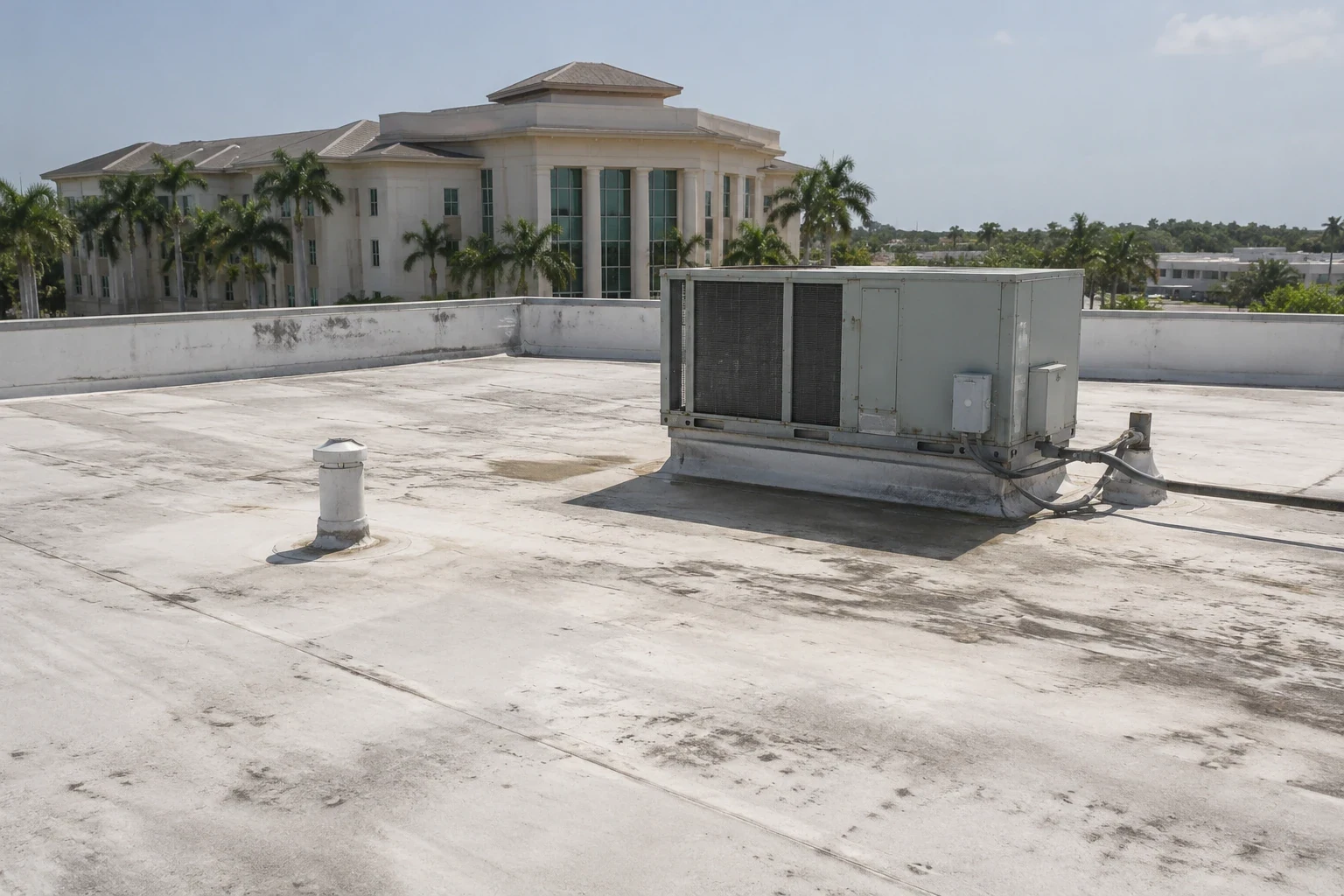
Multi-Site Roof Programs in Pembroke Pines, FL
Coordinate Pembroke Pines roof decisions across properties with individual assembly findings, comparable priorities and defined protection for each work stage.
A moisture finding at one property can expand its removal package while a similar-looking roof at another site remains suitable for a local correction. A multi-site program needs those findings kept separate before procurement or scheduling is combined. Commercial Roofers Pembroke Pines coordinates commercial roof programs in Pembroke Pines, FL around individual assembly evidence and the decisions it supports. We preserve each building's work boundary while giving the asset manager a comparable account of priorities across the properties.
The Chapel Trail Commercial Area includes warehouse and flex space, and the SW 145th Avenue Office Corridor includes office development. A portfolio spanning those uses needs the actual operating arrangements at each building. We discuss occupied space, access and equipment alongside the examined roof condition. The program connects those records with the next work packages without transferring one site's retention finding or agreed opening limit to the other properties.
The program begins with identifiable assemblies
We identify the buildings, roof sections and different coverings included in the program. Additions and separate elevations keep their own construction history. Shared drainage or wall interfaces remain visible where they affect another area. This allows the portfolio record to locate a task and distinguish the assembly it changes. A common property label should not hide that one roof section has a different installation or repair history from another at the same address.
A construction history for each roof can retain installation information, equipment alterations and accepted work. We identify the source of available descriptions and separate them from current physical findings. Where concealed layers remain uncertain, the program records the assessment needed before a work boundary can be established. The asset manager can then compare roofs needing investigation with sites already supporting a defined correction, without treating both as equally developed construction packages.
Comparable findings retain their consequences
A consistent reporting method should preserve the difference between observation and interpretation. We locate defects with photographs, describe the accessible component and identify the examination undertaken. Two roofs can have an open flashing while requiring different removal or support work. The record keeps the surrounding assembly and occupied-use consequence with each finding. The comparison then supports an actual action at each building rather than reduce unlike defects to one portfolio count.
A located report for an individual property also distinguishes interior water complaints from established entry routes. One site may have an identified connection ready for correction. Another may need access or investigation before the source is known. We retain the next action and its purpose. Grouping those tasks should not turn an unresolved examination into a repair estimate or imply that the same detail will resolve every reported leak.
The priority explains the next authorization
We review current water entry, vulnerable connections and conditions suitable for scheduled follow-up with their actual consequences. A defect above sensitive equipment can require protective work before another site's deferred maintenance. The priority entry explains that finding and the action needed. The asset manager should know whether authorization begins an investigation, secures an opening or completes permanent construction. A broad condition rating alone does not establish that choice.
For roofing above warehouse operations, loading access and stock protection may influence staging. An office can require other arrangements around occupied rooms or equipment. We review the particular building before assigning those constraints. The program identifies who can confirm access and which operating decision remains unresolved. The owner can then coordinate the work without assuming that a shared roof product or portfolio ownership creates the same interruption consequence at each property.
Each building has an opening and closure limit
A combined schedule needs the construction stage at each roof defined. We identify what can be removed, how an interrupted opening will be protected and which permanent connection closes the stage. Roof geometry, shared drainage and adjacent walls influence that boundary. An area suitable for daily removal at one building may not leave a workable closure at another. The program retains those differences alongside the portfolio sequence before the openings are authorized.
Roof staging for occupied buildings also needs preparation and application requirements reviewed against the selected materials. South Florida's wet period usually lies between mid-May and mid-October, with frequent showers and thunderstorms. We discuss protection for the actual opening rather than treat a chosen work date as evidence that interrupted roofing can remain exposed. The asset manager receives the condition requiring a revised stage where access or weather changes the original arrangement.
Shared purchasing follows suitability decisions
A common product choice cannot establish suitability across different retained assemblies. We examine preparation, support, attachment and interface reconstruction before treating materials as a coordinated purchase. A suitable roof needing one rebuilt connection presents a different scope from a property with affected insulation. The program preserves those removal obligations and any further assessment required. Procurement follows established construction rather than replace the findings needed to compare the next work packages.
A portfolio capital review connects proposed amounts with the intervention at each site. We identify investigation allowances, separate trade work and interim protection. A changed concealed finding should revise the affected property's scope before its amount is carried into the combined plan. Permit and code review also remain specific to the actual jurisdiction and project circumstances. A program can coordinate decisions without extending one city's requirements or one roof's approval to unrelated construction.
Completed work returns to its assembly record
Acceptance identifies the roof area, removed material and permanent detail completed. We retain preparation findings and photographs of concealed work before the final covering hides them. Surrounding material left outside the intervention remains distinguishable. A portfolio completion entry should reference that site record, allowing a later examination to identify the rebuilt connection without treating the task as renewal of every roof at the property.
A maintenance sequence for each retained roof keeps deferred details and drainage available for follow-up. We identify the condition that should bring another examination forward. Equipment changes need a separate entry where they affect roof connections or traffic. The asset manager can then review new findings against accepted construction before authorizing another correction. The program retains an overview without sacrificing the individual record needed to make that decision.
Properties entering or leaving the portfolio need a handover of unresolved roof tasks and available documents. We identify the current examination status, accepted work and next action. Ownership or management changes do not establish that an outstanding finding has been corrected. The record should retain who can arrange the follow-up and the access needed to complete it.
Commercial Roofing Questions
Can several roofs share one retention decision?
Examine the assembly at each property. Similar surfaces can conceal different insulation, support or attachment conditions. We recommend keeping the evidence and remaining questions with the individual roof before coordinating material selection or treating retained construction as suitable across the portfolio.
What should a program-wide priority show?
Retain the defect, occupied-space consequence and next action at the specific site. Identify whether the proposed authorization protects, investigates or permanently corrects the condition. That allows the asset manager to compare unlike tasks without letting a common rating hide the work actually required.
Does coordinated scheduling remove the need for individual closure plans?
Each building needs its opening limit, temporary protection and permanent stage connection established. Review access and material requirements for that roof. The combined schedule should reference those plans and identify which change would require a particular site's sequence to be reconsidered.
How should completion be recorded for the portfolio?
Return the accepted scope and concealed-work record to the individual assembly history. Keep retained components and unresolved tasks identifiable. The overview can then show work completed while preserving the evidence needed for the next property inspection, management handover or capital decision.