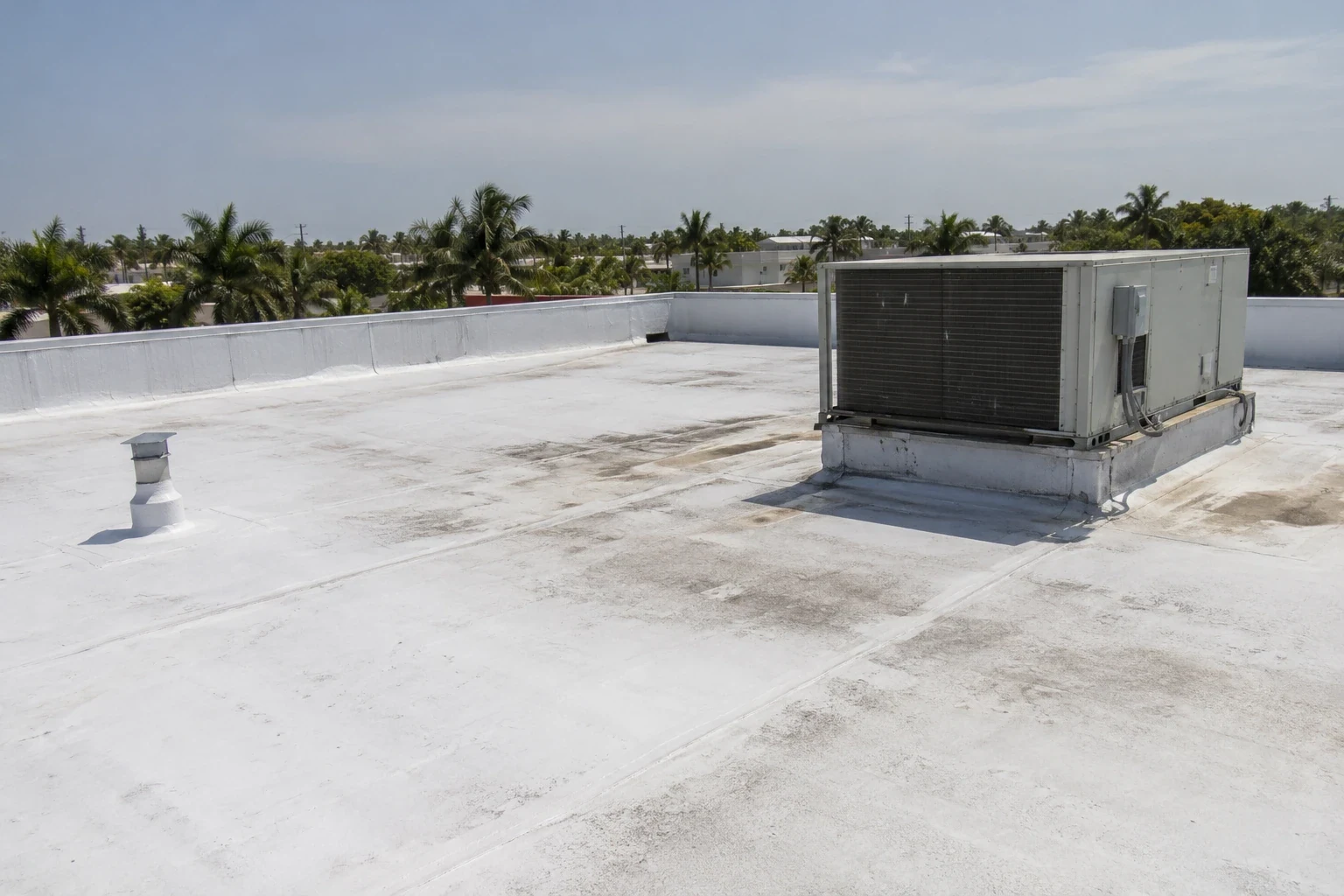
Drone Roof Inspection in Pembroke Pines, FL
Assess commercial roofs in Pembroke Pines with drone imagery, mapped observations and selective hands-on checks before approving repairs or capital work.
A displaced metal edge visible above an inaccessible elevation gives the owner a reason to investigate, but the image alone does not establish the repair connection below it. In Pembroke Pines, FL, we use drone roof inspection to obtain useful views of commercial roof areas and direct closer examination. The asset decision becomes clearer when the image is connected to a roof location, an observed condition and the next method needed to assess it.
Drone imagery can help compare elevations, equipment concentrations, drainage paths and visible damage across a property. It is particularly useful where access restricts the initial overview. We combine those images with hands-on roof examination where close assessment is necessary. The scope should define what the flight will show and what condition questions remain beyond a visual view.
Choose the question before the flight
A flight intended to map storm damage needs different views from one documenting equipment changes or supporting a repair proposal. We establish the building areas, decision and available access before selecting the observation sequence. An asset manager may need a clear comparison between roof elevations, while maintenance personnel may need a closer view of a specific curb or perimeter detail. The images should serve that question rather than simply produce a broad aerial picture.
Property boundaries, neighboring activity and safe flight conditions also affect the work. Applicable airspace and operating requirements must be evaluated for the proposed flight. We assess access and flight feasibility before promising coverage of every surface. Where drone use is unsuitable, the inspection recommendation should identify another practical method, rather than leaving the owner with an unresolved roof question because the preferred imaging approach is unavailable.
Visible findings direct closer checks
Loose material, displaced components, debris accumulation and an altered drainage path may be apparent in images. Seam separation, attachment condition and material deterioration can require closer examination than an aerial photograph supports. We identify which observations justify a hands-on check and which establish a visible condition directly. Image clarity, viewing angle and shadows influence that distinction.
For a metal roof, panel relationships and perimeter deformation can be useful overview findings. The connection beneath a panel or edge still requires appropriate examination before a repair is selected. We can direct wind-damage investigation toward the affected details using the imagery. The repair recommendation then follows the condition of those details, including supporting material and attachment, rather than the appearance of a single photograph.
An overview preserves relationships
Several roof elevations can make it difficult to understand how water and access routes relate across a property. Wider imagery can show the arrangement of equipment, transitions and drainage areas in a form useful for planning. We connect close views with that overview so a manager can identify the actual location of the observation. The resulting record should support a site discussion without requiring personnel to interpret a collection of unlocated images.
That relationship also helps explain a phased work package. A proposed repair area beside equipment, a material-lift location and an occupied entrance can be considered together. Drone imagery does not establish the load capacity of a staging area, but it can identify questions that need assessment before materials are placed there. We separate those planning uses from technical conclusions requiring investigation or a qualified design review.
Local operations shape the observation
Chapel Trail includes warehouse and flex properties, where equipment and loading operations may complicate access to roof edges and exterior elevations. A drone overview can help identify the relationship between those operating areas and visible roof concerns. We coordinate the observation with the property manager and evaluate people, traffic and surrounding activity before the flight. Imaging should not create an avoidable interference with the building's use.
Office development in the SW 145th Avenue Office Corridor presents a different access discussion, including occupied rooms and rooftop equipment serving tenants. Imagery can help locate proposed work boundaries before a close inspection or selective opening is arranged. An assessment in the SW 145th Avenue office corridor should identify which operating constraints affect the next examination. The overview is most useful when it leads to an actionable condition question.
Weather controls image quality and safety
South Florida wet-season thunderstorms bring changing conditions that can prevent a planned flight. Wind, rain and lightning require a safe operating decision, and a clear interval can still leave some surfaces obscured at the available viewing angles. Glare, standing water and shadows can obscure detail. We discuss those limitations where they affect the scope and select another observation time or method when appropriate.
Visible-light imagery and thermal investigation also answer different questions. A photograph of a clean membrane does not establish dry insulation. Where concealed moisture is relevant to retention or removal, an infrared moisture survey may be considered under suitable conditions, followed by confirmation of suspect areas. We keep the visual overview and moisture investigation distinct so one method is not presented as evidence for a condition it did not assess.
Translate the images into a work package
A useful deliverable identifies the observed condition, location and recommended next action. Some findings may support a repair proposal after close examination; others may call for monitoring or further investigation. We avoid assigning a removal boundary solely from a distant visible view. The owner should know which parts of the recommendation are supported by direct examination and which still need a closer check.
For a flex-industrial building, the images may help coordinate separate tenant areas and equipment access before repairs begin. We can retain the observations within written roof condition records so later inspections have a usable point of comparison. The value lies in connecting aerial coverage with decisions about access, investigation and repair, not in treating the flight itself as the completed assessment of every roof component.
Commercial Roofing Questions
Can aerial images establish whether the membrane needs replacement?
Images can reveal visible deterioration or damage that warrants investigation, but replacement decisions also depend on concealed material, attachment and the extent of repairable defects. We use the overview to direct those assessments. Where the visible condition suggests broader work, the recommendation should identify the examination needed to establish the removal scope rather than deciding from an aerial view alone.
Will a drone identify loose seams?
Some separations may be visible at a suitable angle and image resolution. Others require close examination of the membrane connection. We identify suspected areas in the imagery and arrange an appropriate hands-on check where needed. The absence of a visible separation in a photograph should not be treated as acceptance of every seam on the roof.
Can you inspect a roof that has no safe walking access?
A flight may provide an initial exterior view where walking access is restricted, subject to safe operating and airspace conditions. That can help identify visible damage and plan the next method. Some questions will still require another access arrangement or selective investigation. We explain those remaining limits so the overview supports a responsible decision about how the roof can be assessed further.
Should the flight be repeated after repairs?
Follow-up imagery can document the location and appearance of completed work, particularly where it helps compare elevations or work boundaries. Closeout also needs detail records appropriate to the installed correction. A distant image cannot replace examination of concealed connections before they are covered. We select the follow-up views for the owner's maintenance and condition record rather than repeating the flight without a defined purpose.
How should the property manager prepare?
Identify the decision the inspection must support, any sensitive operations and the available roof access. Existing leak locations and equipment changes can help direct the imagery. We will evaluate flight feasibility and coordinate the observation area. There is no need to place personnel on an unsafe roof to prepare a closer view; the inspection approach should be selected from the available safe access and the question being examined.