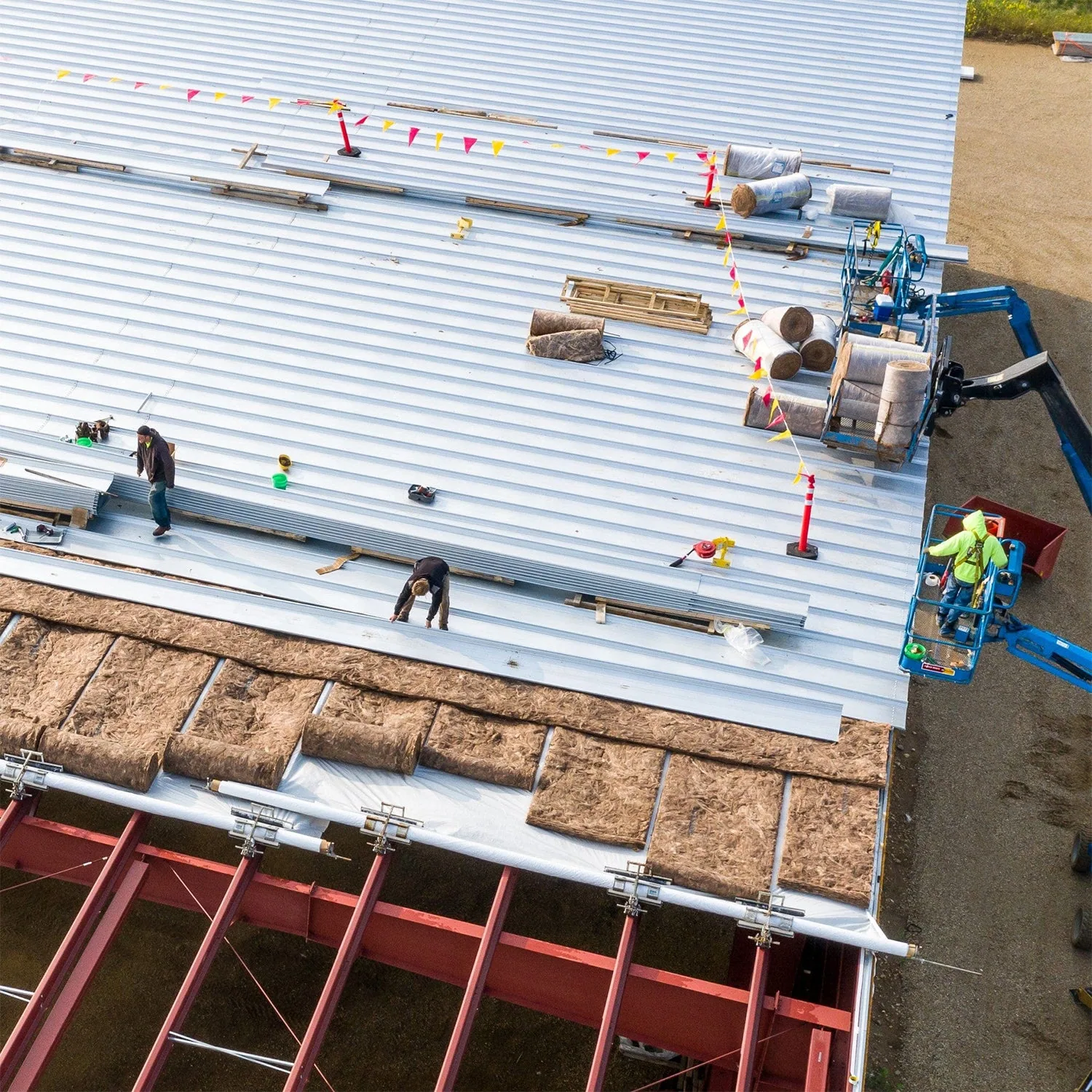
Rooftop Equipment Curbs and Supports in Pembroke Pines, FL
Coordinate roof curbs and equipment supports in Pembroke Pines with flashing heights, drainage paths and clearly defined roofing and equipment scopes.
A pipe support compressing insulation beside a roof seam creates a support question before it becomes a membrane repair. Replacing the damaged surface without correcting how the load reaches the assembly can leave the same stress in place. In Pembroke Pines, FL, we examine equipment curbs, supports and their roof connections as coordinated components. The owner needs to know which work belongs to roofing, which requires equipment personnel and which calls for design review.
Rooftop equipment can affect drainage, membrane access and the work needed to replace or repair the roof. We assess those relationships before setting the construction boundary. A suitable support still needs a compatible roof detail, while an apparently sound flashing may conceal an unsuitable support condition. We connect that examination with penetration and curb flashing repairs where the water-control detail also requires correction.
Identify the support question
A curb, pipe support or equipment frame needs a suitable means of transferring its load. Roofing material is not a substitute for the structural assessment required where that arrangement is uncertain. We identify observed displacement, deformation or damaged substrate and explain the question needing qualified evaluation. The proposal should not treat a firm-looking surface as proof of capacity or imply that a thicker board resolves an unanswered load path.
Existing equipment records can help establish intended connections, but the installed condition still needs examination. An altered support, additional piping or a moved unit may change the arrangement. We coordinate with the appropriate equipment and design personnel where necessary, keeping their responsibilities distinct from the roof correction. The owner then has a defined dependency to resolve before material removal exposes a connection that cannot yet be rebuilt.
The curb needs a workable roof height
Curb flashing height is evaluated against the finished roof field. Additional insulation can reduce that clearance, even where the existing curb remains physically sound. We assess proposed roof elevations and the equipment connections before choosing retention or modification. A new membrane installed around the unchanged curb may leave an unsuitable transition if the buildup has altered the space available for the flashing.
Where insulation and cover-board changes form part of the project, the equipment interface belongs in the same planning discussion. Raising or altering a curb can affect ductwork, piping, electrical connections and service clearances. Those consequences require coordination before construction. We describe the necessary access and trade work so an asset manager can compare the full package rather than approve a field assembly with its equipment details still unresolved.
Supports must preserve the water path
A support placed across a drainage route can create a collection area or trap debris. We examine how water moves around the equipment and toward the intended outlet. Protection pads, sleepers and other components should not be accepted solely because they separate equipment from the membrane; their placement and compatibility also matter. The assessment should identify whether the support arrangement needs adjustment or whether the surrounding geometry requires another correction.
A cricket or tapered detail can redirect water where an obstruction affects flow, subject to the roof's design and available height. We consider drainage connections alongside that geometry. Adding material near equipment without reviewing adjacent low areas can transfer the problem rather than resolve it. The proposed arrangement should show how the roof will carry water past the support to an appropriate discharge point.
Movement requires an appropriate connection
Pipes and equipment can move differently from the roof assembly. A flashing detail should suit the component and its expected movement without becoming an improvised restraint. We examine the support and the water-control connection separately, then coordinate a correction that allows each to perform its intended role. Sealing an active movement problem can leave the repaired membrane repeatedly stressed at the same point.
Material compatibility also affects the connection. A support pad or repair product suitable for one membrane may be unsuitable for another. For a PVC roof assembly, we select details and protection appropriate to that membrane and installation requirements. The owner should receive a clear explanation of the necessary interface instead of a generic proposal to place more material beneath equipment regardless of the roof system.
Equipment access sets the construction sequence
The SW 145th Avenue Office Corridor includes completed office development where rooftop equipment can serve occupied tenant space. Repairs may require coordinated shutdowns, temporary service arrangements or equipment handling by the responsible trade. We establish those constraints before choosing the opening sequence. Continued occupancy does not remove the need for a workable interval to access and reconstruct the curb connection.
Chapel Trail contains warehouse and flex uses, where stored goods, loading activity and separate occupants can affect staging. Work in the Chapel Trail commercial area should identify where materials and removed equipment components can be handled. South Florida wet-season thunderstorms also influence how much roof can be exposed beside a curb. We plan the transition so the roof can be protected while coordinated equipment work proceeds.
The project record keeps responsibilities clear
The city's permit resources include rooftop-mounted equipment forms. We review the applicable project requirements where the scope changes equipment or its roof interface. That review should be tied to the actual alteration rather than treated as a general administrative step unrelated to construction. The work package needs a suitable connection, an appropriate authorization path and a defined sequence for the personnel responsible for each component.
For a roof replacement project, we identify equipment transitions separately from field removal and installation. Closeout can preserve photographs of supports and flashing before the equipment conceals them. We also record any remaining observations outside the completed scope. Those details help future personnel assess later equipment changes without assuming that every curb or support was rebuilt during the previous roof work.
Commercial Roofing Questions
Can equipment remain operating during the curb work?
Some exterior details can be corrected without interruption, while others need access requiring equipment shutdown or handling. We examine the connection and coordinate with the responsible personnel before scheduling. The sequence should identify the operating consequence and the work needed to restore service. Assuming continuous operation before that assessment can leave the roofing correction inaccessible once removal starts.
Will a new cover board carry the equipment load?
A board provides a roof substrate within a selected assembly; it does not establish structural capacity for equipment. The load path and supporting structure require appropriate assessment where they are uncertain. We identify observed damage and coordinate the design question. The roofing scope can then provide suitable protection and flashing for a support arrangement that has been evaluated for its intended use.
Should a curb be raised during replacement?
Compare its available flashing height with the proposed finished roof and equipment requirements. Modification may be appropriate where the new buildup reduces clearance, but it needs coordinated assessment of ducts, piping and other connections. We explain that work before thickness is finalized. A retained curb should be accepted for the altered assembly on its condition and geometry, not simply because the equipment remains serviceable.
How can pipe supports affect later maintenance?
Their locations influence roof access, debris accumulation and the water path. We identify service routes and protection suitable for the membrane, and record areas that need attention during maintenance. Moved supports can create new stress or obstruct drainage. A post-equipment examination helps establish whether the arrangement still protects the roof and permits appropriate access to its connections.
What belongs in the coordinated proposal?
Identify the roof opening, flashing correction, support assessment and any equipment handling or shutdown needed. Separate the responsible trades and describe the sequence at their shared connection. We also identify the finished-height and drainage questions affecting the detail. That allows the owner to approve a complete work package instead of several partial scopes whose missing interface becomes apparent only during construction.