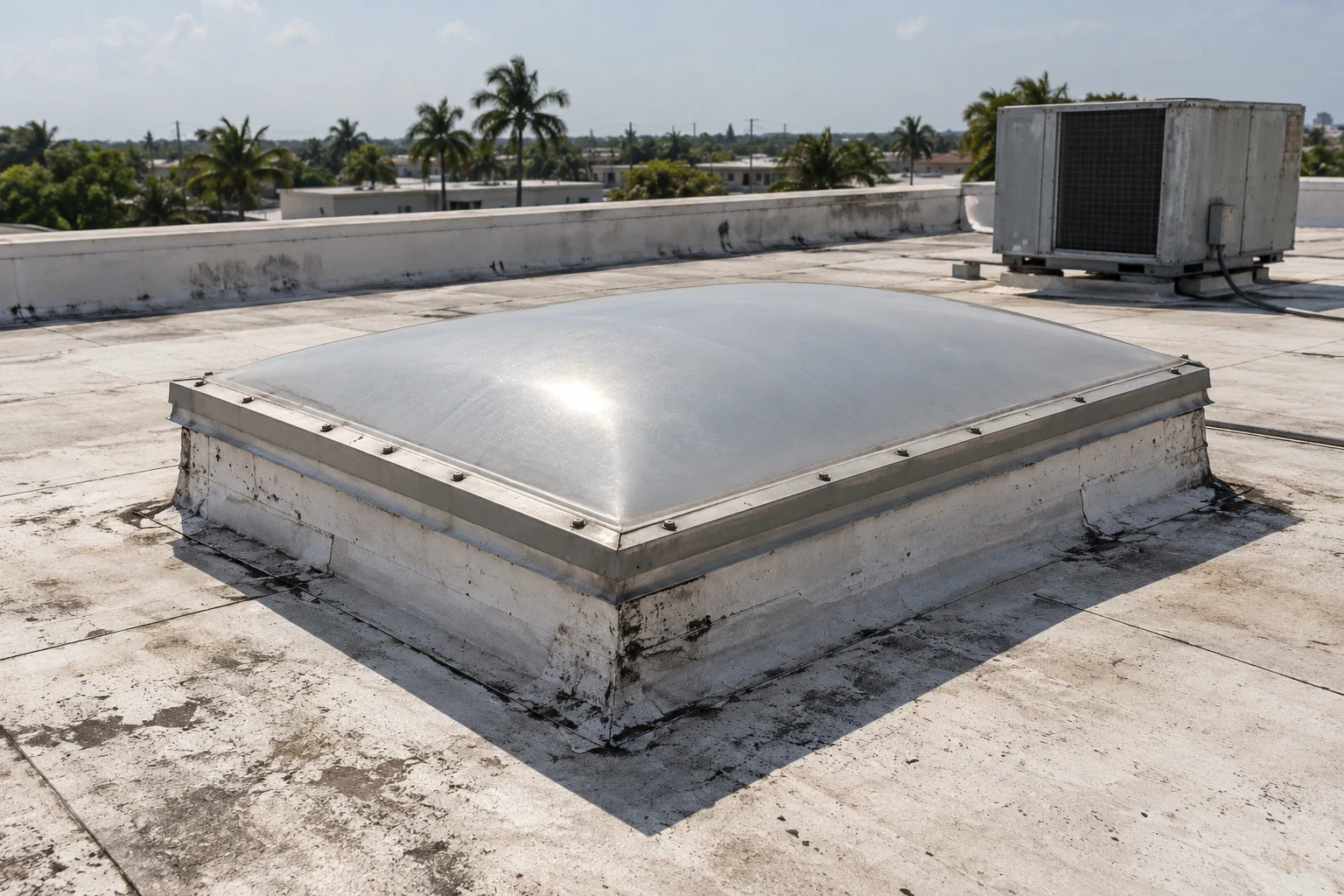
Roof Drains and Scuppers in Pembroke Pines, FL
Correct roof drainage in Pembroke Pines with outlet inspection, low-area assessment, drain flashing repairs and a workable path for stormwater.
A drain standing above its immediate sump can leave water behind even after debris is cleared. The outlet may function, but the surrounding roof geometry prevents the area from emptying as intended. In Pembroke Pines, FL, we assess drains and scuppers as parts of a complete water path. The owner’s decision should identify whether the correction belongs at the outlet, in the adjacent insulation or in a broader drainage design.
We examine roof collection areas, discharge connections and the material surrounding them. Clearing an obstruction can restore flow in one case; reconstructing a flange or correcting an elevation may be necessary in another. We distinguish those tasks before proposing persistent-water correction. A drain replacement should not be treated as a complete answer where the roof retains the same low areas beside it.
Read the collection area
Sediment, water marks and repeated debris accumulation can help identify where water collects and how it reaches an outlet. We compare those observations with the roof slope and nearby equipment supports. A water path interrupted by a displaced support needs a different response from a broad depression in the assembly. The inspection should explain the physical limitation before prescribing a material or an outlet size.
The visible surface may also conceal an unsuitable substrate. Soft material near a drain can require an opening to determine whether insulation or deck conditions affect the repair. We identify that examination before treating the area as ready for a new connection. Water management and substrate correction belong in the same scope when the repaired drain needs supporting material that the existing assembly no longer provides.
The drain connection needs continuity
A drain flange must connect appropriately with the roof membrane, and its components need the condition and arrangement required by that detail. Corrosion, missing components or an incompatible repair can leave a route for water around the outlet rather than through it. We examine the connection and adjoining material before selecting a repair. A bead of sealant around the visible ring may leave the deficient membrane connection beneath it untouched.
For a TPO roof drain detail, the correction must fit the membrane and drain assembly. Other roof systems require their own compatible method. We discuss the removal area and how the new flashing will connect with sound material. Where piping condition or discharge performance needs assessment, coordination with the appropriate plumbing or design professional becomes part of resolving the water path.
Scuppers depend on height and discharge
A scupper needs an appropriate connection through the wall or perimeter and a functioning outlet beyond it. Its location relative to the roof surface affects how water reaches it. We inspect the throat, flashing, surrounding wall detail and any collector or downspout involved. Water overflowing beside a scupper can indicate obstruction, an inadequate connection or another design concern that needs further assessment.
Primary and emergency drainage serve different purposes and should not be confused during a repair. A secondary outlet is not a substitute for maintaining the normal discharge path. We examine the intended arrangement and identify unresolved design questions where they affect safe drainage. Correcting gutters and perimeter discharge components may be necessary when the problem continues beyond the roof outlet, rather than ending at its visible opening.
Slope corrections need room
Tapered insulation or a cricket can direct water away from an obstruction and toward an appropriate outlet. That correction needs consideration of finished roof heights, curb clearances and existing low spots. Adding thickness without reviewing those relationships can preserve or create an unfavorable water path. We compare the proposed geometry with the surrounding assembly before treating a tapered package as ready for installation.
Where insulation changes form part of drainage correction, the material, attachment and membrane connection must work together. The outlet sump also needs an appropriate elevation relative to the finished field. We separate the geometry being changed from any existing deficiency left outside the work area. An asset manager should know whether the proposal corrects one localized collection point or implements a broader drainage recommendation.
Wet-season preparation is practical
South Florida receives much of its average annual rain during the wet season from mid-May through mid-October. For Pembroke Pines buildings, clearing obstructions and assessing deficient outlets before that period can leave time to organize corrections. During a visit, we also examine whether debris has moved from a nearby roof area toward the drain. Repeated blockage can call for a more useful maintenance approach than cleaning the same opening after each report.
The Pines Boulevard Commercial Corridor contains concentrated commercial uses where discharge and access near occupied entrances may affect the work. Chapel Trail warehouse and flex properties have different staging and interior protection needs. Drainage repairs in the Chapel Trail commercial area should account for stored goods beneath openings and loading activity around access routes. Those considerations influence sequencing without establishing the drainage condition of a particular building.
Test the correction and retain the record
After work, we examine the finished connections and use appropriate assessment to check the corrected flow path. Testing must account for interior exposure and the conditions of the assembly. We document the work location, repaired components and any remaining drainage concern. A clean outlet photograph alone does not explain whether a localized elevation problem was also corrected or simply left for another decision.
A scheduled maintenance program can keep the outlets and collection paths attended to after construction. The owner should retain the drainage arrangement and completed corrections in the building record, particularly where equipment or later roofing work could alter elevations. We identify the changes that warrant another examination so maintenance personnel can preserve the intended water path instead of unknowingly obstructing it during unrelated rooftop work.
Commercial Roofing Questions
Can clearing the drains resolve the whole problem?
Debris removal can restore an obstructed path, but it will not change a low area or reconstruct a deficient flange connection. We compare the remaining water pattern with the outlet after cleaning where conditions permit. That examination helps identify whether another correction is needed. The scope should explain the difference between maintenance that restores intended flow and construction that changes the roof's geometry.
Why is insulation work included with a drain repair?
The surrounding insulation establishes the slope and supports the membrane connection. A damaged or incorrectly configured area may need reconstruction for the new drain detail to work as intended. We identify the affected material and proposed elevations before opening it. The repair should leave a suitable substrate and a coherent water path, rather than a new outlet surrounded by the same unresolved collection area.
Will you determine the required drain capacity?
A capacity or broader drainage design question may require the appropriate design professional and applicable project review. We examine observed obstructions, connections and geometry and identify where that further assessment is needed. A surface inspection should not substitute an assumed outlet capacity for a design calculation. The owner receives a defined next step for the drainage question beyond the repair itself.
Should emergency overflow outlets be kept clear too?
Secondary outlets need attention alongside the normal drainage system. Their intended role depends on the building's arrangement, so we examine the outlet and identify access or maintenance concerns. Obstruction can remove an important discharge path. We preserve the distinction between primary and secondary drainage in the repair record instead of treating either outlet as an interchangeable way to avoid correcting the other.
How can later roof work affect the drains?
Added insulation, moved equipment supports and new membrane details can change elevations or interrupt the route toward an outlet. We review those relationships during construction planning and inspect affected connections afterward. Maintenance personnel should also monitor debris following equipment work. Keeping the intended water path identifiable helps the owner avoid a drainage problem introduced by an otherwise unrelated rooftop change.