Preventive Roof Maintenance in Pembroke Pines, FL
Plan preventive roof maintenance in Pembroke Pines with drainage checks, defect tracking and repair priorities matched to the building’s operating use.
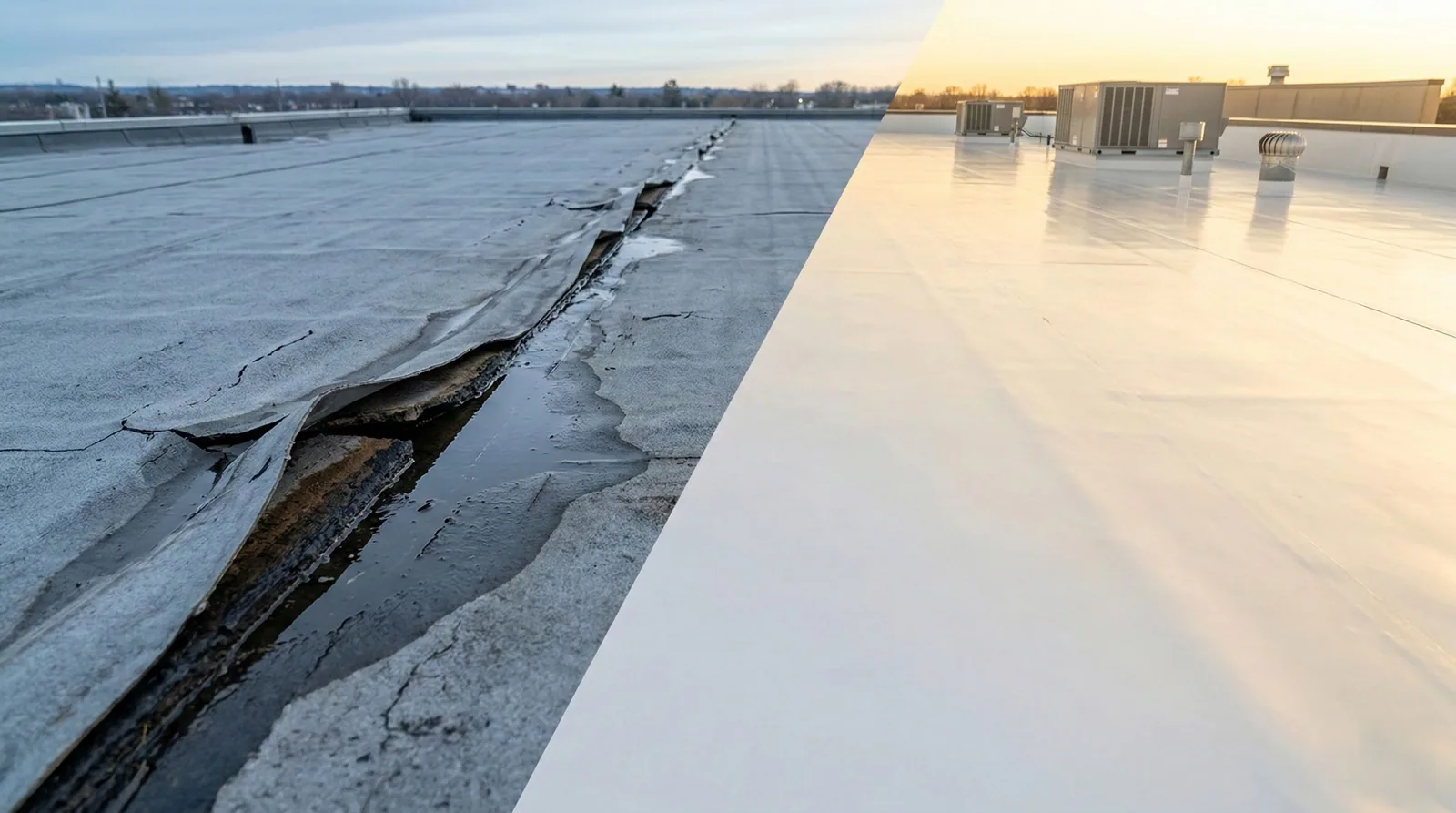
Sediment beside a clear drain outlet can indicate a low area that routine debris removal will not resolve. That finding changes a maintenance visit from simple cleaning to a decision about drainage and localized correction. In Pembroke Pines, FL, we use preventive roof maintenance to distinguish conditions that can be managed through scheduled attention from defects requiring a separate repair. An asset manager needs both the completed maintenance record and a clear recommendation for anything left unresolved.
Our maintenance work includes roof examination, appropriate debris removal, attention to drainage paths and identification of deteriorating connections. We discuss the building's use and repair history before setting the program. A maintenance agreement should identify its included tasks and the work requiring additional authorization. We connect observations with defined roof repairs where correcting a defect calls for more than the scheduled visit can responsibly include.
Drainage deserves a complete view
A drain can be open while leaves, displaced equipment pads or sediment obstruct the route leading toward it. We examine that route and the discharge connection, checking what can be cleared safely and what requires reconstruction. Scuppers and gutters need attention to outlets and transitions as well as visible debris. A repeat accumulation in the same location is useful information because the maintenance task may be controlling a symptom of a geometry problem.
Persistent water requires an assessment of the surrounding elevations and intended discharge path. We separate clearing an obstruction from drainage correction that changes a connection or roof slope. The maintenance record should explain that distinction. Otherwise, the same low spot can be listed as cleaned repeatedly without the owner receiving a practical recommendation for the condition that keeps it wet.
Small changes need comparison
A flashing termination that has begun to separate may remain manageable through planned corrective work before a larger opening develops. We examine its material, support and relationship to adjoining details, then record the condition in a way that supports comparison. A photograph without a roof location or a description of the change is difficult to use at the next visit. The asset record should allow a manager to understand what is stable and what is progressing.
Roof traffic also leaves findings worth tracking. Scuffs beside an equipment service route, a displaced walkway or a new penetration can identify a change in how the roof is being used. We discuss appropriate protection and coordination with the responsible trade. Maintenance should not merely cover each new mark with another patch; it should identify whether a repeated activity needs a different access arrangement or a system-compatible protective measure.
Weather informs the schedule
In South Florida, the May 15 to October 15 wet season places recurring storm and shower exposure on the maintenance calendar. For a Pembroke Pines property, drainage examination before that period can identify obstructions and defects while there is time to organize corrections. Significant weather can also justify a focused follow-up. We select the visit timing from exposure, the building's condition and its operating needs, rather than applying one calendar to every property.
Heat and weather exposure can affect membranes and connections between visits. Maintenance examination looks for the resulting material condition, including movement at flashing interfaces and deterioration of prior repairs. Where a modified bitumen assembly needs attention, the corrective material and preparation must fit that roof. The program should recognize the installed system instead of treating all low-slope surfaces as interchangeable maintenance substrates.
Operating space affects the visit
The SW 145th Avenue Office Corridor contains completed office development south of Pines Boulevard. Maintenance there may require roof access coordination, awareness of air intakes and attention to equipment serving occupied rooms. We discuss those restrictions before scheduling work or moving debris. The useful maintenance plan identifies both the roof tasks and the access conditions needed to perform them without an avoidable conflict with the occupants.
Chapel Trail includes warehouse and flex properties with several possible operating constraints, including loading activity and stored goods. A program in the Chapel Trail commercial area should identify how personnel reach the roof and where material can be lowered safely. Separate occupants may also report different interior concerns. We connect those reports with roof locations so the maintenance record does not lose a specific defect within a general building-wide visit.
The repair allowance needs boundaries
Some programs include limited minor corrections, while larger openings, equipment transitions or moisture removal require their own scope. We identify those limits in the agreement and explain them during the visit when a finding crosses that boundary. The owner should know which items were completed, which were protected temporarily and which await a separate decision. That distinction makes the maintenance expenditure useful without disguising an unresolved repair as finished work.
Repeated defects can warrant a broader roof condition assessment. We examine whether the observations are concentrated at one connection or distributed through the assembly. A maintenance program can extend the usefulness of serviceable components by keeping them attended to, but it cannot make unsuitable material a sound base. Where replacement planning becomes reasonable, the recommendation should identify the deterioration supporting that larger commitment.
Close the visit with priorities
The maintenance report should record completed tasks and identify the next action for each material observation. Active water entry, deteriorating flashing and a stable wear area belong in different priorities. We explain why an item requires prompt repair, scheduled correction or continued comparison. That allows the asset manager to approve the next work package without reconstructing the meaning of each photograph independently.
A roof asset management record can retain those findings alongside previous repairs and planned capital work. Comparing visits helps establish whether a defect is recurring and whether the existing program still suits the building's use. The objective is a usable sequence of decisions: maintain what remains serviceable, correct what has failed and investigate what the available examination has not yet resolved. Each visit should leave that sequence clearer than it was before.
Commercial Roofing Questions
What should be included in a maintenance agreement?
Specify the inspection areas, drainage and debris tasks, reporting and any minor corrective work included in the visit. Identify access requirements and the work that needs separate approval. We can discuss those boundaries before the program begins. A clear agreement allows the property manager to distinguish routine attention from a repair involving removal, specialized detailing or an additional investigation.
Can maintenance replace an investigation of a recurring leak?
Repeated water entry needs a directed examination of its cause and concealed consequence. Maintenance observations can help locate the concern and preserve its history, but cleaning and general inspection may not resolve it. We recommend the appropriate leak investigation or moisture assessment where needed. The maintenance program can then track the completed correction rather than repeatedly record the same unresolved event.
How should equipment trades use the roof between visits?
Keep their work coordinated with the roof system and the existing access route. New penetrations, moved supports and discarded material can change water paths or damage the membrane. We can identify suitable protective measures and assess affected connections after equipment work. The maintenance visit becomes more useful when it includes a record of those changes and the areas they could have disturbed.
Should storm follow-up be separate from the routine visit?
A significant event can justify focused examination before the next scheduled maintenance date, especially where occupants report water or loose components are visible. We review the affected details and identify the appropriate scope. The regular program should not become a reason to defer an active concern. Follow-up can remain limited to the event area where the observations support that approach.
When should the program be revised?
Changes in roof condition, occupancy or rooftop equipment can alter the tasks and access the program needs. We review recurring findings and discuss whether additional investigation or a different visit sequence is appropriate. A roof approaching broader capital work may need more focused monitoring of retained areas. The program should remain aligned with the current assembly and operating needs instead of repeating an outdated task list.