Roof Insurance Claim Assistance in Pembroke Pines, FL
Document roof damage in Pembroke Pines with located findings, emergency records and a defined repair scope for the owner’s insurance review.
A torn membrane recorded before temporary protection provides a different claim record from a repaired surface photographed afterward. Both observations matter, but they answer different questions about damage and completed work. In Pembroke Pines, FL, we assist owners with roof insurance documentation by preserving the observed condition and explaining the construction scope. The goal is a clear factual record that supports review without confusing roofing findings with a coverage determination.
We examine reported damage, identify roof locations, document emergency measures and develop the proposed correction. The owner retains responsibility for the policy and insurer communication, while we can provide construction information and clarify our findings. Storm-damage assessment and claim documentation can proceed together, provided immediate protection and the permanent repair recommendation remain distinguishable commitments.
Preserve the observed condition
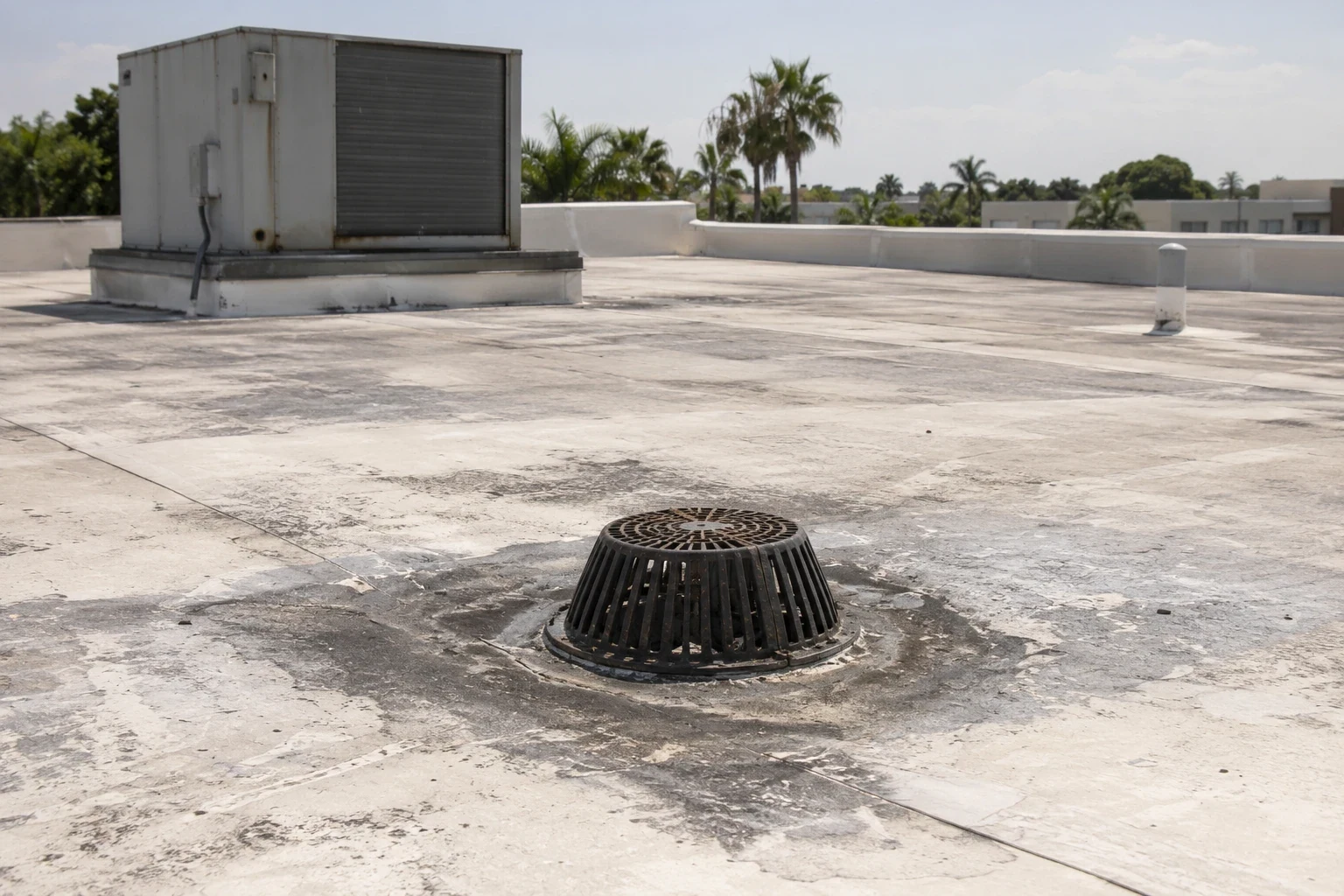
Photographs should show both the defect and its location within the roof. A close image can establish torn material or displaced flashing, while a wider view connects that finding with nearby equipment, edges and drainage. We record observations before changing them where safe access and the need for protection permit. The record should identify the date of examination and the conditions observed, rather than imply that every photograph was taken during the event.
Interior observations can also help explain the consequence of roof damage. Event timing, affected rooms and visible water paths give useful context for the investigation. We distinguish those reports from exterior findings established by examination. That separation helps an owner discuss what occupants experienced and what the roofing assessment confirmed without turning an initial report into a final diagnosis before the roof has been investigated.
Temporary work needs its own record
An urgent opening may require water control before the full repair scope can be developed. We document the reason for the measure, the affected area and the work performed. Materials used for immediate protection can differ from the intended permanent assembly because weather or substrate conditions limit the initial connection. Those circumstances belong in the construction record so later review can understand why another work package follows.
Our emergency roof response is available during nights, weekends and holidays, subject to safe access and conditions. The resulting documentation should not treat a temporary seal as a completed reconstruction. Where protection obscures the original defect, photographs and the location record become especially useful. We identify the examination still needed and keep its findings separate from the first response.
Cause requires careful examination
Damage appearing after a storm can coexist with older wear, prior repairs and equipment-related defects. We describe each observed condition and the basis for any construction recommendation. An examination may support a clear mechanism, while another finding may require additional testing or remain uncertain. The owner benefits from that distinction because a claim record should not assign an unsupported cause to every deficiency present on the roof.
For hurricane-related roof investigation, disturbed components and adjoining connections need attention alongside the visible opening. South Florida's late-summer and fall tropical-system exposure makes event preparation and prompt damage documentation practical. That regional exposure does not establish damage to a particular property. We use the actual roof findings to develop the scope and leave policy interpretation to the applicable insurance review.
The repair scope must be legible
Removal depth, affected insulation, substrate correction and flashing reconstruction explain the work needed better than a single membrane description. We identify the roof areas and the connection each repair must restore. A proposal can separate known work from conditions awaiting exposure, with an explanation of what additional findings would change the scope. That lets the owner and reviewer understand why the correction extends beyond a visible surface defect.
Where moisture investigation is appropriate, its report should distinguish thermal indications from confirmed affected material. An anomaly alone is not a complete removal specification. Selective findings can establish which layers require correction and which remain uncertain. We connect those observations with the proposed construction so the claim record explains the basis for the work instead of presenting a map without an interpretation.
Building use affects the consequence
The Pines Boulevard Commercial Corridor includes concentrated commercial development. For a property there, water affecting occupied rooms or customer access can make temporary protection and repair sequencing particularly consequential. We document the roof condition and discuss the operating constraints relevant to construction. The extent of disruption and any claimed business loss require the owner's own records and the applicable policy review.
Chapel Trail has warehouse and flex properties, where inventory protection, loading activity and separate occupants can complicate an opening. A warehouse roof repair may need staging and interior protection distinct from an office repair. We identify those construction requirements without calculating an insured loss or assuming coverage. The roof scope remains a description of how damaged or unsuitable components need to be corrected on that building.
Keep the owner’s decision separate
An insurer may ask for additional information or review a scope differently from the initial assessment. We can explain our observations and construction recommendations, but approval, deductibles and payment terms belong to the policy process. Owners should understand the work authorization separately from the claim outcome. Immediate protection may be necessary while a broader review remains underway, and that commitment should have a defined scope.
A property in the Chapel Trail commercial area may also need to coordinate repairs with operations before final scheduling. We preserve a usable record of conditions, temporary measures, permanent work and findings left outside the authorized package. That record supports the owner's review and future maintenance decisions regardless of the claim's resolution. The useful service is accurate construction documentation, followed by a repair recommendation the owner can evaluate on its own merits.
Commercial Roofing Questions
Can you tell us whether the policy covers the damage?
Coverage depends on the policy and the insurer's review, which are separate from our roofing assessment. We provide observed conditions, photographs and a proposed construction scope. The owner can use that information in the claim process and obtain the appropriate policy advice where needed. We do not make the repair recommendation contingent on assuming that the insurer will approve or pay for it.
What if protection was installed before photographs were taken?
We document the current condition, identify the temporary work and preserve any available earlier observations from building personnel. The record should distinguish what was directly examined from what was reported. Further investigation may still establish the supporting material and permanent repair needs. A later assessment should not reconstruct an unobserved original defect as though it had been photographed before the protection was placed.
Will you attend a roof review with the insurer?
We can coordinate access and discuss the observed roof conditions and proposed construction with the owner's representatives. Safe access and scheduling need to be arranged for the specific visit. Our role is to explain the findings and repair method, not negotiate policy coverage as an insurance representative. A shared roof examination can help clarify a construction question where the available records leave it unresolved.
How are concealed conditions handled in the proposal?
Known affected material should be identified separately from areas requiring further exposure. We explain the initial removal assumption and the finding that could change it. Appropriate photographs and observations during construction can document that change. The owner should have a clear process for reviewing additional work rather than treating every concealed condition as either included automatically or excluded without explanation.
Should repairs wait until the claim review is complete?
Active water entry or unsafe loose material may require protection before the review is resolved. We discuss the immediate roof concern and identify the limited work necessary for that response. Broader permanent construction can then be considered with its own authorization and schedule. The decision should account for the observed exposure and the owner's obligations without assuming a particular claim outcome.