Hurricane Damage Roof Repair in Pembroke Pines, FL
Hurricane damage roof repair in Pembroke Pines, FL: uplift and water-entry assessment, temporary protection, hurricane zone permits and phased rebuilding.
After a hurricane, a roof is judged twice: once for what the wind did and once for what the water did afterward. The first judgment is about attachment, edges and lost material. The second is about insulation that took on rain through openings the wind created, often in places that look fine from above. For an owner in Pembroke Pines, FL, late summer and early autumn carry the highest tropical-system risk, and the city's own plan records past exposure to hurricanes as well as flooding, heavy rain and tornadoes. That is context, not a finding. We assess the roof in the order that protects the building first and the record second.
Assess safety and access first
A roof after a hurricane may carry weakened deck, loose metal, debris and hidden hazards. Power lines, standing water and damaged equipment add risks. We confirm that the building is safe to enter, that utilities are secured and that the roof can bear a crew.
Where the structure is uncertain, an engineer clears the roof before anyone walks it. A drone survey gives a first look at the whole surface without putting people on a damaged deck. Emergency access is often constrained by closed roads and shortages, so we plan routes and staging before the first truck arrives, and we tell the owner what to expect for timing.
Debris is a hazard and evidence. Branches, signs and loose roofing that landed on the roof may have struck the membrane, so they are photographed in place before being removed.
Read uplift evidence at edges and fields
Wind damage starts at the edges and corners and works inward. We check perimeter metal, coping, parapet caps and the first rows of fasteners or adhesive. Then we test attachment across the field with pull tests and probes. Lost sections of membrane, torn seams and displaced ballast show how far uplift went.
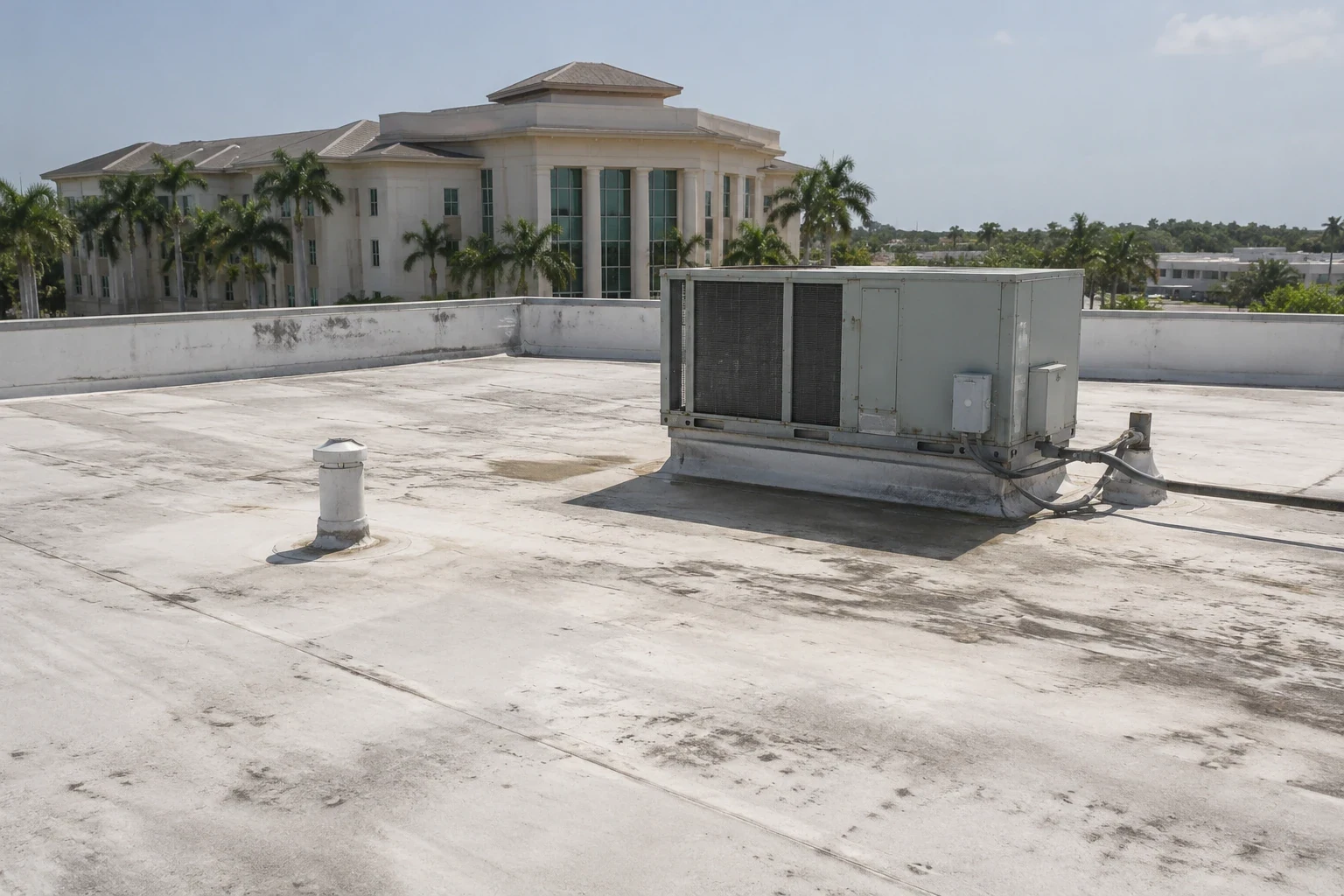
Roof-mounted equipment gets the same scrutiny. Screens, hoods and curbs can shift or lose flashing. A wind damage repair scope covers the edges and attachment, and the hurricane scope adds the water that followed. Pembroke Pines identifies Exposure C unless Exposure D applies under ASCE 7-22, so the wind exposure of the building matters when the repair is specified.
Equipment screens and rooftop signs are common victims. Their supports can tear the membrane as they move, and the damage shows up as linear gouges that run in the direction of the wind.
Find the water that came after the wind
Hurricane rain pours through every opening. Insulation can be soaked across large areas while the surface looks intact. Ceilings may stain days later. We run a moisture survey as soon as the roof is dry enough to read, and we cut cores where readings are high.
The survey defines how much insulation must come out. Wet material left in place holds moisture against the deck, invites mold inside the building and shortens the life of whatever goes on top. The infrared moisture survey also gives the carrier a clear map of the water damage, separate from the wind damage, which helps in scoping and in reviewing the claim.
Interior damage follows the water, not the wind. A wet ceiling may sit far from the roof opening that fed it, so we trace along the deck and insulation to find the entry. Thermal images taken after sunset make the wet zones easier to read.
Stage protection for the next system
After a hurricane, the next storm may be days away. Temporary protection has to be built for it: tarps fastened through battens, sealed penetrations, secured equipment and cleared drains. Our emergency roof repair response aims to dry in the building at any hour.
We photograph the roof before covering anything and keep receipts and logs. Even with no named storm on the map, a temporary cover has to survive routine afternoon downpours for months, so fastening and lapping are specified for weeks of service, not a single night. Contents, electrical equipment and sensitive spaces below are protected first, and the owner receives a short list of what was done.
Generators, antennas and sensitive equipment on the roof are secured and protected early. Cables are routed away from standing water, and the roof plan shows where every protected item sits.
Meet High Velocity Hurricane Zone requirements
The city administers the 2023 edition of the Florida Building Code and treats its own territory as part of the High Velocity Hurricane Zone. Its published permit resources list a commercial reroof statement, an insulation certification and rooftop equipment forms, and each of them is gathered before a repair package is priced. Repairs beyond a minor scale involve permit review and product approvals.
We confirm the scope with the city before pricing and select assemblies, fasteners, edge metal and adhesives that carry the required approvals. Where a repair triggers upgrades to current requirements, we list them separately so the owner and the carrier can see which items are damage repair and which are code items. A newer code edition is expected at the end of 2026, which means a repair permitted after that date will be reviewed under different rules than one filed this year.
Product approvals can take time to confirm after a regional storm, so we verify availability and lead time before the scope is fixed. The permit documents are assembled in advance, which shortens the inspection phase.
Plan the permanent scope in phases
After a regional storm, materials and crews are in short supply, so a phased plan is practical. Phase one is dry-in and safety. Phase two is moisture removal and structural repair. Phase three is the permanent roof, with edges, flashings and equipment curbs completed in order.
Each phase has its own documents, inspections and photographs. The storm damage roof repair work and the claim file move together, and adjusters and restoration contractors get a file organized by roof section. A tornado damage repair follows the same sequence when the event includes embedded tornadoes, which the Weather Service lists among wet-season hazards.
An owner with buildings across Pembroke Pines, Miramar and Hollywood benefits from one ranking: which roofs are open, which are protected and which can wait for the permanent phase. Roads such as Interstate 75 and US 27 may be congested after a storm, so crew routes and delivery times are part of the plan.
Handing over a roof after a hurricane includes a short maintenance plan, because a rebuilt roof needs a first-season check to confirm that seams and edges are holding.
Commercial Roofing Questions
What should an owner do first after a hurricane passes?
Stay off the roof, secure utilities, photograph interior damage and protect contents. Then call for temporary protection and an engineer if the structure is uncertain. Do not start permanent repairs until the roof is documented.
Why do hurricane roofs need a moisture survey?
Rain enters through openings the wind creates, and insulation can be soaked across large areas while the surface looks intact. The survey maps the wet zones so only the affected material is removed and the claim shows the water damage clearly.
How long can a temporary cover protect a damaged roof?
Properly fastened covers can hold for weeks, but they are not permanent. South Florida's wet season brings near-daily storms, so the cover must be built for repeated rain. We set a target date for the permanent repair when we install the cover.
What changes when a roof sits in the High Velocity Hurricane Zone?
Work larger than a minor patch moves into permit review, and the product on the roof must carry an approval that fits the assembly. We confirm the permit scope with the city, select approved assemblies and list code items separately.
Should repairs wait for the insurance adjuster?
Emergency protection should not wait, since further loss can be denied if the owner fails to prevent it. Document the roof first, then protect it, and keep receipts. Permanent repairs follow the carrier's review and the owner's approval.