Skylight and Penetration Flashing in Pembroke Pines, FL
Repair skylight and penetration flashing in Pembroke Pines with curb examination, compatible transitions and coordinated equipment access.
A split flashing corner beside a firm curb needs a different correction from the same split beside a moving support. The membrane defect is visible, but the supporting condition controls whether a localized detail can remain reliable. In Pembroke Pines, FL, we examine skylight and penetration flashing to separate a repairable connection from a problem requiring curb or equipment coordination. The owner should know what must change before another patch is approved.
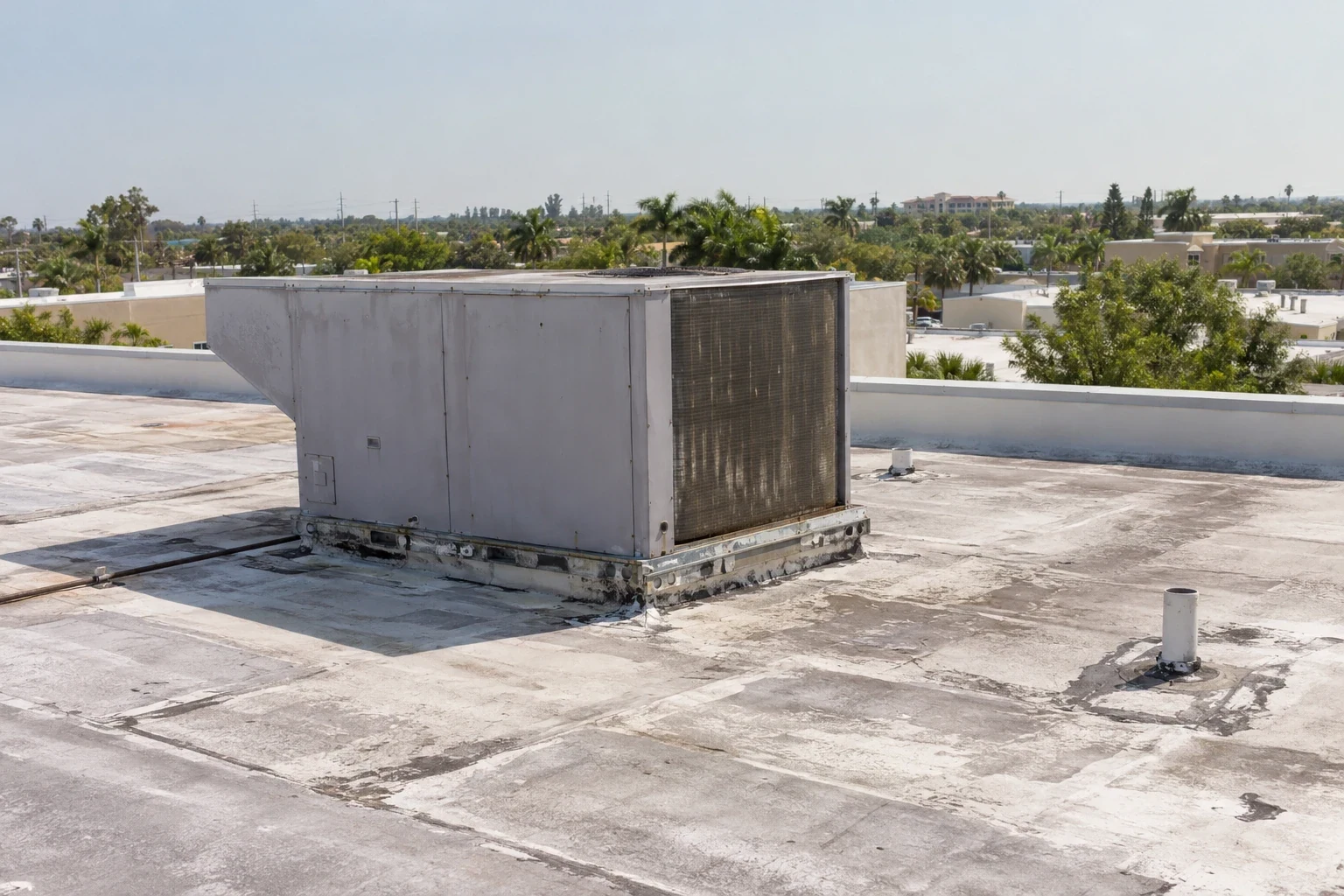
Roof penetrations interrupt the field membrane at equipment, pipes, skylights and other transitions. Their detailing must fit the roof system and the component passing through it. We investigate reported water entry and examine the surrounding material before specifying the correction. Where the cause is uncertain, focused leak investigation can establish the affected connection rather than assume that the nearest penetration explains the interior report.
Identify the water path
A skylight assembly includes more than its roof flashing. Glazing, frame connections, curb condition and condensation can also require examination where water appears below it. We distinguish those observations and identify when another qualified trade needs involvement. Rebuilding the membrane transition may be appropriate, but it should not be presented as a correction to an unexamined glazing or frame defect.
Pipes and equipment penetrations likewise need attention to the relationship between roofing and the component itself. Water can follow a deficient connection above the membrane or enter at its flashing. Appropriate examination and testing help identify the repair location. We explain the observed mechanism and the remaining question so the asset manager can authorize the correct work package instead of treating every wet ceiling below equipment as the same roofing defect.
Support and movement belong in the detail
A flashing needs suitable support and an arrangement compatible with movement at the penetration. A loose curb or unsupported pipe can continue to stress the repaired connection. We examine those conditions and identify any necessary coordination before rebuilding the membrane detail. A more elaborate patch cannot replace a suitable support where the underlying component continues to move beyond the intended connection.
Where curb and equipment support work is needed, roofing and equipment responsibilities should be defined together. We discuss shutdowns, lifting and protection required to access the detail. Structural or equipment-support questions may need the appropriate design or service professional. The roof scope should identify that dependency rather than leave an owner to discover it after flashing removal has begun.
Match the material connection
Thermoplastic membranes, rubber membranes and asphalt-based roofs use different compatible flashing methods. We identify the installed system and examine weathered surfaces before selecting materials and preparation. A repair that bonds to sound surrounding material is a different scope from one requiring removal of brittle or contaminated membrane. The proposal should describe the extent needed to make a suitable connection.
For PVC roof penetrations, seams and detail materials must suit that assembly. Other systems require their own treatment rather than an interchangeable sealant approach. We also examine corners, changes in plane and terminations where the geometry can make installation more demanding. Correct preparation and fit at those locations give the owner a better repair basis than simply adding liquid material over an existing separation.
Flashing height needs a finished-roof reference
Adding insulation during other roof work can reduce the available height between the finished field and an existing termination. We review that relationship before accepting the curb as suitable to remain unchanged. A raised field may require curb modification or another designed transition. Drainage around the penetration also matters because the new geometry should not preserve a low collection area without evaluation.
The city's permit resources include rooftop-mounted equipment forms and commercial reroof documentation. For work in Pembroke Pines, we review the applicable requirements where the proposed correction changes equipment or the assembly. That review belongs alongside the practical detail assessment. We identify the project question and coordinate it before installation, rather than assume that the existing curb establishes the requirements for an altered roof height or new equipment connection.
Occupied rooms shape the opening
The SW 145th Avenue Office Corridor contains office development where equipment serving tenants can influence access and shutdown planning. A flashing repair beside an intake or over a sensitive room may need a limited opening and deliberate protection. We discuss the affected operating space before removing material. The roof detail and the tenant consequence should be evaluated together so the correction can be completed under workable conditions.
Chapel Trail includes warehouse and flex uses where equipment routes, loading activity and stored goods create different coordination needs. Repairing a penetration in the Chapel Trail commercial area may require interior protection beneath a selective opening and a practical material route outside. South Florida wet-season thunderstorms also affect the opening limit. We choose a sequence that allows the exposed connection to be closed appropriately if conditions change.
Separate the completed correction from later work
The repair record should identify the penetration, the supporting condition examined and the new connection installed. Photographs before closure can preserve details that later become difficult to see. We distinguish any equipment or glazing observation left outside the roofing scope. That keeps a later service visit from assuming that the entire assembly was rebuilt when only its membrane transition was corrected.
A follow-up roof examination can assess affected areas after subsequent equipment work or renewed leakage. Where several penetrations have similar deterioration, a planned repair package may be more useful than repeated isolated responses. We connect those findings with roof capital planning when the required changes extend beyond a localized detail. The recommendation remains tied to the condition of the components needing attention.
Commercial Roofing Questions
Can a leaking skylight remain in place?
Retention requires examination of the skylight, curb and roofing connection relevant to the leak. A sound unit with a deficient membrane detail may support a roofing repair. Deteriorated glazing or frame components can require a different trade or replacement recommendation. We identify those findings separately so keeping the unit does not become an assumption that every part of its assembly remains suitable.
Why does the repair include material beside the penetration?
The new flashing needs a suitable transition to the retained roof. Weathered membrane, contaminated repairs or damaged insulation can require a wider opening than the visible split suggests. We establish that boundary and explain the preparation needed. Extending the work to sound material addresses the connection supporting the repair rather than leave a new detail joined to an unsuitable surrounding surface.
Should equipment be lifted for a flashing repair?
Some connections can be corrected with the equipment in place, while others need access that lifting or coordinated removal provides. We assess the detail and discuss the required service work before selecting the sequence. Equipment handling belongs with the appropriate personnel and authorization. The roofing proposal should identify that access dependency instead of assuming unrestricted reach beneath an operating unit.
Will sealing the visible corner stop the movement?
A seal can address a suitable localized opening, but it does not stabilize a loose curb or pipe support. We examine the movement and supporting components before recommending the repair method. Necessary support corrections should precede or accompany the flashing work. Otherwise, the new material remains exposed to the same condition that separated the previous connection.
What should be checked after a new penetration is added?
Examine the membrane connection, termination, support and drainage around the new component. The equipment work can also disturb adjoining material or service routes. We coordinate an assessment of those affected areas and identify any correction needed before the assembly is accepted. Keeping the new detail in the building record helps maintenance personnel distinguish it from older connections during later leak investigation.