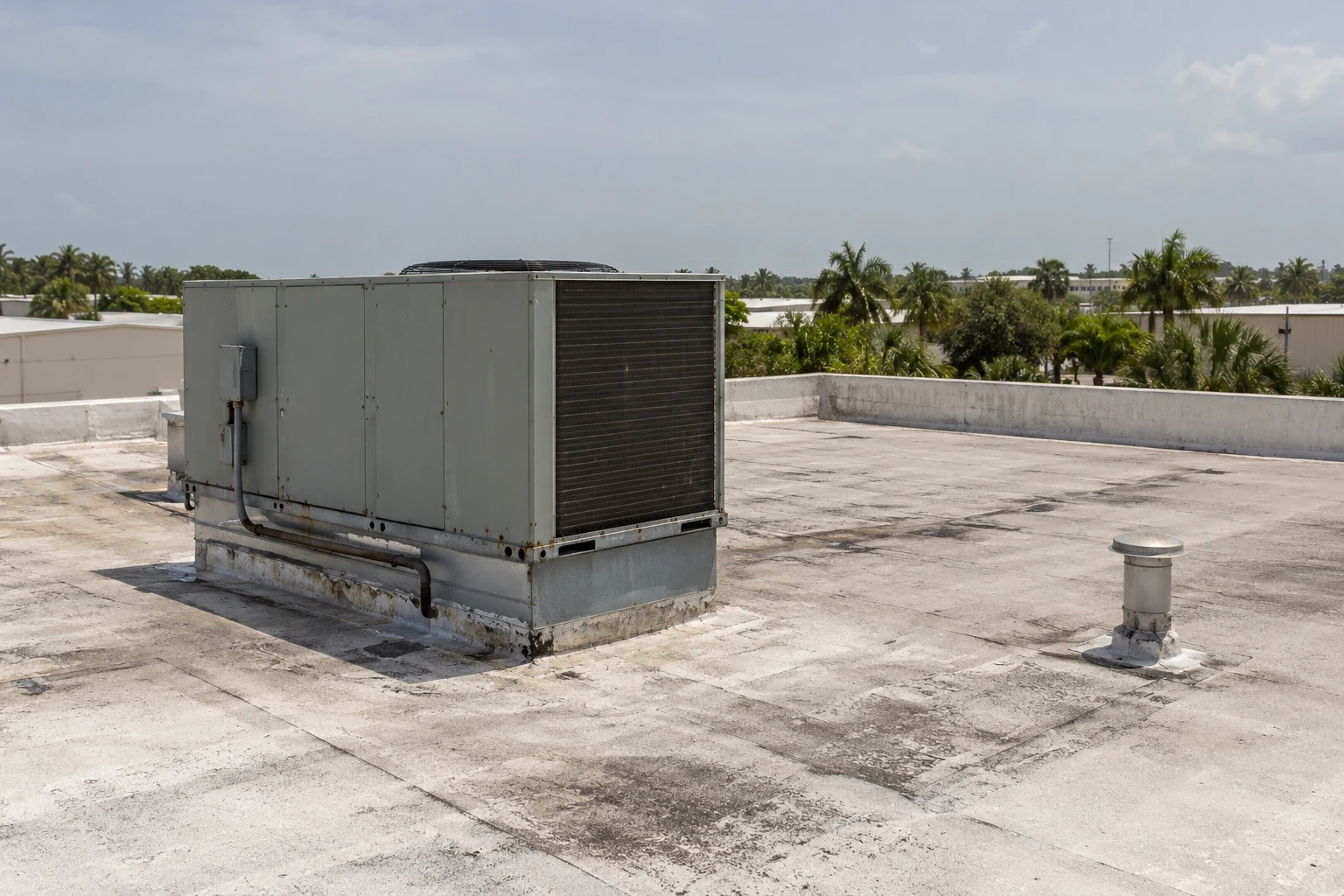
Coast Guard Station Roofing in Pembroke Pines, FL
Roof inspection, repair and replacement planning for Coast Guard station and air station buildings near Pembroke Pines, FL, scheduled around operations.
Grit packed into a scupper after one wet-season month is a small inspection finding with a large budget consequence, because it shows how much water the roof can shed before it ponds. On a Coast Guard building the same finding carries more weight, since the facility may not be able to close for a repair. The nearest example for an asset manager in Pembroke Pines, FL is Coast Guard Air Station Miami, which Miami-Dade aviation officials place on the west side of the Opa-locka airfield, about 6.6 miles away by straight line. We examine drainage, edges and penetrations first, then separate immediate leak work from capital work.
Read the drainage before the membrane
During the wet season, the roof's first job is to move water. We trace each drain, scupper and overflow, measure where water stands after a shower and note debris, vegetation and sediment around outlets. A blocked outlet can pond water on a roof that is otherwise sound, and ponded water loads the structure and stresses seams.
If standing water persists after outlets are clear, the cause may be slope, deck deflection or insulation compression. We mark those areas and recommend the correction that fits the cause: cleaning, a new outlet, a tapered build-up or a larger scope. A drain and scupper correction is often the first capital item because it reduces risk across the whole roof. It is also one of the few corrections that can be priced with confidence early, since the outlet, its flashing and the surrounding membrane can be examined from the surface.
Overflow paths deserve the same attention. A roof with a parapet on all sides needs a secondary route for water if the primary drain clogs, and that route must stay open. We check that scuppers through walls are not covered by repair material, that they sit at the right height and that the wall beneath them is not stained or softened. A finding there changes the scope from a roof repair to a roof-and-wall repair.
Plan around operations that do not stop
A rescue and homeland-security mission, as the county aviation article describes for the air station, does not pause for a roof schedule. Roof work for any facility that stands watch at all hours must be sequenced so that a section can be sealed and left quickly. We divide the roof into small areas, stage temporary protection beside each and agree on a stop signal with the facility contact.
Noise, dust and fumes near operations and living or working spaces are managed by section. Hot work is limited, adhesives are chosen for ventilation and intake locations are marked on the roof sketch. Because access to a military site is controlled by the installation and not by the contractor, we add time for badging, escorts and vehicle inspection, and we ask for those procedures in writing before pricing. A crew that waits at a gate for an escort is a crew not roofing, so the proposal states the assumed delay and what happens to cost if it grows. Our military installation roofing planning treats these items as scope, not as afterthoughts.
Keep roof material from becoming flight-line debris
Fixed-wing aircraft and helicopters are both present at the air station, according to the aviation article. Where aircraft operate, loose material is a hazard: gravel ballast, membrane offcuts, fastener caps and packaging can be thrown by rotor wash or jet blast. We plan debris control as part of the work: covered containers, hourly sweeping of the roof and ground, lashed materials and no loose stockpiles overnight. At the end of every shift we walk the work area and the ground below looking for fasteners, cut ends and plastic wrap, because a single small item can matter more near aircraft than a large item elsewhere.
Roof surfaces matter too. A gravel-surfaced roof near an operating area may need a different top surface, and edge metal must be fastened so it does not lift. For hangar buildings on the same grounds, our approach to military hangar and maintenance facility roofing applies the same discipline to larger spans and doors, and an aircraft hangar roof adds its own concerns at the door-side edge.
Detail for wind, rain and the storm calendar
The city sits in the High Velocity Hurricane Zone, which raises the bar on fastening and testing; its default is Exposure C, with Exposure D used where ASCE 7-22 calls for it. Under the Florida Building Code, 8th Edition (2023), edges, corners and penetrations take the highest uplift, so those get the heaviest fastening and the most careful flashing.
The wet season runs from mid-May to mid-October by the Weather Service's reckoning; the roughest weather arrives early, from mid-May into July, and tropical systems matter most from August through October. We set daily opening limits against that calendar and keep protection staged. In practice that means no section is opened unless the crew can close it before the likely afternoon shower, and no section is left open when a named system is forecast to approach. After a major storm, wind damage roof repair begins at edges and rooftop equipment, then moves to the field and drains.
Retain the record for the next work package
The closeout file lists the system found, the material removed and retained, the drainage changes, the photographs of each opening and any questions that remain for the facility engineer. Public descriptions of an air station's fleet and staffing are dated and do not describe the roof, so we leave them out of the condition record and rely on what we measure.
Managers with several government or commercial properties across Pembroke Pines and the nearby Hialeah area can keep the same format for each building. A consistent record helps them set the order of capital spending and compare drainage risk across roofs. Because wet-season storms bring lightning, flooding and hail as well as wind, the file also notes which roofs have overflow routes, which have only a single drain and which need an added outlet in the next work package.
Heat belongs in that file as well. Normal July highs of 91 to 92 degrees Fahrenheit at the Pembroke Pines station go into that file too, along with how crews were protected and which materials needed shaded storage.
Commercial Roofing Questions
How near is the closest Coast Guard air facility?
Coast Guard Air Station Miami lies about 6.6 miles from the weather station on a straight line; gate and driving time come on top and are priced separately. Access time and procedures are priced separately because the installation sets them.
What is the first inspection step on a station building?
Drainage. We walk to each outlet, photograph the area, note standing water and debris, and check the surrounding flashing. Then we survey edges, penetrations and equipment. The report orders findings by consequence, so the facility knows what to correct before the next heavy rain.
Can roof work happen without interrupting watch operations?
Often, if the roof is opened in small sections and each is sealed at the end of a shift or on a stop signal. We agree on noise, fume and access limits with the facility contact and keep temporary protection staged on the roof.
How is debris near aircraft controlled?
We use covered containers, secured materials and frequent sweeps, and we avoid loose surfacing where it could be displaced. Materials are removed from the roof at the end of each work period rather than stacked.
Does hurricane zone status change the specification?
Yes. The High Velocity Hurricane Zone sets stricter fastening, edge and testing requirements, and permit resources include a commercial reroof statement. We assemble the documents with the scope so review is not a surprise.