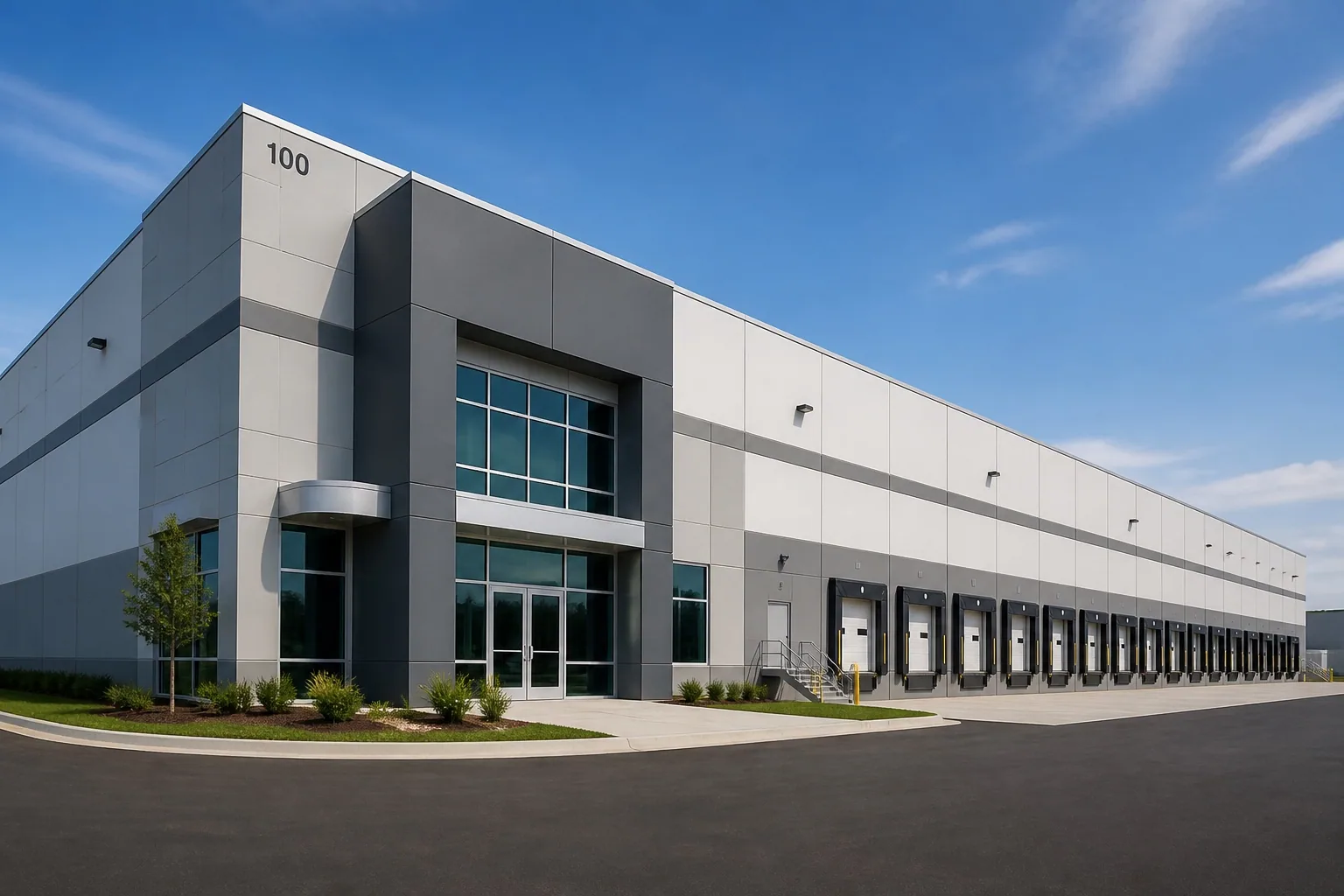
Military Hangar and Maintenance Facility Roofing in Pembroke Pines, FL
Roof inspection, repair and replacement planning for military hangars and aircraft maintenance buildings near Pembroke Pines, FL, with hot-work limits.
Staining that tracks one line across a long roof span usually points to a single failed detail, not a failed roof, and that distinction can move a repair scope by an order of magnitude. Hangars and aircraft maintenance buildings put the question under pressure because their interiors hold aircraft, tools and people who cannot be moved easily. For an asset manager in Pembroke Pines, FL, the nearest military aviation setting is Coast Guard Air Station Miami at Opa-locka, about 6.6 miles by straight line, with fixed-wing aircraft and helicopters. We trace the line first, then set the removal boundary and the hot-work rules.
Trace the stain to its source
A long span gives water room to travel. A leak seen at one bay may begin at a panel lap, a purlin connection, a skylight, an exhaust penetration or a wall junction many feet away. We follow the line from the interior mark along the roof structure, compare it with the exterior detail above and photograph both. Where we cannot see the entry point, we use a controlled water test or an infrared survey rather than guess.
The finding tells us how far the repair must reach. If the failure is a single seam, a local correction restores the roof. If several laps along the same run show movement or corrosion, the finding supports a larger scope. A commercial roof leak investigation records which case applies before the owner commits money.
Assembly type changes how we read the line. On a metal roof, a stain that follows a panel seam may mean fastener back-out, a failed sealant bead or a clip that has moved with heat. On a membrane roof, the same line may follow a weld, a lap or a joint in the insulation below. We identify the system first because a metal repair and a membrane repair share almost nothing except the leak. Where the type is not obvious, a small inspection opening shows panel, deck and insulation, and we close it the same day.
Limit ignition sources near aircraft and fuel
Open flame and heat tools do not belong near aircraft, fuel storage or hazardous materials. Many maintenance buildings enforce hot-work permits, fire watches and exclusion zones, and some prohibit open flame altogether. We ask for those rules in writing before choosing a system, and we favor mechanically attached, cold-applied or heat-welded methods only where the permit regime allows them.
When a roof assembly includes foam, adhesives or solvents, ventilation and intake locations matter as well. We mark roof-mounted exhaust and air intakes on the sketch, choose products with the lowest practical odor and schedule fume-producing steps when the space below is clear or protected. These choices change the cost and speed of the job, so they appear in the proposal as scope, not as allowances.
Fire protection is also part of the roof. Sprinkler piping, smoke vents and roof-mounted fire equipment may pass through the assembly, and cutting near them can disturb systems the building depends on. We locate them on the sketch, coordinate with the facility's fire personnel and avoid altering them without direction. A Coast Guard station roof with similar penetrations follows the same rule.
Plan equipment and debris around active airfields
Where aircraft operate nearby, tall equipment can require advance coordination, and loose debris becomes a hazard. Cranes, lifts and hoists need approvals that vary by location, and rotor wash or jet blast can move anything unsecured. We schedule lift work for approved windows, tie down materials and sweep the roof and ground at the end of every period.
The Homestead Air Reserve Base, an active Air Force installation, lies about 36.1 miles from the Pembroke Pines station by straight line, well beyond the Coast Guard station and outside the nearby range we treat as routine. We include it as context only. For buildings that sit in a hangar line, the more relevant comparison is the aircraft hangar roof assembly, since door-side edges and long spans raise their own questions.
Detail for hurricane exposure and the wet season
Large roofs with few interior supports act like sails in high wind. The city lies in the High Velocity Hurricane Zone, and wind design takes Exposure C as the baseline, moving to Exposure D where ASCE 7-22 calls for it. The Florida Building Code, 8th Edition (2023), is the edition currently enforced, with the next edition expected at the end of 2026. Edges and corners take the highest uplift and get the most fastening. For permitting, we gather the city's commercial reroof statement, insulation certification and equipment form alongside the scope, so one review covers all three.
From May 15 through October 15, the Weather Service's wet season, showers come nearly every day, the stormiest stretch runs from mid-May to early July, and tropical impacts concentrate in August through October. The opened area is capped at what the crew can close ahead of the likely storm, temporary protection stays staged, and hurricane damage roof repair is scoped separately from the planned work.
Phase the work and keep the record
Maintenance facilities run on schedules tied to aircraft availability. We divide the roof into areas that match bays or zones, agree on closure times with the facility contact and record the plan in a short sequence document. Temporary protection, retained material and removed material are listed separately so the owner can see what each phase achieved. If a bay must stay empty during the work, we say how long, and if equipment must be moved for protection, we list who moves it and who is responsible for it.
For owners with roofs elsewhere, such as Miramar and the northwest Pembroke Pines industrial area, the same record format allows comparison. The closeout file holds photographs of every opening, the fastening pattern, product data and open questions for the engineer, giving the next work package a clear starting point. Our military installation roofing planning draws on that file.
Commercial Roofing Questions
What is the nearest military aviation facility?
Coast Guard Air Station Miami is roughly 6.6 miles away, measured in a straight line from the weather station, with gate time extra. Homestead Air Reserve Base is about 36.1 miles away and serves only as context.
How do hot-work rules affect the roof system?
They limit which methods are allowed. Where open flame is prohibited, we price mechanically attached or cold-applied systems and add fire-watch time if a permit requires it. We ask for the rules in writing first so the proposal matches them, and we price fire-watch time and permit lead time as separate lines because they affect the schedule more than the roofing labor does.
Can a long-span roof be repaired in sections?
Yes, if each section can be sealed at day's end and the structure allows. We divide the roof into bays or zones, stage protection beside each and record the boundary of every phase. The sequencing depends on the building's operating schedule.
How is wind uplift handled?
Edges and corners receive extra fastening or a stronger attachment pattern, and details follow the hurricane-zone requirements that the city applies. We confirm the specification with the reviewer, and the closeout lists the pattern used.
What happens if work must stop for a storm or operations?
The open area is already sealed, so the building stays protected. We keep temporary protection on site, log the stoppage and update the schedule so any added cost is clear. A stoppage that leaves one bay sealed and another open should never happen, which is why we cap the opening size against the slowest closing time.