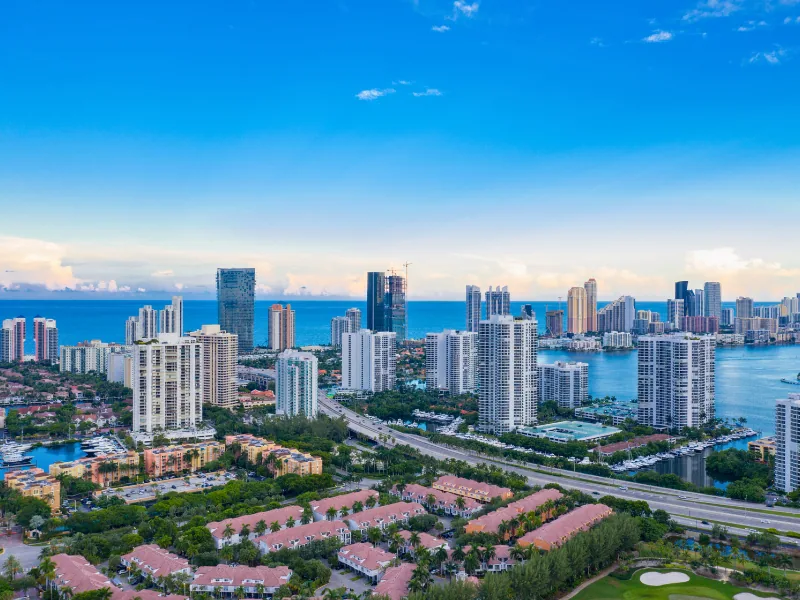
Commercial Roofing in Plantation, FL
Commercial roof inspection, repair and replacement planning in Plantation, FL for Midtown mixed-use, restaurant and independent business buildings.
Grease residue around a rooftop fan can age a membrane faster than sun does. Plantation Midtown is an approximately 850-acre central business district that combines retail, office, entertainment and residential development, and the Alliance's profile reports roughly 5,400 businesses in the city, including independently owned service, retail and dining establishments, though the count is undated. Dining and entertainment put heavy exhaust on roofs, and independent owners often manage a single building with no facilities department. In Plantation, FL we begin with the inspection finding, then explain what the roof needs in terms an owner can act.
Kitchen exhaust shortens membrane life
Grease from exhaust fans lands on the roof around them. Some membranes resist it, and others soften, swell or lose adhesion at seams. We look around every kitchen fan for staining, soft spots and open seams, and we check whether a grease containment tray is in place and working.
A restaurant roof may need a protective walk pad around the fan, a grease-resistant membrane at the affected zone or a new containment device. We price those as a separate item, since they apply to the kitchen bay and not the whole roof. Cleaning the roof on a schedule also extends the life of the surface, and we note the interval that fits the restaurant's cooking volume.
Condensate and water lines add another source. A drain line that discharges onto the membrane keeps one patch wet and invites algae and wear. We redirect those lines to a drain or a splash pad and note the change on the roof plan, since a small correction of that kind often removes the cause of a repeat stain below.
Mixed-use buildings stack tenant needs
Midtown combines retail, office, entertainment and residential development, so one structure can hold a restaurant, an office suite and apartments. Each brings a different set of rooftop equipment and a different tolerance for disruption. The roof plan lists every unit and the tenant it serves.
For an apartment roof above retail, we coordinate with the residential manager on noise and access hours. For an fitness center roof, we protect the equipment floor from dust and water. The phased opening plan identifies the most sensitive space beneath each section, and temporary protection goes there first.
Independent owners need plain scopes
An owner of a single building may not have a facilities team, so the proposal has to be readable by a non-specialist. We state the condition in a few sentences, show the photographs that support it, list the options and give a cost range for each. We say which items are urgent and which can wait.
If wet insulation is found, we explain what it means in practical terms: the material that must come out, the material that can stay and the effect on price. A commercial roof repair may be enough for a sound roof with an isolated defect. A broader scope is recommended only when the findings support it, and the owner sees the reasons.
Independent owners also tend to ask about payment timing and phases. We split a larger scope into packages that can be funded separately, such as drainage and flashing first, field membrane next. Each package leaves the roof in a sound, closed condition, so the owner is never left with a half-finished building between phases.
Afternoon storms set the stop time
Showers and thunderstorms occur close to daily through South Florida's wet season. The early part of the season brings damaging wind, hail and lightning, and tropical systems matter most from late summer into October. A roof opened in the morning has to be dry before the clouds build.
We set an opening limit, stage temporary protection and agree on a stop time with the owner. Loose material is secured when wind is forecast. After a storm, we check the temporary work and the finished sections before the next phase begins. Immediate leak work is kept separate from capital work, so each decision can be made on its own terms. Evening events and weekend crowds are part of the calendar too, and we avoid hoisting over entrances during them, moving the lift to a side of the building that stays quiet.
Check the small details first
Skylights, vents, signs and drains are small items that cause large leaks. We test the curb and glazing seal at each skylight and penetration, check the bracket sealant at signs and confirm that each drain is clear and sound. Edge metal and coping joints get the same attention, since wind-driven rain finds them.
These details are inexpensive to correct compared with the interior damage they cause. We list them in order of risk and recommend a single visit to handle the cluster. Entertainment and retail tenants rely on finished interiors, and a stained ceiling in a public space costs more than the repair that would have prevented it.
Signs deserve a note of their own. A sign bolted through the membrane relies on sealant that ages in the sun, and a loose bracket moves with every gust. We tighten, reseal or reflash each mounting point, and where a sign is due for replacement we recommend coordinating its removal with the roof work so the opening is flashed properly once.
Interstate access helps delivery, not parking
Plantation has access to the interstate system and the Florida Turnpike, which helps material delivery. In a dense business district, the harder problem is the last block: loading zones, parking structures, pedestrian routes and event traffic. We draw a staging plan that shows the hoist, the waste route and the times when deliveries can arrive.
Owners with buildings in Sunrise or Davie can sequence them in one program. A roof capital plan ranks the roofs by condition and exposure, so the next work package goes to the building that needs it most. The plan is short enough for an owner to read in a single sitting, and it names the one condition on each roof that decides the timing.
Commercial Roofing Questions
How can an owner tell whether grease is damaging a roof?
Look for dark staining, soft or swollen membrane, and lifted seams around exhaust fans. A walk with a probe confirms it. If grease is reaching the membrane, a containment device and a resistant surface may be needed in that area.
What should a small owner ask for in a roof proposal?
A written description of the condition, photographs, a list of options with costs and a statement of what each leaves undone. The proposal should separate urgent work from deferrable work. We prepare ours in that form.
Do mixed-use roofs need a separate plan for each tenant?
They need one plan that lists each tenant's equipment and sensitivity. The plan sets the order of work, so the most sensitive space beneath is protected first. Tenants receive notices that apply to their bays.
How can skylight leaks be prevented?
By inspecting the curb, the glazing seal and the flashing on a schedule and replacing sealant before it fails. Where a skylight has leaked more than once, reflashing or replacing the unit is the sound choice. We test each opening and recommend one or the other.
What happens if storms delay a project for several days?
The roof stays closed and protected, and the schedule shifts. We keep temporary protection in place and resume when conditions allow. The owner receives a note on the revised dates and any change in cost.