Solar-Ready Commercial Roofing in Pembroke Pines, FL
Prepare commercial roofs for solar in Pembroke Pines with condition review, attachment coordination, drainage access and a practical roofing work sequence.
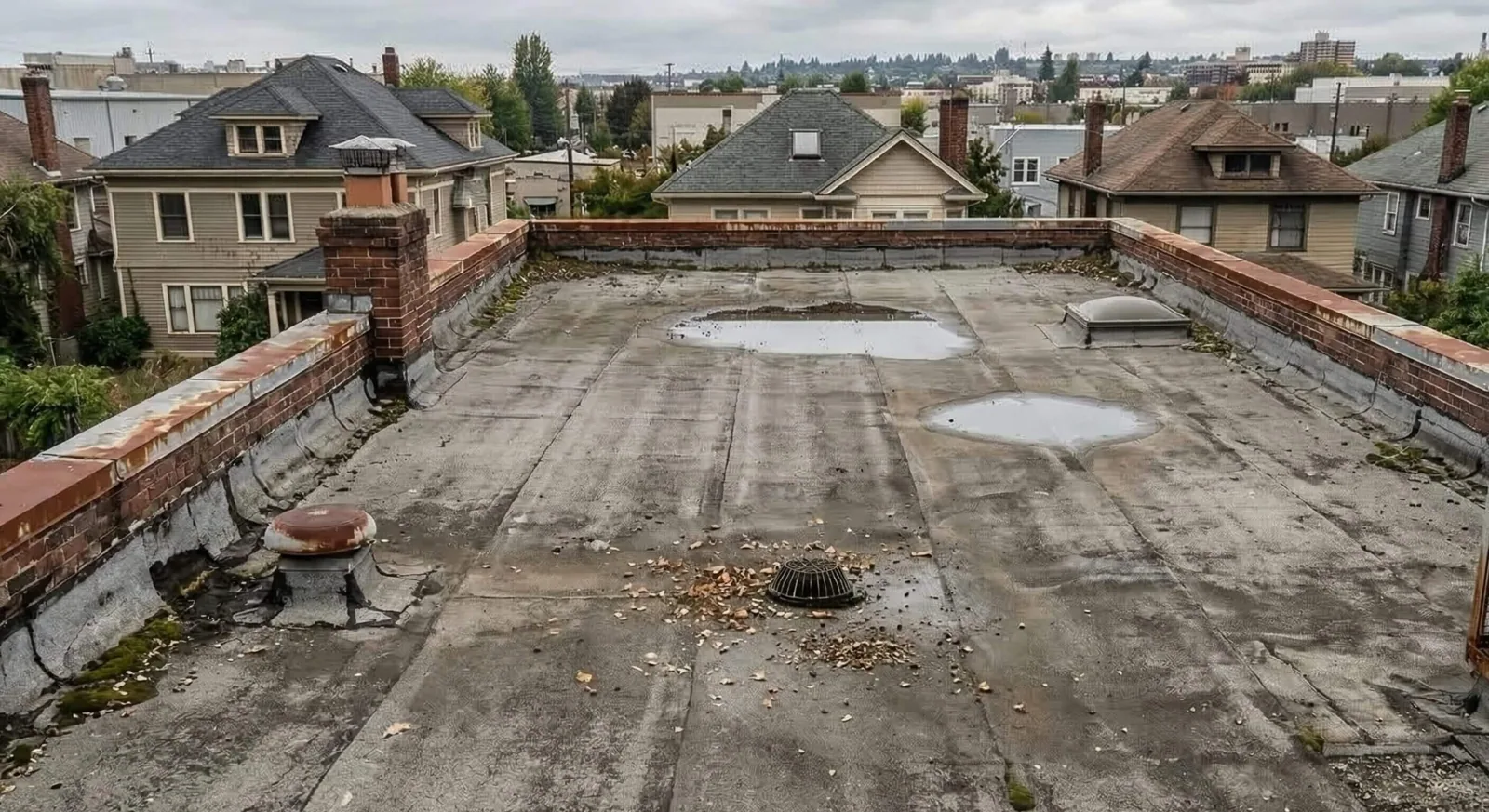
A serviceable membrane with a deteriorated curb can leave a solar project facing two different roof decisions. The field may be retainable, while the deficient detail needs correction before equipment restricts access. In Pembroke Pines, FL, we assess solar-ready roofing by identifying roof work that should precede an array and the interfaces requiring coordinated design. The owner needs a usable construction sequence, not a label that assumes the existing roof is suitable for every proposed installation.
Solar equipment changes access, loading and the way future roof repairs can proceed. We examine the existing assembly and its unresolved condition questions before the layout is finalized. A roof condition examination can identify deterioration, leak concerns and details needing further investigation. The resulting recommendation should distinguish roofing corrections from structural and solar-system decisions handled by the appropriate project professionals.
Assess the roof before fixing the layout
An array can make later access to the membrane and insulation more involved. That makes the existing roof's condition and remaining service expectations relevant before installation. We examine seams, flashings and drainage, and investigate concealed material where needed. The owner should understand whether repairs can leave a reasonable retained assembly or whether broader roof work should be considered before the equipment is placed.
Where concealed moisture investigation is suitable, it can direct selective confirmation of affected areas. The survey needs interpretation and an appropriate basis for the removal recommendation. A dry-looking membrane is not sufficient evidence for closing off access to an uncertain assembly. We identify unresolved areas and the next examination needed so the roof assessment can inform the solar schedule rather than arrive after the layout has constrained the repair.
Structural questions stay with their assessment
Equipment loads, supports and attachment need evaluation for the intended system and building. A roof walk can identify observed damage or an unanswered support question, but it does not establish structural capacity. We coordinate the roofing information with the qualified design personnel assessing the proposed array. Their evaluation should address the actual equipment and arrangement rather than assume that a visibly firm membrane demonstrates capacity beneath it.
Ballasted and attached configurations present different roof interfaces and load considerations. The roofing scope needs to address membrane compatibility, protection and access for the selected approach. We identify those requirements alongside support and penetration coordination. The owner can then review a complete project interface instead of separate proposals that leave attachment, roof protection or the load path without an assigned responsibility.
Keep drainage and service access workable
Array supports and related equipment should not obstruct the intended water path or make outlets impractical to maintain. We compare the proposed locations with drains, scuppers, low areas and existing equipment routes. A component that clears the membrane can still trap debris or complicate maintenance if its placement interrupts access. Those relationships need review before the final arrangement is accepted.
Future leak investigation also needs a practical access plan. Service routes, clearances and equipment removal responsibilities can affect how the roof is examined and corrected after installation. We discuss that consequence with the owner and project team. Where drainage correction is already needed, completing it before the array may simplify the work and leave an intended discharge path that can be preserved throughout the equipment installation.
Detail the roof connections deliberately
Penetrations need a compatible flashing arrangement and suitable support. A seal around a fastener or pipe does not automatically provide the appropriate connection for the assembly. We examine the intended detail and identify roofing work needed for its installation. The interface should accommodate the component and expected movement without leaving an improvised transition that later maintenance personnel cannot assess clearly.
For a TPO membrane roof, protection and flashing materials need to fit the system and selected installation requirements. Existing warranties and applicable conditions also deserve review before alterations proceed. We identify the roofing questions and coordinate the necessary documentation, while avoiding assumptions about manufacturer approval or coverage. The proposal should explain how the new equipment will connect to the roof and what needs resolution before the work begins.
Local building use informs phasing
The SW 145th Avenue Office Corridor contains office development where roof work can affect tenants and equipment serving occupied rooms. Preparing the roof before a solar installation may require selective openings or a broader replacement interval. We discuss the occupied space beneath those areas and the access needed for each trade. The sequence should allow roofing corrections to be completed and assessed before equipment limits reach to the affected details.
Chapel Trail includes warehouse and flex properties where loading operations, stored goods and separate occupants can influence material handling. A project in the Chapel Trail commercial area needs those constraints included in the coordinated plan. South Florida wet-season thunderstorms also affect opening limits and temporary protection. We keep roof closure and equipment staging connected so an array schedule does not leave an unfinished roofing transition exposed.
The capital sequence should remain legible
Preparing a roof can involve localized corrections, a recover assessment or replacement, depending on the findings. We identify the work justified by the existing condition and separate it from changes driven by the proposed array. That lets the owner see whether a capital package resolves current deterioration, creates a suitable interface for new equipment or does both. The distinction also helps compare a combined schedule with separate projects.
Closeout should record the retained roof, corrected areas, new penetrations and access requirements. We can connect those items with future roof capital planning, including the coordination needed if later replacement requires equipment handling. A solar-ready decision is more useful when the owner understands that later obligation. The completed project should leave a roof that can be maintained and investigated, with clear responsibilities at its equipment connections.
Commercial Roofing Questions
Does a sound-looking roof need investigation before solar?
A visual view establishes surface observations, while concealed material and attachment may need further assessment. The proposed equipment can make later investigation and repair more involved. We examine the conditions relevant to retention and identify unresolved questions before the layout is fixed. That does not mean every roof needs replacement, but it gives the owner a basis for the preparation scope instead of relying solely on appearance.
Who confirms the roof can carry the array?
The appropriate qualified design professional evaluates structural capacity for the proposed equipment and arrangement. We provide roofing observations and coordinate the roof interfaces affecting installation. Membrane condition, insulation and flashing also need attention, but they are separate from the capacity assessment. The project should identify both responsibilities so accepting the roof surface does not become an unintended structural conclusion.
Should existing leaks be repaired before equipment arrives?
An active defect should be investigated and corrected with access suitable for its repair. Placing equipment first can complicate that access and leave the concealed consequence unresolved. We identify the entry mechanism, affected material and correction needed before coordinating the installation sequence. The owner should know which roof areas have been resolved and which remain subject to further examination.
Will the solar installation preserve roof warranty coverage?
Existing terms and the proposed alterations require specific review with the applicable parties. We identify the roofing details and information needed for that discussion, but do not assume acceptance or coverage. The construction scope should fit the selected roof and equipment interface regardless. Keeping that review separate from unsupported assurances gives the owner a clearer decision before penetrations or supports are installed.
How should later maintenance be coordinated?
Preserve access to outlets, service routes and roof details, and record the personnel responsible for equipment handling where it is needed. We assess affected areas after installation and identify appropriate inspection needs. New leaks or equipment changes may require coordination between trades. The owner benefits from that arrangement being defined before the array is placed rather than during an urgent repair beneath it.