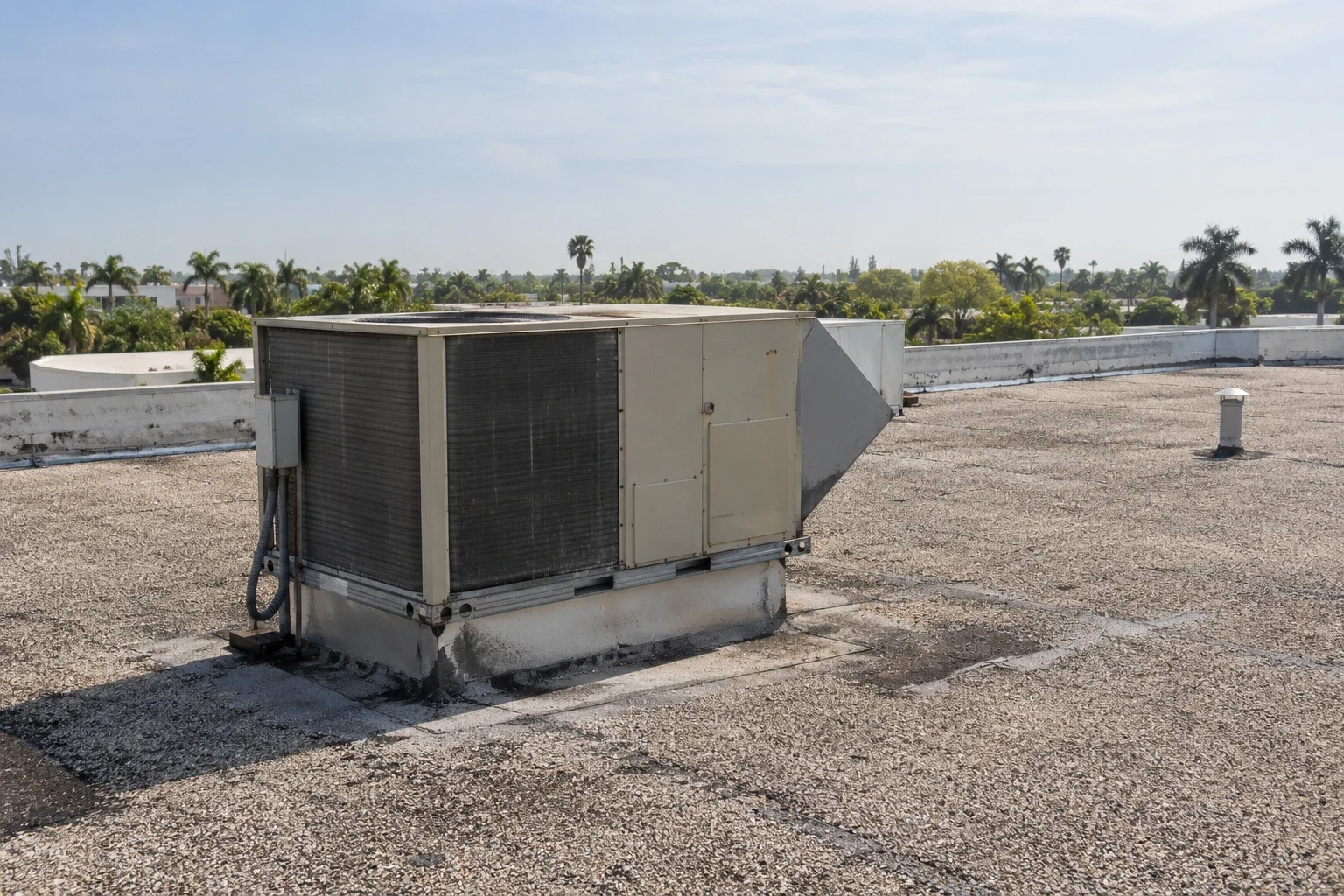
Silicone Roof Coatings in Pembroke Pines, FL
Assess silicone roof coatings in Pembroke Pines with substrate preparation, moisture correction, detail reinforcement and defined restoration limits.
A coating worn through beside a drain can be a surface-maintenance finding or evidence of a wider assembly problem. The distinction depends on the substrate and the water path, not the coating color. In Pembroke Pines, FL, we evaluate silicone roof coatings by establishing what the retained roof can support and which defects need correction first. The capital recommendation should connect the proposed application with that preparation package.
Silicone coating systems can form a protective surface over suitable roof assemblies when their requirements are met. Material selection needs consideration of the existing substrate, exposure, details and maintenance access. We compare the work with a complete restoration scope rather than treat the field application as the whole project. A suitable finish depends on the assembly and connections it is expected to protect.
Start with the retained roof
A coating does not establish that concealed insulation is dry or that the deck and attachment remain acceptable. We inspect the membrane and details, then identify any need for moisture or substrate investigation. Active leaks, soft material and deficient supports can change the scope. The owner should understand which conditions must be corrected before retention becomes a reasonable construction decision.
Where moisture investigation is suitable, it can direct confirmation and help define removal. The findings need interpretation rather than automatic acceptance of every thermal anomaly as affected insulation. Localized correction may leave a usable substrate for restoration, while distributed deterioration may justify another assembly. We explain that distinction before the coating proposal is evaluated as an alternative to replacement.
Preparation determines the connection
Contamination, old coatings and weathered repair products can affect adhesion. We examine the surface and select preparation appropriate to the proposed silicone system and existing roof. Cleaning must leave a suitable area without damaging material or driving water through deficient details. Required primers and adhesion assessment should be considered where the selected system calls for them.
A proposal should identify that preparation and any removal of unsuitable material explicitly. One coating price may exclude the detail reconstruction or old-treatment removal another scope includes. Those are different construction packages, not necessarily a difference in coating value. We explain the retained substrate condition and the work needed to prepare it so the owner can compare suitable alternatives using the same roof findings.
Details need more than field coverage
Seams, curbs and penetrations can require reinforcement or reconstruction before the field application proceeds. A moving support or inadequate termination remains a construction issue beneath the new surface. We examine those interfaces and identify the correction needed for an acceptable connection. Simply applying more coating at a visible gap can leave the defect mechanism active where the component continues to move.
We coordinate flashing corrections with any equipment work required to reach the detail. The selected materials and method need compatibility with the retained roof and coating system. Where a defect extends into affected insulation, the removal boundary should address that material as well. The finished coating should protect a suitable reconstructed interface, not conceal a connection whose support remains unresolved.
Water exposure requires a complete assessment
Some silicone systems are considered for conditions involving persistent water exposure, but suitability needs review for the specific product and roof. That does not remove the value of functional drainage. We examine outlets, collection areas and the condition around them before recommending restoration. The coating proposal should not treat water tolerance as a reason to leave an outlet obstruction or deficient flange untouched.
A coating generally follows the existing roof geometry. Slope correction, drain adjustment or a designed drainage change may need separate construction. We compare acrylic coating alternatives against the actual exposure and their requirements where another system is appropriate to consider. The useful comparison identifies application, preparation and service conditions rather than assume the two materials can be substituted under every roof condition.
Application needs a suitable work period
The prepared surface and weather must suit the selected product's installation requirements. Rain, surface moisture or unsuitable conditions can require the sequence to change. We evaluate preparation, application and curing together before defining the day's area. Material handling and protection of adjoining components belong in that plan, especially where application occurs beside equipment or an occupied entrance.
South Florida wet-season thunderstorms create recurring scheduling considerations for Pembroke Pines roofs. A prepared area may need another assessment if the weather changes before coating is applied. We keep the work limit practical and identify how unfinished details will remain protected. The application should proceed from suitable conditions rather than be forced to follow the original schedule after a material or weather prerequisite is no longer met.
Occupied use influences the method
Completed office properties in the SW 145th Avenue Office Corridor lie south of Pines Boulevard. For a property there, application and preparation may need coordination with roof access, air intakes and equipment serving tenants. We identify those constraints before selecting material movement and work boundaries. A restoration approach can retain a suitable assembly while still requiring deliberate planning around the occupied rooms beneath it.
The Palm Avenue City Center Redevelopment Area includes commercial and multifamily uses. At a property in the Palm Avenue City Center Redevelopment Area, shared access or different occupant schedules may influence the sequence. We assess the actual operating conditions and the roof details needing attention. Those findings determine whether application can proceed in one planned area or requires smaller coordinated work packages.
Future correction needs compatible materials
After installation, repair and recoating materials must suit the silicone system and its substrate. New penetrations or equipment changes can damage the restored roof or create another detail connection. We identify the system and appropriate maintenance requirements in the closeout record. That information helps later personnel avoid an improvised product that leaves the next repair dependent on an unsuitable interface.
A new membrane assembly may be considered instead where extensive substrate correction makes restoration less practical. We compare complete work scopes and explain the retained material assumptions behind each. Silicone coating can support a reasoned restoration decision on a suitable roof, with preparation, detail correction and maintenance clearly included. The owner's capital choice should follow those conditions rather than the appearance of a new finish alone.
Commercial Roofing Questions
Can silicone be applied over old repairs?
Existing products and membrane condition need examination for compatibility and preparation. Some areas may accept an appropriate system after cleaning or priming, while unsuitable treatments require removal. We identify that work before application. The coating connection should rely on a substrate evaluated for the selected system rather than assume that everything already adhering to the roof is suitable to remain.
Does silicone make ponding correction unnecessary?
Product suitability for water exposure is separate from the roof's drainage condition. Obstructed outlets, deficient connections and geometry concerns still deserve assessment. We explain which correction the scope includes and which requires further design review. Selecting a coating should not turn an identifiable drainage defect into an accepted condition without considering its effect on the assembly and maintenance.
Why does the scope include reinforcement at seams?
The selected system may require detail treatment appropriate to the connection and its condition. We examine the seam and supporting material, then identify preparation or reconstruction needed. Reinforcement should fit a suitable detail, not serve as a substitute for correcting movement or damaged support. The proposal explains that relationship so the owner understands the work beyond the field application.
What affects the timing of application?
Surface preparation, actual weather and the product's installation requirements determine when the next step can proceed responsibly. We assess those prerequisites and adjust the area or schedule where necessary. Occupied access can also limit a workable interval. The goal is a suitable installed connection with appropriate protection of the building, rather than application on a date that no longer fits the conditions.
How should later roof alterations be planned?
Identify the installed coating system before selecting materials for new penetrations or repairs. Coordinate the component support and water-control detail with the roofing work. We can examine affected areas after equipment changes and identify suitable corrections. Retaining the system information and work locations makes the restored roof easier to maintain without introducing an incompatible treatment at the next service visit.