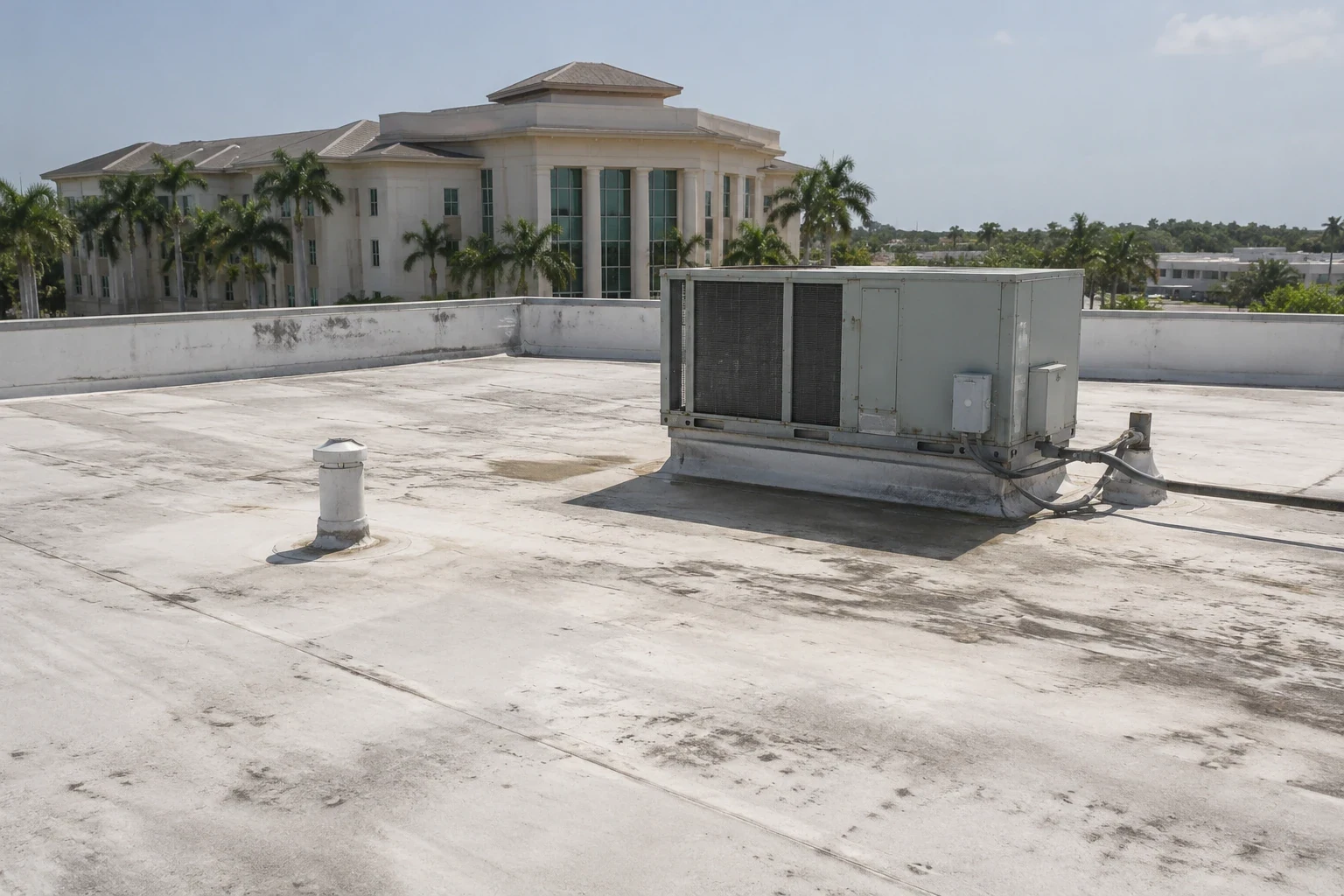
Acrylic Roof Coatings in Pembroke Pines, FL
Plan acrylic roof coatings in Pembroke Pines with drainage assessment, substrate preparation, suitable curing conditions and clear restoration boundaries.
A coating thinned along a service route can call for renewed protection, while a similar worn area beside persistent water needs a drainage assessment first. The new application should not treat those conditions as interchangeable. In Pembroke Pines, FL, we evaluate acrylic roof coatings by connecting substrate condition with the exposure the finished system must accommodate. The owner receives a preparation and correction package before a field application is recommended.
Acrylic coating systems can provide a protective or reflective surface on suitable roof substrates, with product-specific requirements for preparation and service conditions. We examine the retained assembly and active defects before selecting the system. A comparison with silicone roof coatings should explain those requirements, rather than reduce the choice to surface color or assume that either material fits every roof.
Drainage is an early suitability question
Persistent water can affect the suitability of a proposed acrylic system, so the actual product requirements and roof conditions need review. We examine low areas, outlet obstructions and the discharge connection before application is accepted. A coating generally follows the geometry beneath it. If the water path needs construction changes, those changes belong in the scope rather than remain hidden under the new finish.
The correction may involve maintenance, a localized drain detail or further design assessment of roof elevations. Where drainage work is necessary, it should be coordinated before coating preparation and application. The owner can then compare suitable restoration options on a roof with an evaluated water path instead of assuming the coating will create one.
Substrate condition defines the preparation
Weathering, contamination and prior treatments can affect adhesion and the method required to leave a suitable surface. We examine the roof and identify cleaning, priming or removal appropriate to the selected system. Preparation should not damage the membrane or introduce water into deficient details. The proposal should describe the construction necessary to establish the application surface, not simply include a general allowance for cleaning.
Some old repairs can remain after suitable assessment, while others may need correction because their material or condition prevents an acceptable connection. We identify those boundaries and distinguish local preparation from a wider reconstruction question. A new field coating should protect retained material evaluated for the system. Covering an unresolved membrane or support defect merely changes its appearance without establishing that the assembly can continue in service.
Details need assessment before coverage
Curbs, laps, seams and metal transitions can need specific reinforcement or reconstruction. The selected coating system's detail treatment should fit the component and its condition. We examine movement and support where they affect the connection. A recurring gap beside unstable equipment requires more than additional liquid material at the visible opening.
For flashing corrections, suitable retained material and workable geometry remain prerequisites. We identify any equipment access needed and how the detail will connect with the roof field. Some roof areas may also require moisture investigation before retention is accepted. Those findings help establish whether restoration remains practical or another assembly should be evaluated because preparation and correction have become substantial.
Curing conditions influence the sequence
Acrylic application and curing need environmental and substrate conditions appropriate to the product. A water-based system may be affected by rain before it has developed the intended film, while surface moisture or unsuitable temperature can prevent the planned step from proceeding. We review those requirements for the selected system and actual property. The work area should be sized so its preparation and application fit a suitable interval.
South Florida has frequent wet-season showers and thunderstorms. In Pembroke Pines, that makes forecast review and a practical curing window important to the plan. A roof prepared earlier may need another assessment if conditions change before application. Material requirements should guide the sequence instead of being treated as obstacles to an otherwise fixed application date.
Reflectivity needs a building context
With comparable exposure, a more reflective finish absorbs less incoming solar energy; that surface characteristic is one part of evaluating an acrylic restoration. Its effect on the property's energy use depends on the building, insulation and operation. We examine the roof construction and identify the information needed for a project-specific energy assessment where that outcome is central to the owner's decision. The coating scope itself should not promise an unsupported utility reduction.
An alternative reflective membrane assembly may be considered where restoration is unsuitable or broader capital work is justified. We compare removal, substrate correction, attachment and detail work before discussing surface properties. Those construction differences can explain more of the budget than the finish alone. The owner should know which option resolves the existing condition and what operating-performance question remains for separate analysis.
Local operating needs shape application
The Northwest Pembroke Pines Industrial Area contains industrial properties served by US 27 and Interstate 75. A project there can require coordination with loading routes and rooftop equipment, even where much of the assembly is retained. We discuss preparation access, material handling and the activities beneath any selective correction. Restoration should not be presented as an automatic interruption-free approach without examining those actual operating conditions.
Commercial and residential uses are both present in the Palm Avenue City Center Redevelopment Area. For a mixed-use redevelopment property, occupied access and air intakes may influence the application boundary. We identify those requirements before scheduling and protect adjoining components appropriately. The selected method should fit the property as well as the substrate rather than leave occupant coordination until after preparation begins.
Future maintenance should fit the finish
Traffic, debris and equipment changes can damage or alter a coating after installation. The completed record should identify the system, corrected details and material retained beneath it. Suitable cleaning and repair methods need to remain available to maintenance personnel. An unidentified later product can complicate the next restoration by introducing a connection whose compatibility has not been assessed.
A maintenance schedule for the restored roof can track drainage, wear and new penetrations. Renewed coating protection may become appropriate where the assembly remains suitable, while another defect can require investigation or reconstruction. We explain those distinctions in the condition record. The owner then has a useful next decision based on the roof's actual findings instead of assuming that every future concern is resolved by another application of the same material.
Commercial Roofing Questions
Can acrylic coating be applied to a roof that retains water?
The product's suitability and the roof's drainage condition require evaluation. Persistent water can limit an acrylic system's appropriate use, and an outlet or geometry defect may need correction first. We examine those findings and identify the work needed. Restoration should follow an evaluated exposure condition rather than assume that a fresh coating makes every collection area acceptable.
What happens if rain interrupts the application?
The response depends on the installation stage, selected product and its condition after the event. We assess the affected area and follow the requirements appropriate to completing a suitable system. Preparation or correction may need to be repeated where necessary. The schedule should allow that evaluation instead of automatically proceeding over material whose curing or connection has been compromised.
Does the coating repair separated seams by itself?
Deficient seams need examination and treatment suitable to their condition before field application. Some connections require reinforcement within the system, while others need reconstruction or support correction. We identify that work separately so the owner understands the preparation package. Covering an active separation is not the same construction decision as restoring an acceptable connection beneath the finish.
How should the reflective benefit be evaluated?
Consider the roof surface alongside insulation, building use and cooling operation. A project-specific assessment can evaluate the energy question where necessary. We explain the construction and maintenance scope without assigning a universal saving. The owner can then judge reflectivity as one component of a suitable roof decision rather than substitute it for correcting moisture, drainage or attachment conditions.
Which record helps with another restoration later?
Keep the installed system information, preparation work, repaired areas and maintenance observations. Later changes at equipment and penetrations should be recorded as well. Those details help establish compatibility and retained condition before another application is selected. We identify the areas that need monitoring so the next capital recommendation can use actual condition changes instead of relying solely on the appearance of the existing finish.