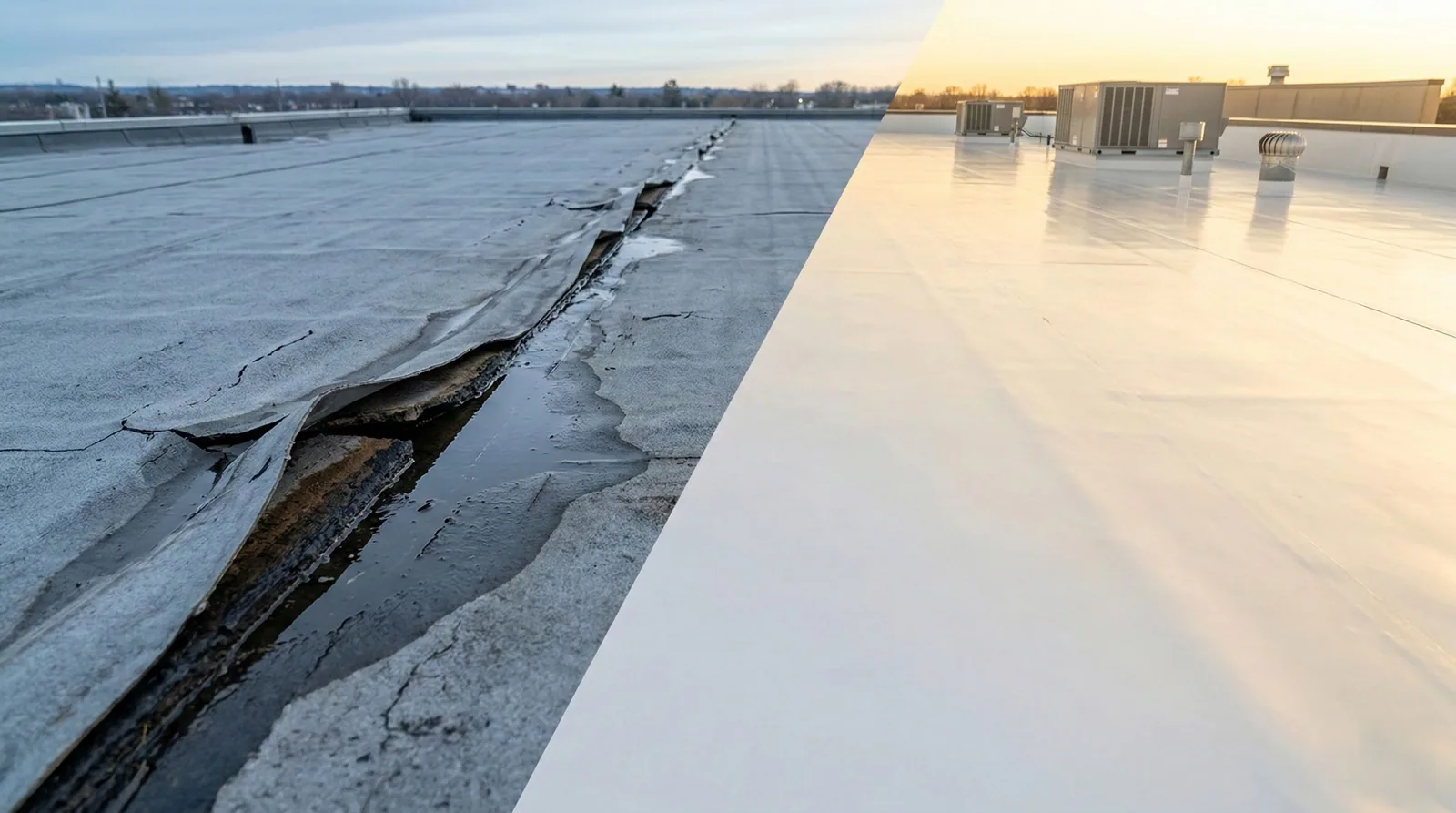
Roof Coating Restoration in Pembroke Pines, FL
Evaluate roof coating restoration in Pembroke Pines with substrate checks, moisture removal, detail preparation and a practical service-life decision.
A weathered roof surface over dry, firm material can present a restoration opportunity, while the same surface over damaged insulation needs a different scope. A coating cannot supply the missing support or remove concealed moisture. In Pembroke Pines, FL, we examine that distinction before recommending roof coating restoration. The useful capital question is whether preparation and targeted corrections can leave an assembly suitable for continued service.
Restoration combines a suitable coating system with examination, cleaning, defect correction and detailed preparation of the roof beneath it. It should address the existing material and the conditions that caused deterioration. We compare that work with localized roof repair and broader replacement where necessary. The recommendation needs to explain why the assembly can remain in service and which corrections must precede the coating.
The substrate must remain useful
A coating follows the roof below it. Distributed membrane failure, damaged support or unsuitable attachment can make restoration an inadequate response even where a product will adhere to part of the surface. We examine field material, seams and flashing connections, then investigate concealed condition where the findings warrant it. A continuous-looking membrane should not be accepted as proof that the insulation and deck can be retained.
Areas containing affected insulation need a defined removal and rebuilding scope before restoration is considered. We can use moisture investigation where the assembly and conditions support it, with appropriate confirmation of suspect areas. The findings should identify the material requiring correction rather than present a broad temperature pattern as an automatic removal map. Extensive deterioration can move the recommendation toward another roof system or replacement.
Preparation has construction value
Contamination, chalking and prior repair materials can affect adhesion. Cleaning needs to leave a suitable surface without damaging the membrane or forcing water through deficient connections. We evaluate preparation and any required primer against the installed roof and the proposed coating system. Adhesion assessment may help establish whether the prepared substrate is suitable before the full application proceeds.
A price comparison should identify that preparation work explicitly. One proposal may assume simple cleaning while another includes removal of unsuitable repairs and reconstruction of deficient seams. Those are different scopes, even if the proposed finished coating sounds similar. We explain what must be corrected and what can remain so the owner can compare the material application with the construction work necessary to support it.
Details require their own correction
Flashings, penetrations and joints can need reinforcement or reconstruction before the field receives coating. Movement at a poorly supported curb connection will continue unless that condition is addressed. A coating applied across an active separation can leave the underlying mechanism unresolved. We identify the connection and select a compatible correction rather than treat all details as another area for additional liquid material.
Existing drainage also remains relevant. Standing water, inadequate discharge and persistent low areas require examination before the coating is chosen. A silicone coating system and an acrylic coating system have different application and exposure considerations. Selection needs to account for the roof conditions and the applicable product requirements, not simply color or a general preference for one coating chemistry.
Application conditions affect the sequence
Surface dryness, temperature and the forecast influence coating application and curing. A prepared roof area may need to be rescheduled if conditions no longer support the next step. We plan how preparation, detail correction and application fit within suitable work periods, including protection of materials and adjoining property. The schedule should preserve the conditions required for a reliable installation rather than assume that preparation commits the crew to immediate coating.
South Florida's wet season brings frequent showers and thunderstorms. In Pembroke Pines, that makes daily application limits and forecast review particularly useful. Coating work also needs attention to occupied entrances, air intakes and equipment that could be affected during preparation or application. We discuss those concerns before mobilizing, so the restoration sequence fits both the roof's material requirements and the building's operating space.
Local building uses shape the scope
The Pines Boulevard Commercial Corridor contains a concentration of commercial development. For an occupied property there, restoration may reduce field removal where the roof is suitable to retain, but preparation and detail work still require coordination. We identify the roof access, affected intake locations and practical work boundaries before presenting continued occupancy as a benefit of the chosen approach.
Warehouse and flex uses in Chapel Trail can create a different staging discussion, including loading operations and equipment service routes. Restoration work in the Chapel Trail commercial area needs a suitable way to clean the roof, handle removed material and protect the operating areas below any selective corrections. A retained roof can support a measured capital decision only after those preparation and access requirements have been included.
The service interval needs maintenance
Coating restoration is intended to preserve a suitable assembly, not reset every component to new condition. We record what was retained, which details were corrected and what ongoing attention the installed system needs. Rooftop traffic, debris and later equipment work can damage the surface or alter its water paths. The completed restoration belongs in the asset record with its actual construction scope and maintenance requirements.
A preventive maintenance program can track those areas and identify new defects before they become a larger removal package. We discuss the circumstances that would prompt another condition assessment, including renewed leakage or changes at equipment connections. The owner can then evaluate continued service against actual findings instead of assuming that a coated surface has resolved every future capital question.
Commercial Roofing Questions
Can we coat a roof with several active leaks?
Active leaks need investigation and defined corrections before restoration is selected. Multiple leaks may arise from localized details or from distributed deterioration, and those conditions lead to different recommendations. We examine the entry points and supporting material first. A coating may fit a sound repaired assembly, while widespread affected material can make another capital approach more reasonable.
Why is adhesion assessment included in the scope?
The coating needs a suitable connection to the prepared roof surface. Weathering, contamination and old repairs can affect that connection. Appropriate assessment helps establish whether the preparation and selected materials will work together. We identify any areas requiring a different correction before committing the entire roof to the application, so the scope follows the actual substrate rather than an assumed clean condition.
Will restoration change the roof slope?
A field coating generally follows existing geometry. Correcting a persistent low area may require separate work to insulation, drainage or the assembly beneath the surface. We evaluate those conditions before application and explain what the restoration includes. Treating a low spot with more coating does not by itself provide a designed drainage path or resolve an inadequate outlet connection.
How should we compare coating and recover proposals?
Compare the retained material, moisture-removal assumptions and treatment of seams, flashings and drainage in each scope. A recover adds an assembly whose height and attachment require evaluation; restoration depends on a suitable existing substrate and preparation. We explain which findings support each approach. The comparison becomes useful when both proposals address the same roof concerns and operating constraints.
Does the completed coating need special traffic protection?
Equipment access and regular service routes can wear or damage a restored surface. We assess the route and recommend compatible protection where appropriate. New equipment work should preserve the coating and its detail connections rather than leave an improvised transition. Recording those access needs helps maintenance personnel care for the actual installed system throughout its continued service.