Commercial Roofing in West Park, FL
Roof repair and replacement planning for commercial and industrial parcels in West Park, FL, with neighbor-aware staging and wet-season opening limits.
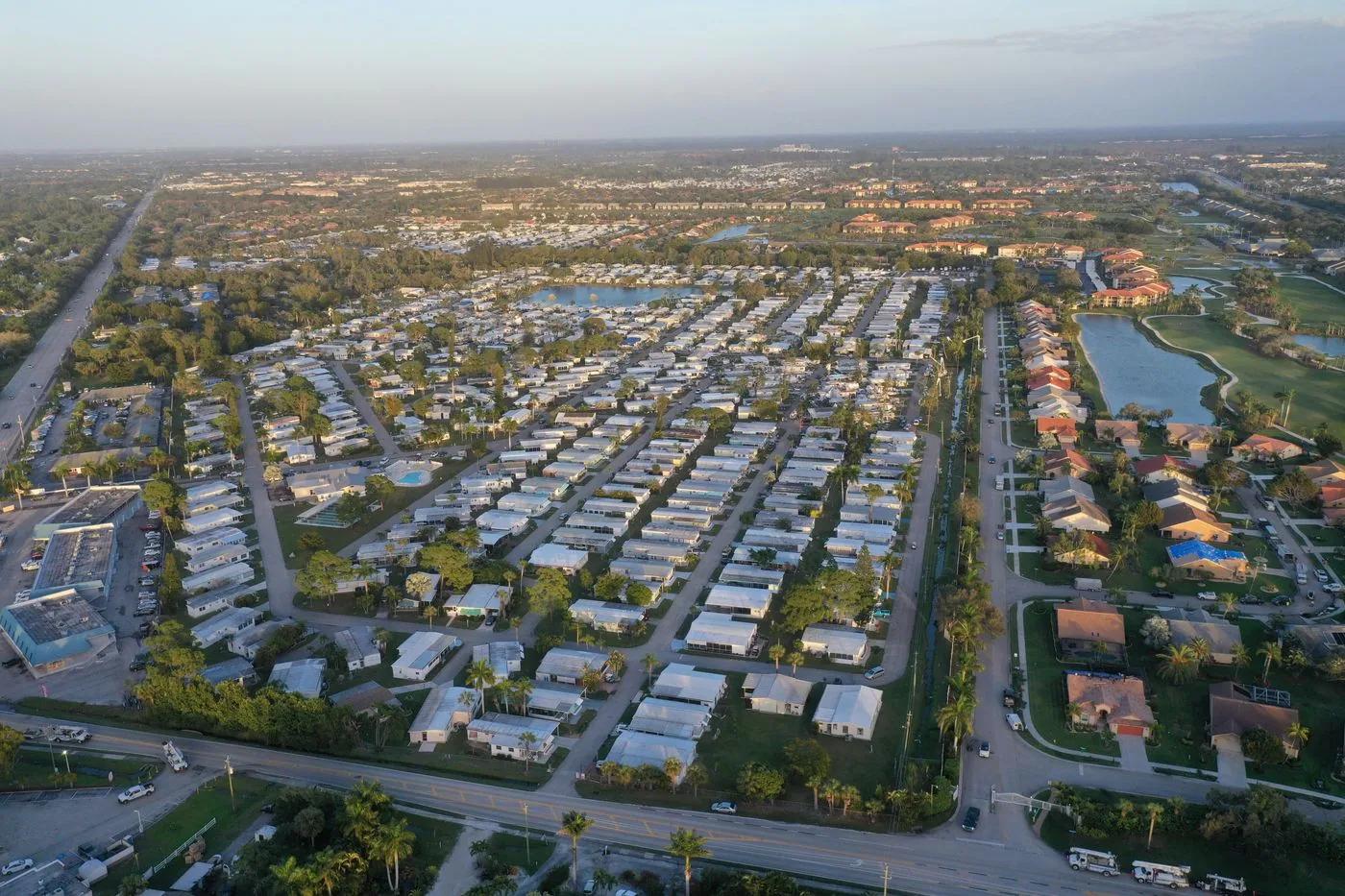
A commercial roof that sits one lot away from houses is held to a stricter standard of conduct than one in an industrial park. West Park is largely residential, yet it contains business, commercial and industrial parcels, and it borders Miami-Dade County to the south, Pembroke Park to the east, Hollywood to the north and Miramar to the west. The city was created on March 1, 2005. Roof work on those parcels affects neighbors in ways that a purely commercial district does not: noise at the property line, trucks on residential streets and debris that can blow into a yard. For an owner in West Park, FL we start with the inspection finding and add a neighbor plan to the scope.
Neighbors are part of the scope
Before a crew arrives, we walk the property line with the owner. We note houses, fences, trees and driveways within reach of debris or noise, and we plan hoisting and waste handling to keep clear of them. Where the staging area sits near a shared boundary, we use netting and covered containers so nothing falls or blows across.
Hours matter as much as location. Tear-off and fastening are loud, and residents notice them most early and late. We agree on a work window with the owner, and where practical we post a short notice to nearby residents with dates, hours and a contact number. A small courtesy of that kind keeps a roof project from becoming a municipal complaint.
Odors and fumes need the same care. Hot-applied or solvent-based materials can drift to nearby homes, and an adhesive chosen for a mixed neighborhood may differ from one chosen for an industrial park. We tell the owner which products are proposed, how they are applied and what ventilation or timing limits apply, and we choose low-odor options where the system allows.
Scattered parcels need individual measurement
Business, commercial and industrial parcels in a mostly residential city do not form a single district. One may hold a small office, another a warehouse and a third a repair shop, and the city profile cannot tell us what is on any of their roofs. We measure each one on its own.
For a flex-industrial building the survey looks at moisture, seams, drains and the loading side. For a self-storage roof the same survey covers long, narrow sections with repeating penetrations. We record condition, remaining service life and the cost of the next repair, so the owner can see where the roof stands before any work is chosen.
Where parcels are small, drainage often crosses a property line. A scupper that discharges at a fence, a downspout that runs onto a neighbor's slab or a roof that drains toward a residential lot can all create complaints. We trace where the water goes after it leaves the roof, in a heavy rain as well as a light one, and recommend a discharge point that stays on the owner's land.
Residential streets limit truck routes
Delivery trucks and boom lifts need turning room, and residential streets may not provide it. We check the approach, note any weight or width limits and plan deliveries for times when traffic is light. Materials are staged on the owner's property wherever possible, so that the street stays clear. Where a truck must wait, we plan the arrival so it does not idle in front of a home.
If an on-street lift is unavoidable, the owner confirms the permission required and we arrange flaggers and cones. Debris leaves in covered containers, and the street is swept at the end of each day. These measures cost little and prevent disputes with residents who share the road with the project.
Storms decide how much roof opens
Summer in South Florida means a wet season of near-daily showers and thunderstorms. The early weeks are the stormiest, when damaging wind, hail, tornadoes and lightning are possible, and tropical systems become the larger concern from August.
We size each opening to what the crew can seal before storms build. Temporary protection waits beside the open area, loose material is secured when wind is forecast and the crew leaves the roof dry every evening. After a storm, we inspect the temporary work before resuming. A commercial roof repair done in this season usually starts by sealing the opening for now and recording where the water travels.
Hot months wear sealants and seams
Station normals from Pembroke Pines put typical July highs at 91 to 92 degrees, and midsummer heat indexes in the region can exceed 100. That heat arrives alongside afternoon rain, and the wear shows up in familiar places: sealants lose flexibility, seams creep and edge terminations loosen.
On a first walk we press on sealant, check terminations and look for shrinkage at inside corners. A small repair at that point costs a fraction of a repair after water has reached the insulation. The finding goes into a written plan with a recommended interval for the next check, set by the roof's condition and not by a fixed calendar.
Group repairs into one visit
Small roofs are costly to mobilize for, so we gather the work. A single planned visit can clear drains, replace failed sealant, repair flashings and photograph the roof. The owner receives a list of what was done and what was deferred, with a note on when to look at the deferred items again.
Owners with other buildings in Pembroke Park, Hollywood or Miramar can add them to the same schedule. A regular preventive maintenance visit also builds the record that supports a later replacement decision, and it tends to catch the small issues that cost the most when left alone. The owner keeps the photographs, the condition notes and the list of deferred items in one file, which is the first thing a buyer or lender will ask to see. When the next heavy storm passes, the same file lets the owner compare the roof with its earlier state in minutes.
Commercial Roofing Questions
How can an owner reduce the effect of roof work on nearby homes?
Agree on work hours that avoid early mornings and evenings, stage materials on the property and use covered containers for debris. A short notice to neighbors with dates and a phone number also helps. We build these steps into the plan before the crew arrives.
What if the site is too tight for a crane or lift?
We plan smaller loads, hand-carry points or a temporary on-street lift with the required permission and flaggers. The staging drawing shows the choice and the cost. The owner approves it before the schedule is set.
Does a small flex building need a full survey?
A full survey is the surest way to learn its condition, and on a small roof it takes little time. We check moisture, seams, drains and flashings and report in a short document. The owner then decides on repair, coating or replacement with real data.
How often should drains on a small commercial roof be cleared?
Before the wet season and after major storms at minimum. Roofs near trees may need more. We record the condition of each drain at every visit so the owner can see whether debris collects faster than expected.
Why keep deferred items on a list?
Deferred items can become urgent if conditions change. A list with dates and locations lets the owner revisit them at a set time and see whether they have worsened. It also documents that the item was known and monitored.